
What Canine Behavioral Training Can Do for Your Dog
Canine behavioral training is a structured way to help dogs learn safer, calmer, and more useful responses to everyday situations. It combines clear communication, consistent practice, thoughtful management, and methods that consider both what a dog does and how they feel.
For a busy family, the goal is not a perfect dog. It is a dog who can cope better at home, on walks, around visitors, and during the real routines of family life.
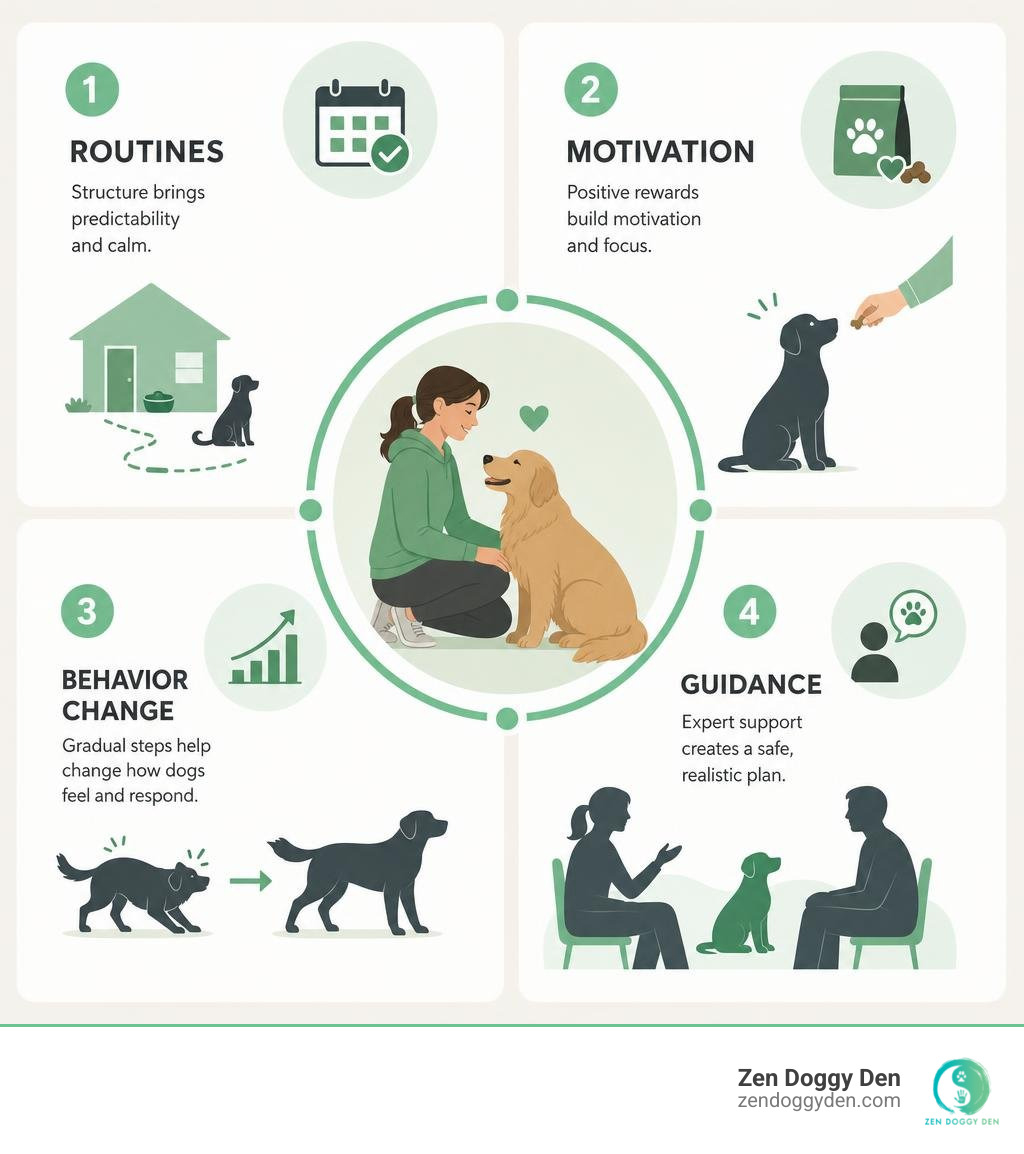
| Key part | What it helps with |
|---|---|
| Clear routines and management | Prevents unwanted behavior from becoming a habit |
| Rewards and motivation | Builds behaviors you want, such as coming when called or settling |
| Gradual behavior modification | Helps address fear, reactivity, anxiety, and overexcitement |
| Professional guidance | Creates a safe, realistic plan for more serious concerns |
Good training is more than teaching sit and stay. It starts by looking at the reason behind barking, pulling, jumping, hiding, growling, or chewing. From there, a qualified professional can match the plan, tools, and level of support to the dog and the household.
I am Julie McLean, and this guide will help you understand the core methods, service options, and professional support available for lasting behavior change.
Core Principles of Positive Canine Behavioral Training
When we dive into canine behavioral training, we work directly with how dogs process information and evaluate their environment. Modern animal learning theory is grounded in operant and classical conditioning, which dictate how animals form habits and emotional associations. By understanding these mechanics, we can create structured training environments that encourage rapid learning while keeping stress manageable for the dog.
At Zen Doggy Den, our work across the Denver Metro Area has shown us that effective behavioral modification requires looking at a dog’s underlying emotional state rather than just controlling outward actions. When a dog exhibits unwanted behaviors like lunging, barking, or destruction, those actions are usually symptoms of fear, frustration, overarousal, or confusion. Addressing the root emotion allows us to build reliable, long-term behavior patterns.
According to the AVSAB Position Statement on Humane Dog Training, scientific evidence strongly supports using reward-based principles as the foundation for all canine learning. When dogs understand how to earn high-value rewards through clear feedback, they become active participants in the learning process.
Reward-Based Science vs. Aversive Methods
The science of animal behavior clearly highlights the contrast between reward-centered learning and training that relies primarily on heavy confrontation or pain. Studies consistently show that dogs trained with reward-based methods exhibit higher levels of obedience, demonstrate greater attentiveness to their handlers, and develop significantly fewer long-term behavioral problems.
When training relies heavily on physical discomfort or scary corrections, such as misapplied choke chains or e-collars, dogs often enter a state of avoidance behavior. In extreme cases, repeated harsh corrections lead to learned helplessness, where a dog shuts down completely because they feel unable to control or escape negative outcomes. While a shut-down dog may look quiet on the surface, their underlying stress remains extremely high, often leading to unpredictable explosive outbursts later on.
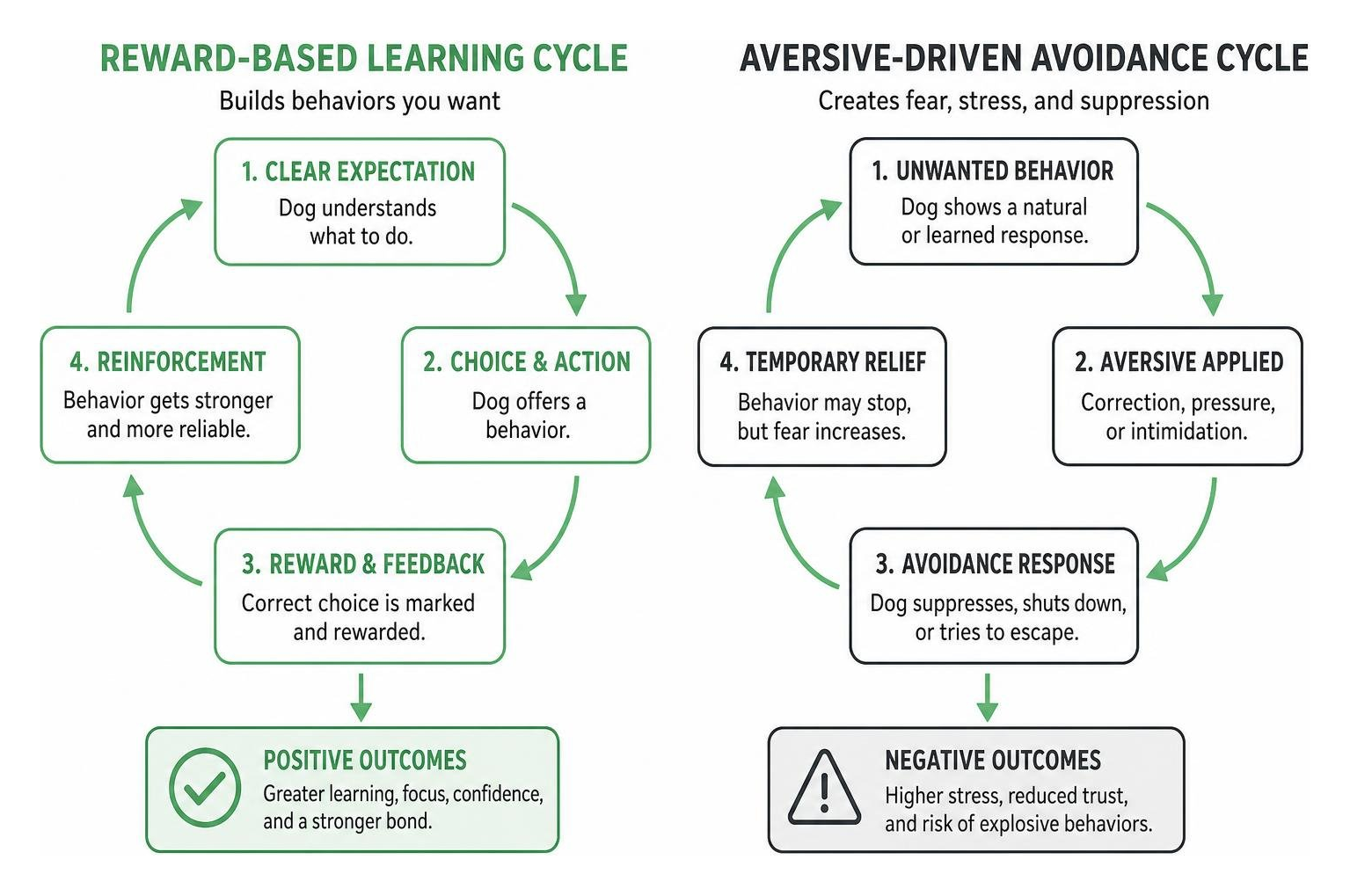
In professional, educated settings, balanced training principles allow us to establish clear boundaries and structure while keeping motivation, safety, and clear communication at the center of every lesson. We believe in setting dogs up for success by rewarding correct choices while using fair management, clear markers, and appropriate tools to prevent bad habits from becoming self-reinforcing.
Stress Biomarkers and Welfare Impacts
Understanding canine stress is vital when designing effective behavioral modification programs. Physiological indicators like cortisol levels provide clear insight into a dog’s internal state. Research demonstrates that dogs subjected to punitive or confrontational training methods show sharp spikes in circulating cortisol compared to dogs engaged in structured, reward-based learning environments.
Handlers can read subtle physical stress signals before a full behavioral meltdown occurs:
- Lip licking and yawning out of context: Early signals that a dog is feeling internal pressure or conflict.
- Posture lowering and tail tucking: Indicators that a dog is trying to make itself smaller in response to a perceived threat.
- Front leg lifting and panting: Signs of rising nervous system arousal and uncertainty.
- Somatic tension and facial stiffness: Clenched jaw muscles or hard staring that signal the dog is approaching its emotional threshold.
Furthermore, long-term studies reveal that dogs trained with harsh aversive techniques display higher baseline pessimism during cognitive bias testing. These dogs view new situations with hesitation and anxiety, whereas dogs trained with positive reinforcers approach novel challenges with optimism and curiosity.
Core Techniques in Behavior Modification
Modifying established behavioral patterns requires systematic application of psychological learning principles. We cannot simply tell a dog to stop feeling anxious or reactive; we must systematically change how they process specific environmental triggers. Guided by standard practices outlined in the MSD Veterinary Manual Guide on Behavior Modification, professional behaviorists rely on targeted protocols to reshape canine habits.
Proper antecedent arrangement is the essential first step in any behavior plan. This means structuring the dog’s physical surroundings to prevent them from practicing unwanted behaviors while new skills are being built. If a dog routinely barks at passersby through a front window, antecedent management might involve applying static window film or blocking access to that room. Preventing repetition of bad habits keeps the neural pathways for those behaviors from growing stronger.
Systematic Desensitization and Classical Counterconditioning
Systematic desensitization and classical counterconditioning form the gold standard protocol for addressing fear, phobias, and leash reactivity.
- Systematic Desensitization: This involves introducing the troubling stimulus at an intensity so low that the dog remains completely calm and non-reactive. This state of low arousal is known as keeping the dog sub-threshold. Intensity can be controlled through physical distance, reduced volume, or shortened duration.
- Classical Counterconditioning: While the dog is exposed to the low-level trigger, we deliver exceptionally high-value reinforcers like fresh real meat or special toys. Over repeated pairings, the trigger undergoes a transformation in the dog’s brain. The goal is to change the automatic conditioned emotional response (CER) governed by the amygdala from negative fear to positive anticipation.

If a dog displays reactivity toward other dogs on leash, we begin by standing far enough away that the dog notices the trigger but does not tense up or bark. At that exact moment, high-value treats are provided. If the dog hardens their body stance or refuses food, they have crossed their threshold, requiring us to increase distance immediately.
Shaping, Response Substitution, and Environmental Control
Beyond classical emotional reconditioning, operant modification strategies build brand-new, active skill sets.
- Shaping: This technique involves rewarding successive approximations of a target behavior. Rather than forcing a dog into a complex position, we reward tiny movement steps toward the desired end goal. Shaping builds problem-solving confidence and improves long-term memory retention.
- Response Substitution: We teach the dog an incompatible alternative behavior to replace the unwanted action. For instance, a dog cannot jump on arriving houseguests if they are actively engaged in holding a designated “place” command on their dog bed.
- Premack Principle: This principle states that a high-probability behavior (something the dog desperately wants to do, like run outside) can reinforce a lower-probability behavior (like sitting calmly at an open door). By requiring a calm sit before opening the door, impulse control becomes second nature.
- Differential Reinforcement: We systematically reinforce desired behaviors while ignoring or structurally managing nuisance behaviors, allowing unwanted habits like demand barking to go through natural behavioral extinction.
Selecting a Qualified and Ethical Dog Behavior Professional
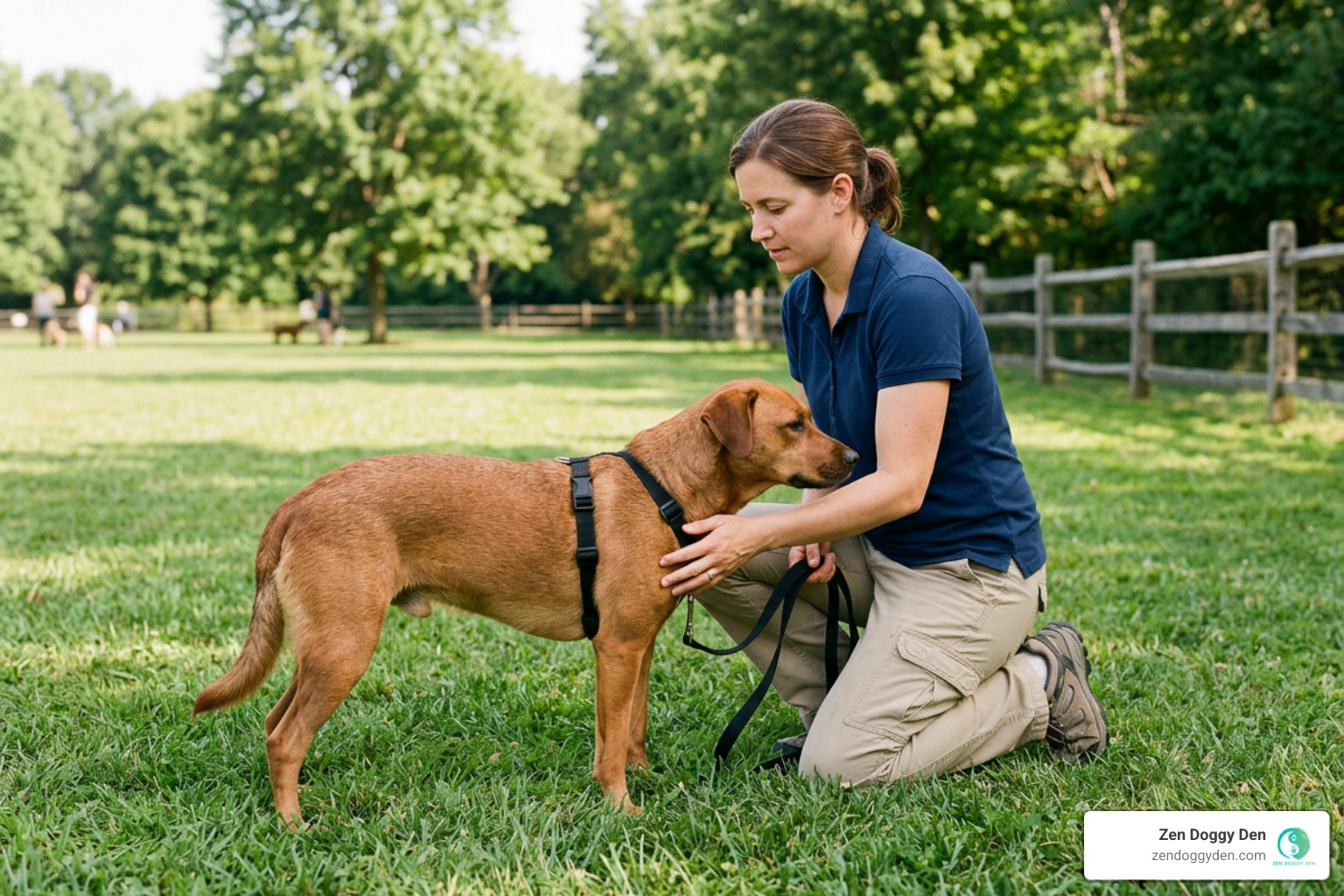
Because the dog training industry remains largely unregulated in many areas, dog owners must carefully vet potential professionals. Anyone can purchase a leash, design a website, and call themselves a dog behaviorist regardless of their actual background or knowledge. Entrusting a dog with severe behavioral problems to an inexperienced or overly harsh practitioner can escalate fear, trigger defensive aggression, and severely damage the bond you share with your pet.
When searching for professional help in Wheat Ridge, Denver, Lakewood, Arvada, or Boulder, look for trainers who prioritize scientific principles, clear handler instruction, transparent equipment use, and tailored training strategies.
Key Credentials and Professional Certifications
Reputable professionals invest significant time and effort into earning independent certifications that require rigorous testing, supervised experience hours, and ongoing continuing education:
- CPDT-KA / CPDT-KSA (Certified Professional Dog Trainer): Demonstrates evaluated knowledge in learning theory, canine care, instruction hands-on skills, and ethology.
- IAABC-CDBC (International Association of Animal Behavior Consultants): Highly specialized certification focused specifically on complex behavior modification including aggression, severe fear, and separation anxiety.
- CAAB / ACAAB (Certified Applied Animal Behaviorist): Professionals holding Master’s or Doctoral degrees in animal behavior, biological sciences, or psychology from accredited universities.
- Dip ACVB (Diplomate of the American College of Veterinary Behaviorists): Board-certified veterinary specialists who have completed veterinary school followed by specialized residency training in behavioral medicine.
Red Flags to Avoid in Canine Behavioral Training
When interviewing prospective trainers or evaluating facilities, watch for clear warning signs that indicate outdated or potentially harmful practices:
- Guaranteed Results: Animal behavior is dynamic and influenced by living environments, genetics, and health. No ethical professional can offer absolute 100% guarantees on living creatures.
- Dominance and Alpha Theories: Practitioners who claim your dog’s unwanted behavior stems from “trying to be the alpha” or “pack leader” are relying on outdated mythologies discredited by modern veterinary science.
- Reliance on Physical Confrontation: Techniques involving alpha rolls, physical pin-downs, scruff shakes, or intentional intimidation reflect poor behavioral understanding and carry high risks of defensive bite fallout.
- Refusal to Allow Class Observations: Transparent trainers welcome prospective clients to view classes or training routines before enrolling their own pets.
- Over-reliance on Aversive Equipment as a First Resort: Trainers who immediately fit heavy prong or shock collars on young puppies or fearful dogs without evaluating motivation, structure, or reward-based methods lack proper behavioral versatility.
Matching Training Service Formats to Behavioral Issues
Every dog experiences unique behavioral challenges, and choosing the correct training format is critical for achieving lasting success. Enrolling a highly reactive or fearful dog in the wrong environment can slow progress and elevate stress for everyone involved.
| Service Format | Best For | Key Benefits | Considerations |
|---|---|---|---|
| Group Classes | Basic manners, young puppy socialization, distraction proofing | Cost-effective, controlled socialization, builds focus around mild triggers | Not suitable for aggressive, highly reactive, or deeply fearful dogs |
| Private Sessions | Leash reactivity, resource guarding, in-home manners, territorial barking | Custom individual attention, worked in real-world home surroundings, customized pace | Requires owner to manage and practice all reps between trainer visits |
| Board-and-Train | Complex behavior modification, immersion foundation, busy schedules | High-volume daily professional reps, controlled environment reset | Requires diligent owner follow-through and transfer coaching |
| Virtual Consulting | Separation anxiety, sound phobias, initial intake screenings | Zero trigger stress, flexible scheduling, direct observation of undisturbed home behavior | Requires handler to execute mechanics directly under camera guidance |
Group Classes vs. Private One-on-One Sessions
Group obedience classes offer an excellent environment for puppies and social adult dogs to practice attention and basic manners around mild distractions. Standard class prerequisites typically require complete age-appropriate vaccination records, including DHPP, Rabies, and Bordetella. Facilities like ours generally require puppies to reach at least 16 weeks of age and complete mandatory vaccination rounds before joining group settings.
However, group classes are poorly suited for dogs struggling with moderate to severe behavioral challenges. A dog that barks incessantly, lunges, or exhibits extreme fear will quickly cross their emotional threshold in a room full of unfamiliar dogs. For these dogs, customized Private Training or targeted Group Puppy Training early in development is far more productive and safe.
When to Choose Board-and-Train Programs
For complex behavior challenges, severe leash pulling, or busy households struggling to find time for high-rep training daily, an immersive program offers a powerful alternative. During a structured stay, professional trainers work with the dog across multiple daily sessions, establishing consistent boundaries, building clear communication channels, and resetting baseline habits.
The true success of any board-and-train hinges on owner transfer lessons. Dogs do not forget their learned behaviors, but they will quickly test boundaries if owners fail to maintain consistent standards at home. Quality programs include dedicated hands-on coaching lessons, clear video tutorials, and structured post-graduation homework to keep training results solid for life.
Navigating Service Options in Canine Behavioral Training
Certain behavioral issues require specialized environmental controls. Separation anxiety, for instance, is almost always best managed through careful in-home management or specialized remote coaching. Because separation panic triggers when the owner prepares to leave the house, virtual sessions allow the behavior specialist to observe real departure cues without introducing trainer presence as a confounding variable.
Whether you are seeking remote guidance via Virtual Dog Training or proactive solutions for a new adoption using New Puppy Behaviors Dog Training, matching the exact training format to your dog’s distinct emotional profile ensures efficient, low-stress progress.
The Role of Veterinary Medicine and Behavior Modification
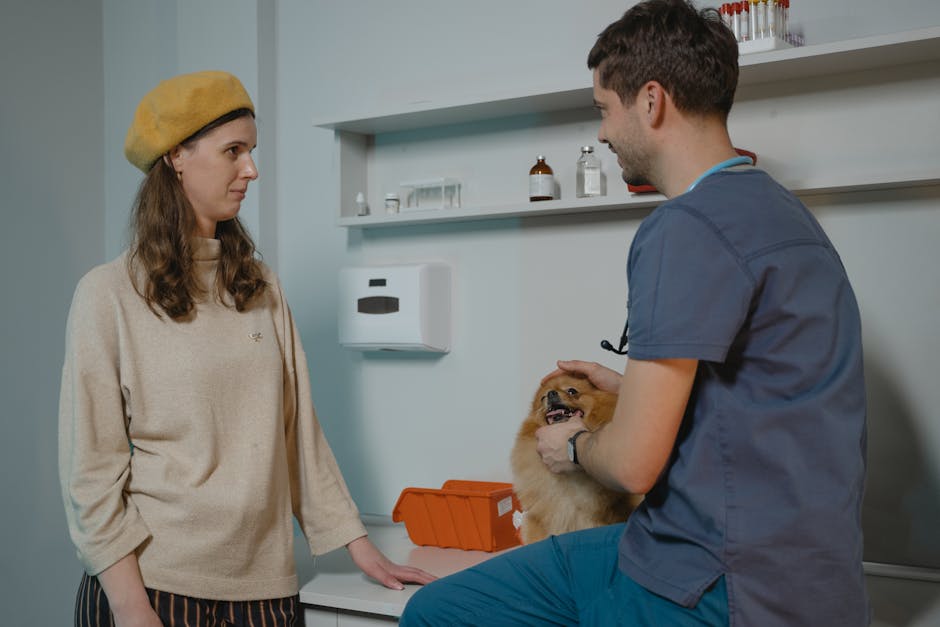
Canine behavior does not exist in a vacuum; it is directly linked to physical health, underlying pain, and internal neurochemistry. Before launching an intensive behavior modification protocol, dog owners should schedule a thorough health examination with a licensed veterinarian. Sudden behavioral changes, such as unexpected aggression, newfound irritability, or elimination accidents in house-trained adult dogs, frequently stem from medical issues such as thyroid imbalances, joint pain, dental disease, or gastrointestinal distress.
When physical illness or pain is present, a dog’s coping capacity drops dramatically, lowering their threshold for frustration and reactivity. Treating the underlying medical condition often resolves or significantly reduces the behavioral issue.
When to Consult a Veterinary Behaviorist
When behavioral problems involve severe bite risks, extreme panic disorders, profound separation anxiety, or compulsive behaviors (such as flank sucking, tail chasing, or fly snapping), consulting a board-certified veterinary behaviorist (Dip ACVB) becomes necessary. Guided by reference standards in the Merck Veterinary Manual on Canine Behavior Modification, these specialists hold unique clinical expertise spanning both medical diagnostics and advanced learning theory.
Veterinary behaviorists evaluate subtle neurological and physiological factors contributing to behavioral breakdown. They can design comprehensive clinical treatment plans that safely combine environmental management, structured training, and targeted behavioral medications.
Medication alone is almost never a standalone cure. Pharmaceuticals work best as a bridge, reducing extreme panic enough for structured systematic desensitization and counterconditioning to take hold.
Frequently Asked Questions About Canine Behavior
How old does a dog need to be to start behavioral training?
Behavioral learning begins the moment a puppy arrives home. Early puppy socialization and light foundation training should start right away between 8 and 12 weeks of age, focusing on soft handling, house rules, confidence building, and positive exposure to household sights and sounds. Structured group training classes typically require puppies to be at least 16 weeks old with proof of DHPP, Rabies, and Bordetella vaccinations on file. Older dogs can learn just as effectively; senior dogs thrive on positive training routines, which provide essential mental stimulation and keep cognitive function sharp.
Can behavioral medication replace structured training?
No. Behavioral medication is not a magical fix and cannot replace hands-on behavioral modification. While prescription psychotropics help stabilize hyper-aroused neurochemistry and lower background stress, they do not directly teach a dog what alternative behaviors to perform. Optimal long-term results occur when veterinary pharmaceuticals are combined with active counterconditioning, clear environmental management, and consistent daily structure.
Why are group classes unsuitable for aggressive or highly reactive dogs?
Group classes present a high-distraction, high-arousal environment with close physical proximity to other dogs and handlers. For an aggressive or reactive dog, this environment easily leads to threshold overflow, placing the dog’s threat-detection nervous system into fight-or-flight. When a dog is over threshold, their prefrontal cortex goes offline, making true learning impossible while elevating stress and safety risks for surrounding participants. Reactive and aggressive dogs require specialized, sub-threshold, one-on-one private instruction or professional immersion care before ever considering controlled group exposures.
Transform Your Dog’s Mindset with Tailored Behavioral Coaching
Navigating complex dog behaviors can feel overwhelming, but you do not have to do it alone. Transforming your dog’s mindset is a rewarding journey built on clear communication, structured daily habits, and science-backed training protocols. Whether you are managing adolescent excitement, leash reactivity, or house manners, establishing a balanced routine will restore harmony and confidence to your home.
At Zen Doggy Den, located in Wheat Ridge, CO, and proudly serving the greater Denver Metro Area, including Lakewood, Arvada, and Boulder, we specialize in helping dogs and their owners thrive together. Our signature structured rotation protocol balances physical exercise, focused mental enrichment, and essential rest periods, ensuring your dog stays calm, receptive, and emotionally regulated.
If you are ready to build a reliable partnership with your canine companion, explore our comprehensive solutions on our dog training service hub. Contact our professional coaching team today to schedule your initial evaluation and take the first step toward a peaceful, well-behaved pet!