
Find a Safe Dog Care Center Near You
A dog care center can give your dog safe exercise, social time, boarding, grooming, and training support while work, school, and travel fill your calendar. The right local facility should do more than keep your dog busy. It should screen dogs before group play, match playgroups by size and temperament, maintain clear vaccine rules, and have trained staff actively supervising.
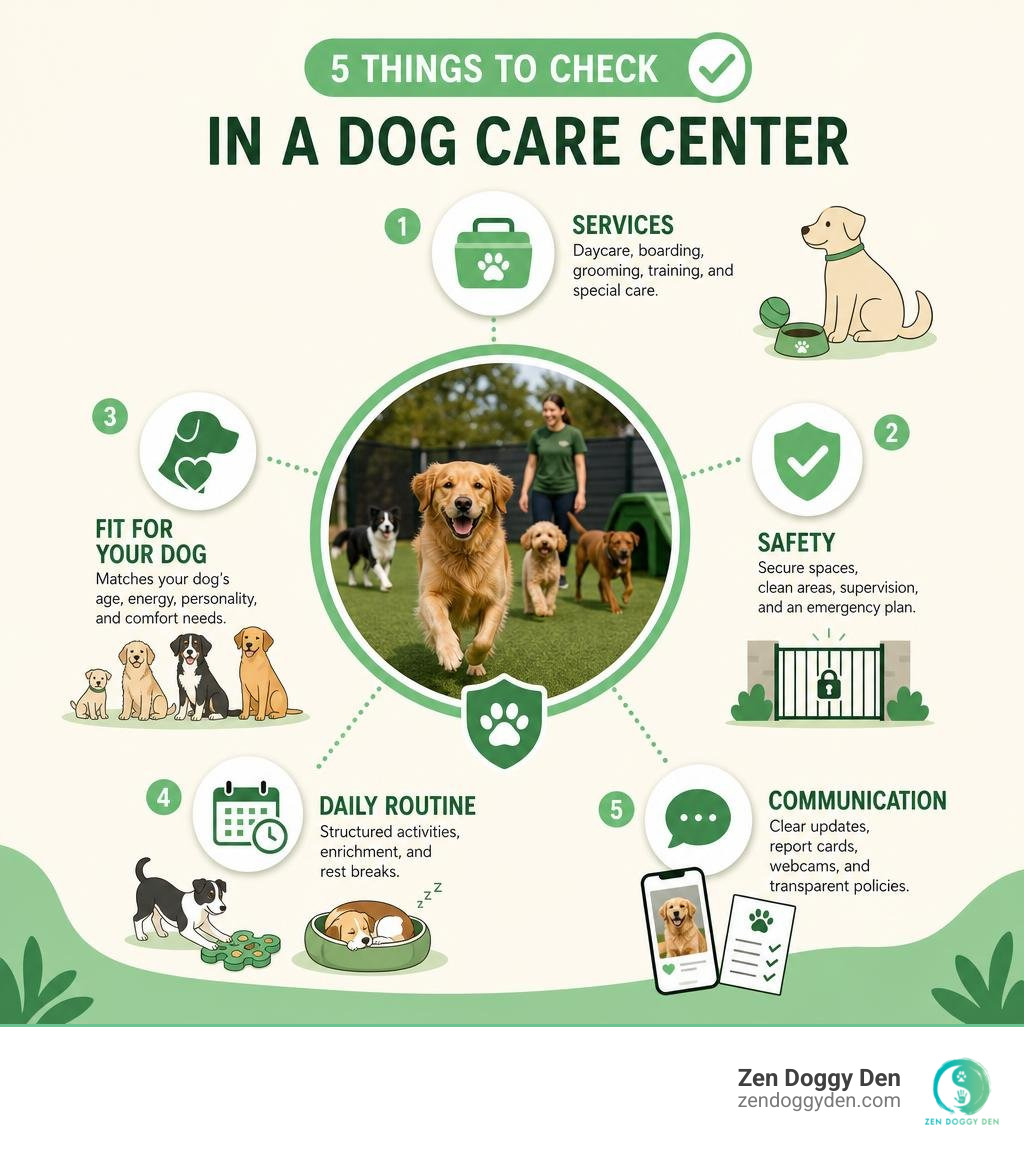
Use this quick checklist when comparing nearby options:
- Services: Confirm whether it offers daycare, boarding, grooming, training, and care for medication or special diets.
- Safety: Look for secure entry gates, clean play areas, safe fencing, supervision, and an emergency plan.
- Fit for your dog: Ask how the center handles shy, high-energy, senior, puppy, or dog-selective guests.
- Daily routine: Favor structured activity, enrichment, and rest breaks over all-day open play.
- Communication: Check for clear updates, report cards, webcams, and transparent policies.
You do not need to feel guilty for needing help. A well-run center can provide a reliable routine and appropriate guidance while your family handles everything else.
I’m Julie McLean, and this field guide will help you compare local pet care facilities with confidence.
Evaluating Core Services at a Professional Dog Care Center
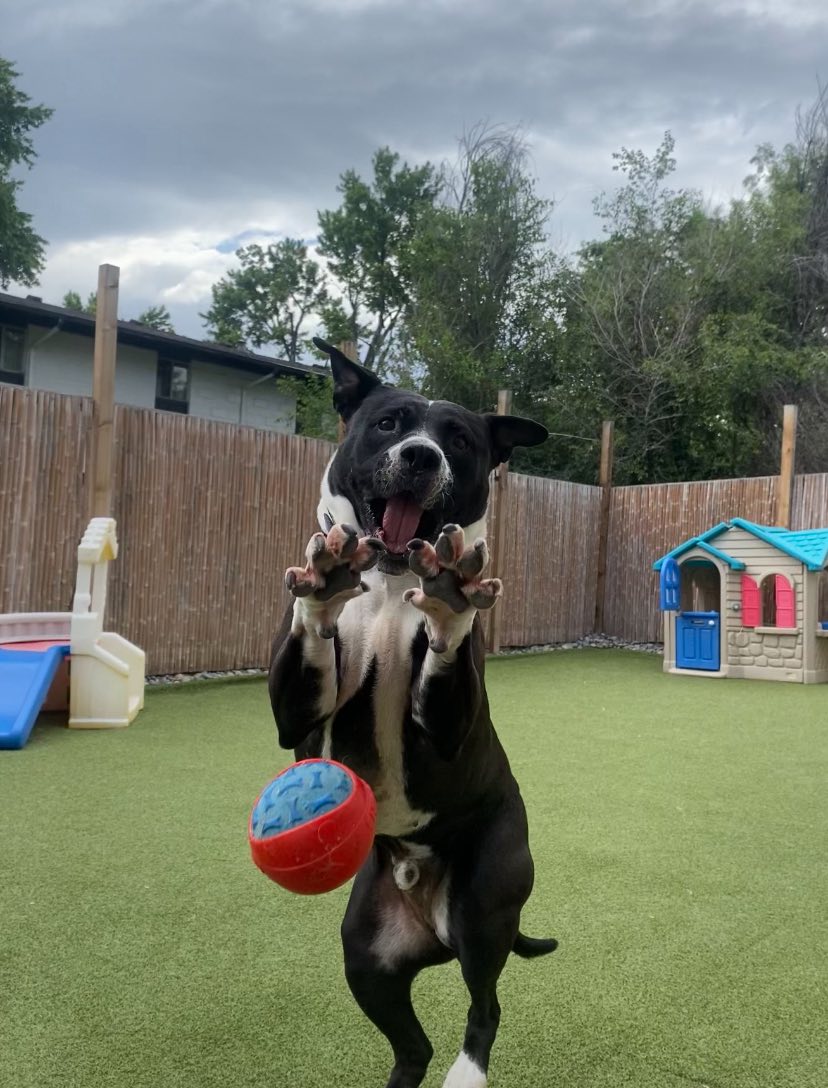
When you begin searching for a quality dog care center, you quickly realize that facilities come in many shapes and sizes. Understanding the broad spectrum of available services allows you to match your pet with a location equipped to support their physical health, emotional balance, and behavioral development.
A full-service center typically brings several essential pet care solutions under a single roof:
- Daycare: Daily group play, structured exercise, and individual handling sessions designed to keep your dog active and engaged while you are at work or away during the day.
- Overnight Boarding: Short-term or extended lodging where dogs receive feeding, exercise, and comfortable rest spaces. Options range from traditional climate-controlled kennels to private luxury suites equipped with raised bedding and private outdoor runs.
- Bathing and Grooming: Essential coat maintenance, full-body haircuts, nail trimming, ear cleaning, and specialized spa treatments that support skin and coat health.
- Training and Behavior Modification: Guided education ranging from foundation puppy manners to advanced off-leash obedience routines and behavior correction.
Selecting a location offering comprehensive care gives your family consistency. Your dog builds a close relationship with the staff, becoming comfortable with the facility layout, handling protocols, and overall daily environment.
For pet parents living across Wheat Ridge, Denver, Lakewood, Arvada, and Boulder, finding a trustworthy facility starts with evaluating how daily play and rest are balanced. Our dedicated Doggy Daycare programs focus on structured play, ensuring that dogs get quality exercise without becoming overly aroused or exhausted. When you travel, choosing professional Dog Boarding ensures your dog stays in a familiar, structured environment where experienced handlers oversee every aspect of their routine.
Training Options at a Local Dog Care Center
Not all dog facilities approach behavior in the same way. When evaluating a professional dog care center, look closely at their training philosophy and available instructional formats. A comprehensive facility should offer a variety of learning tracks tailored to your dog’s age, personality, and current obedience level.
At our professional Dog Training Center, we believe in a balanced training methodology. Effective behavior modification requires clear communication, fair boundaries, and realistic real-world expectations. Balanced training utilizes a full range of proven, humane tools, including slip leads, flat collars, directional head halters, and remote e-collars when appropriate, operated by educated professionals. Combining positive rewards for correct choices with fair, timely corrections for undesirable behaviors creates reliable obedience, emotional stability, and mutual respect between dogs and owners.
Common training options available at modern pet facilities include:
- Board and Train Programs: An intensive, immersive training option where your dog resides at the facility for several weeks. Professional trainers handle daily handler sessions, establishing reliable obedience, impulse control, and leash manners before transitioning those skills to you. You can learn more about our structured Board and Train programs to see if this immersive setup fits your lifestyle.
- Private Instruction: One-on-one sessions between a trainer, you, and your dog. These targeted appointments allow handlers to address specific household challenges such as door-bolting, boundary pushing, or leash reactivity in a controlled setting. Discover how our Private Training sessions help resolve tailored behavioral issues.
- Group Classes: Structured group environments where dogs practice obedience commands, sit-stays, and heel work amidst real-world distractions alongside other handlers. Explore our Group Dog Classes to build social neutrality and handler focus.
Medical Oversight and Special Needs
A major factor separating an average facility from a top-tier center is how medical needs and unexpected emergencies are handled. Pets with chronic health conditions, dietary restrictions, or recovering mobility needs require knowledgeable care.
When touring facilities, ask direct questions regarding medical management:
- Medication Protocols: Can staff administer oral medications, topical ointments, or daily insulin injections? Medications should always remain in their original prescription packaging with clear veterinarian dosing instructions.
- Specialized Diets: How does the facility store and prepare individual diets, raw food, or prescription kibble? Facilities should feature separate food preparation areas to avoid cross-contamination.
- Veterinary Oversight: Is the center connected directly to an on-site animal hospital, or do they maintain formal emergency protocols with a nearby 24-hour veterinary emergency center?
Facilities that partner directly with veterinary teams give owners immediate peace of mind. High-quality centers following standards recognized by organizations like the American Veterinary Medical Association show how combining veterinary-supervised care with daily boarding guarantees that post-surgical pets, seniors, or dogs needing insulin receive expert oversight throughout their stay.
Step-by-Step Facility Inspection: Safety, Sanitation, and Amenities
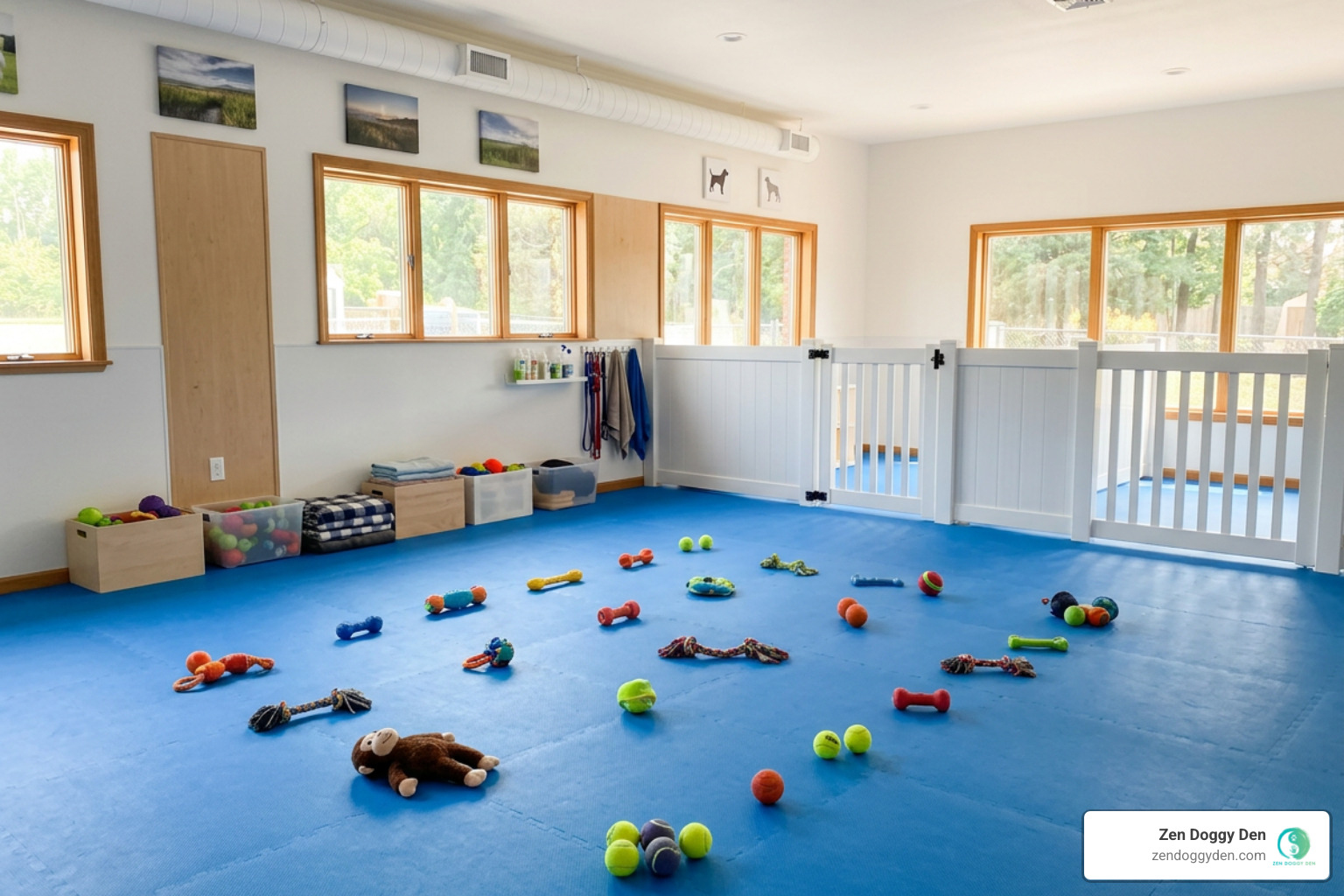
Before trusting any business with your dog, schedule an in-person walkthrough. Walking through the facility allows you to evaluate hygiene, physical construction, and overall atmosphere firsthand.
During your inspection, evaluate these critical areas:
- Air Quality and Odor Control: A clean facility should smell fresh, not heavily masked by artificial perfumes or overwhelmed by ammonia and waste odors. Look for centers utilizing commercial-grade HVAC systems equipped with high-flow air exchange and UV sanitizing lights. Advanced UV air filtration systems can destroy up to 99.9% of airborne viruses, bacteria, and mold spores.
- Flooring and Surface Safety: Indoor play areas should feature specialized non-slip flooring, such as thick rubberized matting or cushioned epoxy turf. Smooth concrete floors increase slipping hazards and joint impact during high-energy play.
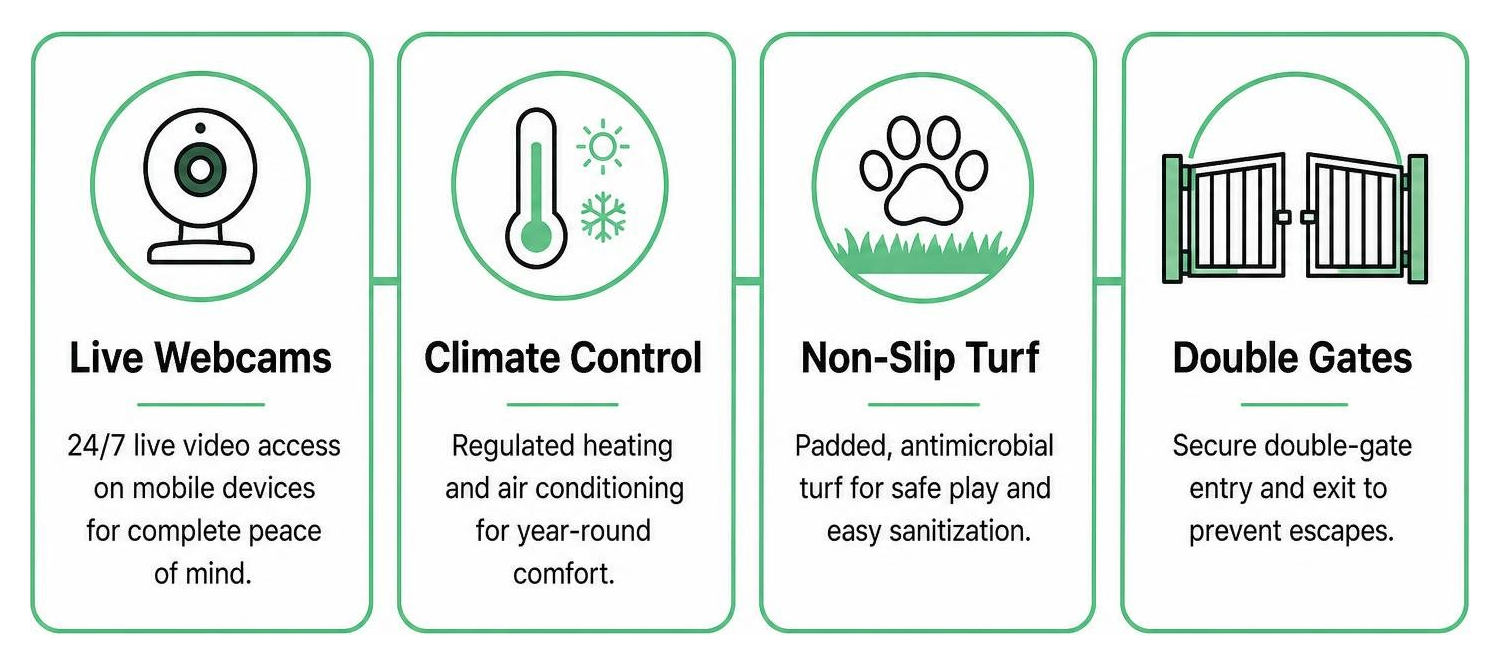
- Double-Gated Entryways: Pay attention to how entry doors and play yards are secured. Every point of egress should feature a double-gate airlock system. Double gates prevent dogs from bolting into parking lots or unmonitored hallways during drop-off and pick-up hours.
- Fencing and Perimeter Barriers: Outdoor yards require tall, sturdy commercial fencing, ideally six to eight feet high. Check whether fencing includes underground anti-dig mesh lining to prevent athletic dogs from tunneling beneath perimeter walls.
To help you compare play environments, review the operational differences between structured care facilities and unmonitored free-for-all spaces below:
| Feature / Standard | Structured Dog Care Center | Free-For-All Play Facility |
|---|---|---|
| Playgroup Ratios | Strict staff ratios (8:1 to 15:1 max) | High ratios (20:1 or unmonitored) |
| Group Matching | Matched by size, age, energy, play style | Mixed sizes and random temperaments |
| Daily Rhythm | Alternating play, mental exercise, quiet rest | Non-stop open play without mandatory breaks |
| Arousal Management | Balanced corrections and handler intervention | High arousal, continuous barking, rough handling |
| Sanitation Protocol | Twice-daily veterinary-grade disinfection | Basic spot cleaning with household cleaners |
Staff Qualifications and Supervision Standards
The physical building is only as safe as the team operating it inside. High-quality dog care centers invest heavily in thorough employee vetting, continuous hands-on training, and recognized industry certifications.
When speaking with facility management, ask about staff credentials and supervision protocols:
- Emergency Certification: Are staff members certified in Pet First Aid and CPCR (Cardiopulmonary Cerebral Resuscitation)? Certified teams can react instantly if a pet chokes, suffers heat exhaustion, or experiences a sudden medical event.
- Supervision Ratios: What is the handler-to-dog ratio during active group play? Industry best practices recommend ratios between 1:8 for focused enrichment groups and 1:12 to 1:15 for standard playgroups.
- Overnight Staffing: Is the building staffed continuously 24 hours a day, 7 days a week? Top-rated boarding facilities maintain 24/7 awake overnight staff who actively monitor kennels, perform late-night check-ins, and manage climate controls to ensure boarding guests are never left unattended.
- Group Handling Expertise: Handlers should understand canine body language, subtle stress cues, pack dynamics, and boundary control. Staff should actively manage gates, practice group sit cues, and enforce reliable recalls rather than standing passively in play yards.
Key Amenities in a Modern Dog Care Center
Modern technology and thoughtful architectural choices significantly elevate the client experience. Premium amenities ensure comfort for pets and complete transparency for owners.
Key features to look for in a modern center include:
- Live Webcam Feeds: Many leading facilities offer 24/7 live video stream access accessible via mobile devices or customer web portals. Being able to watch your dog playing outside or resting in their room builds immense trust and provides complete peace of mind while traveling.
- Climate Control Systems: Indoor play areas and sleeping quarters must feature regulated heating and air conditioning to maintain comfortable temperatures year-round regardless of outdoor weather extremes.
- Indoor Padded Turf: Synthetic antimicrobial turf with padded underlayment gives dogs the feel of natural grass indoors while permitting thorough sanitization between play groups.
- Private Outdoor Space: Expansive outdoor play areas give dogs fresh air, natural sunlight, and space to run. Top facilities illustrate the value of combining spacious indoor suites with private outdoor verandas and yards.
Evaluating Play Models: Structured Socialization vs. Free-For-All
A common misconception among pet parents is that a dog’s primary goal at daycare is physical exhaustion. Many traditional daycare businesses operate open, free-for-all play yards where dozens of dogs run continuously for eight to ten hours without breaks. While this may result in a tired dog at night, it frequently leads to severe physical fatigue, overstimulation, behavioral frustration, and heightened reactivity.
Continuous off-leash play in unmanaged groups forces dogs to operate in an elevated state of arousal. Over time, hyper-aroused dogs struggle to settle, develop poor leash manners, and react defensively when pushed past their physical limits.
By contrast, a structured socialization model prioritizes emotional balance, cognitive stimulation, physical safety, and calm behavior. In a structured environment, dogs alternate between periods of active group play, focused obedience work, individual handler time, and mandatory rest. Facilities practicing structured care demonstrate how incorporating dedicated midday rest periods creates calm, confident, and well-adjusted dogs.
Our philosophy at Zen Doggy Den centers on a structured rotation protocol. By balancing mental challenges, controlled physical exercise, balanced obedience handling, and mandatory rest periods in individual crates or suites, dogs stay emotionally regulated, physically safe, and responsive to human direction.
Puppy Socialization and Playgroup Matching
Socialization is far more than simply allowing puppies to tumble around with other dogs. The first 16 weeks of a puppy’s life represent a critical developmental window. During this vital phase, positive, controlled exposure to new environments, handling tools, surfaces, sounds, and dog temperaments shapes their adult personality.
When enrolling young dogs in a center, look for structured programs tailored specifically for puppies:
- Size and Energy Separation: Puppies and small breeds should never be placed in playgroups with large, high-drive adult dogs. Separate play yards prevent accidental injury, over-arousal, and bullying.
- Temperament Assessments: Before joining group play, every dog should undergo a thorough temperament evaluation. Handlers introduce new dogs to calm, neutral helper dogs one at a time to assess social skill, confidence, and play style.
- Behavioral Guidance: Puppies need fair boundaries. Handlers should step in to interrupt pushy behavior, mouthy play, or mounting, using clear spatial pressure, leash guidance, or brief rest timeouts to teach proper canine etiquette.
- Individual Enrichment: Combining play groups with structured puppy manners training builds lifelong confidence. Visit our specialized Puppy Training page to see how early structured guidance establishes proper manners from day one.
Vaccination Requirements, Health Checks, and Pricing Models
To protect every guest, a reputable dog care center enforces clear health prerequisites. Allowing unverified or unvaccinated pets into communal spaces creates severe health risks for the entire facility.
Standard health requirements should include:
- Core Vaccinations: Proof from a licensed veterinarian of up-to-date Rabies, DHPP (Distemper, Hepatitis, Parainfluenza, Parvovirus), and Bordetella (kennel cough) vaccinations. Many top facilities also require Canine Influenza vaccines.
- Negative Fecal Exams: A negative fecal screening (including Giardia testing) completed within the past 6 to 12 months guarantees that parasites are not introduced into shared play areas.
- Spay/Neuter Policies: Facilities typically require intact male and female dogs past 6 to 9 months of age to be spayed or neutered before entering group play. Unaltered adolescent dogs often spark hormonal tension and playgroup conflict. Unaltered pets should receive dedicated individual exercise instead.
When evaluating costs, pet facilities offer various pricing structures depending on location, facility size, and service tier:
- Boarding Rates: Standard boarding across the United States typically ranges from $35 to $55 per night, while luxury suites featuring webcams, private verandas, and specialized attention can reach $75 per night or higher.
- Daycare Packages: Single-day daycare passes average $28 to $45 per day. Many facilities offer multi-day packages (5-day, 10-day, or monthly passes) that lower the daily rate. Some promotional daycare packages even offer unlimited monthly access for as low as $99 per month.
- Incentives and Discounts: Look for promotional introductory offers, such as a complimentary first day or “Stay 3 Nights, Get 1 Night Free” packages. Many locations also offer military, first responder, or referral credits (e.g., $30 referral bonuses for both parties).
You can review our complete pricing options and package details by visiting our official Pricing page.
Frequently Asked Questions About Pet Care Facilities
What vaccinations and health tests are required for daycare or boarding?
Most professional pet care facilities require official veterinary documentation proving up-to-date core vaccinations: Rabies, DHPP, and Bordetella. Additionally, many facilities require a negative fecal exam performed within the past 6 to 12 months and strongly recommend the Canine Influenza vaccine. Puppies must typically complete their full round of vaccinations around 16 weeks of age before joining communal play spaces.
How do urban facilities differ from suburban dog facilities?
Urban pet facilities in dense metropolitan areas often focus heavily on maximizing indoor square footage, utilizing padded indoor turf, multi-level play areas, sound-proofing, and specialized pet taxi pickup and drop-off services to manage city traffic. Suburban and rural facilities generally feature larger physical footprints, including expansive multi-acre outdoor yards, dedicated walking trails, and large private suite accommodations. Both settings can provide exceptional care when proper security measures, like double-gated entryways and strict supervision ratios, are strictly enforced.
Why is structured rotation better than continuous open play?
Continuous open play causes physical exhaustion, over-arousal, and heightened stress responses in dogs. Without enforced downtime, dogs become overtired and irritable, which frequently triggers behavioral friction or reactive outbursts. A structured rotation model alternates active physical play and mental stimulation with mandatory midday rest periods in quiet individual spaces. This routine mimics a dog’s natural biological rhythm, helping them remain emotionally balanced, calm, responsive, and confident.
Conclusion: Choosing the Right Care Environment for Your Dog
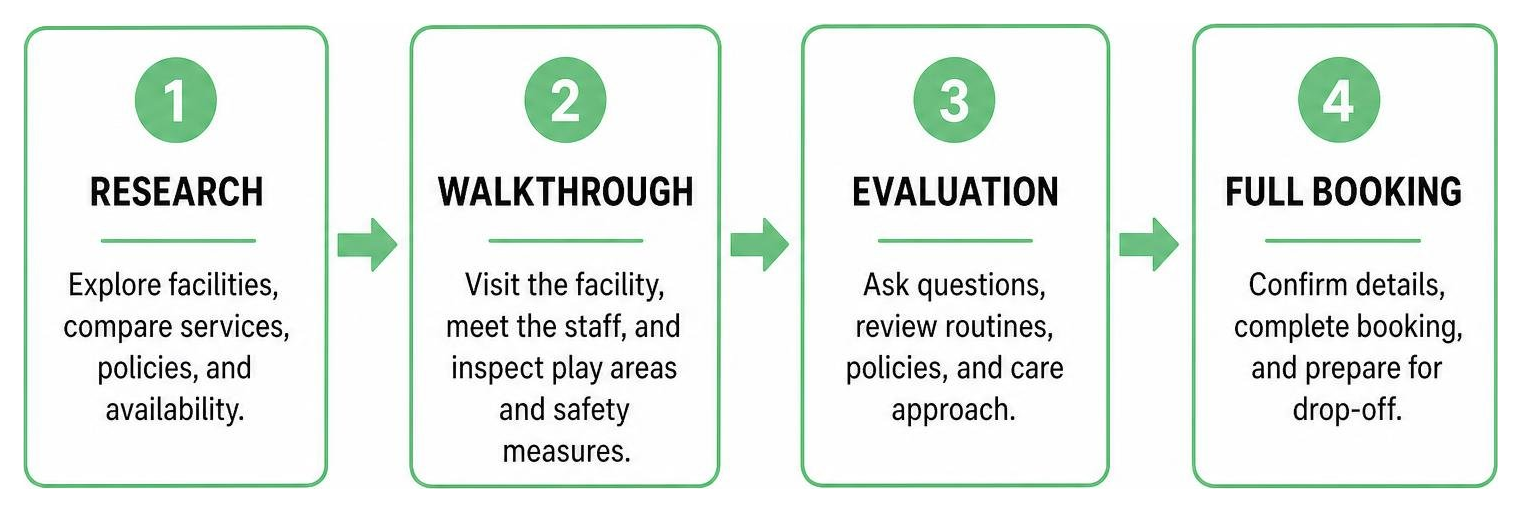
Finding the right dog care center comes down to identifying a facility that treats your pet as an individual. Every dog brings a unique combination of energy, social confidence, age, physical health, and training background. A one-size-fits-all approach with unmonitored open play cannot support the long-term emotional and physical well-being of your companion.
When selecting a facility, prioritize locations that emphasize structured daily routines, balanced training handling, mandatory rest periods, rigorous sanitation, and clear handler communication. Take time to schedule a facility walkthrough, meet the staff, inspect the play areas, and ask detailed questions about safety protocols.
At Zen Doggy Den, our team is passionate about delivering exceptional care across Wheat Ridge, Denver, Lakewood, Arvada, and Boulder. Our structured rotation protocol balances active physical exercise, cognitive mental work, balanced obedience guidance, and restful downtime. Learn more about our background and team by reading our About page, browse common questions on our FAQ section, view facility photos in our Gallery, or read helpful insights on our Blog.
When you are ready to give your dog a safe, structured, and truly enriching pet care experience, Contact us today. Discover how our balanced approach can transform your dog’s daily routine by visiting our main Daycare page to get started.