
How Dog Aggression Behavior Classes Address the Root Cause
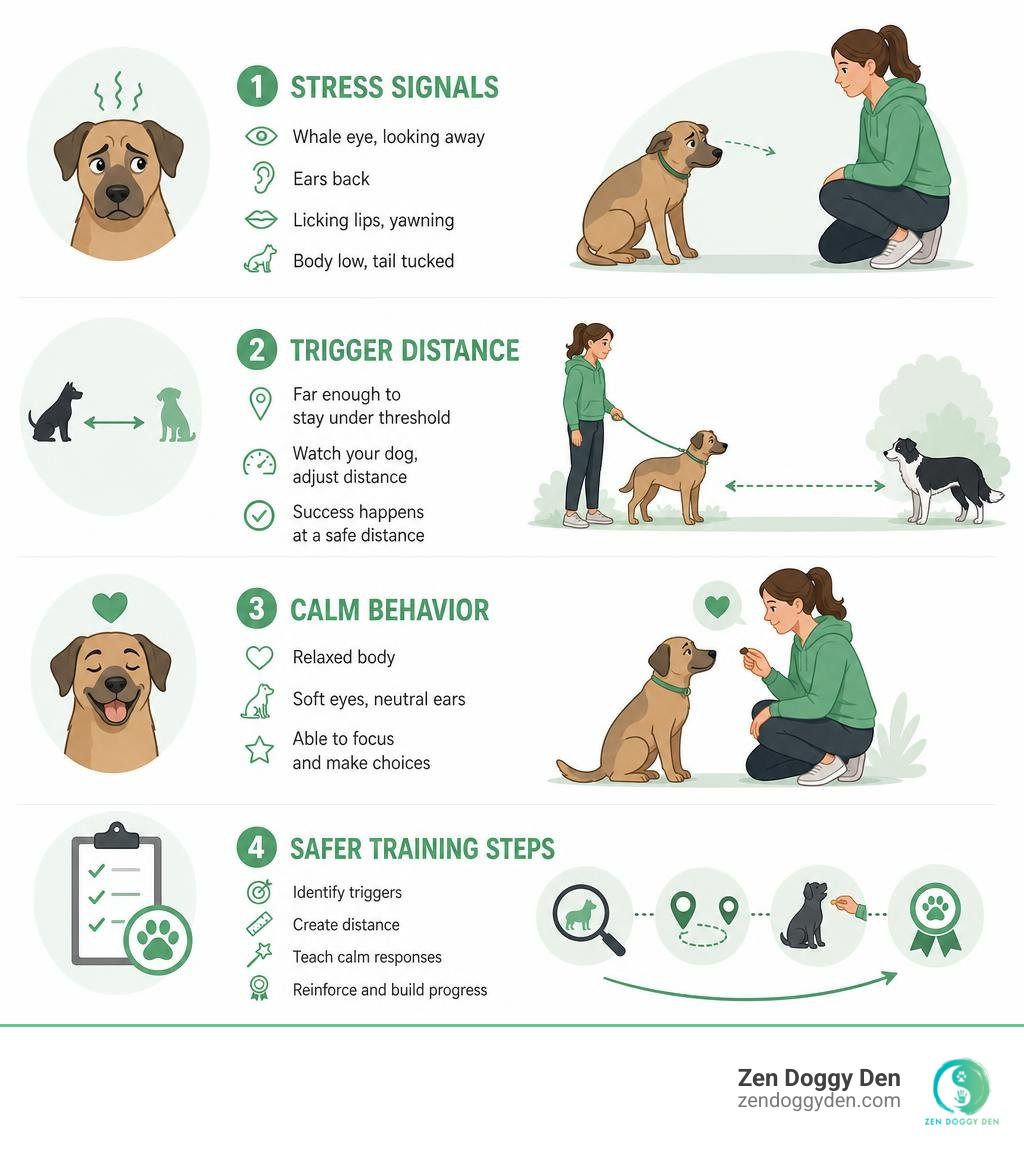
Dog aggression behavior classes help owners identify what triggers their dog, prevent unsafe practice of the behavior, and build safer responses through guided exercises. The right class does not simply teach a dog to sit near a trigger. It teaches you how to spot stress early, create enough distance, use safe handling tools when needed, and reward calm, workable choices.
For busy families, that structure matters. Growling, barking, lunging, freezing, or guarding food can feel scary and confusing, especially when life is already full. These behaviors are often linked to fear, frustration, pain, stress, or protecting valued resources. A veterinarian should assess sudden behavior changes, since pain and medical problems can affect behavior.
Reactivity is not always the same as aggression. A reactive dog may bark or lunge because they are overwhelmed, while aggression can include threats or actions intended to make a person or dog go away. Both deserve early attention from a qualified professional.
I am Julie McLean, and this guide will help you understand what structured classes can do and how to choose a safe next step for your dog.
Understanding Canine Reactivity vs. True Aggression
Understanding the line between reactivity and aggression helps us choose the right training path. While they look similar on the end of a leash, their underlying emotional arousal and goals are often distinct.
Reactivity is typically an over-aroused, impulsive response to everyday stimuli. A reactive dog might bark, spin, whine, or lunge when they see another dog or person. This explosion is often fueled by barrier frustration, lack of impulse control, or general social excitement. The dog wants to interact or feels trapped by the leash, and their excitement spills over.
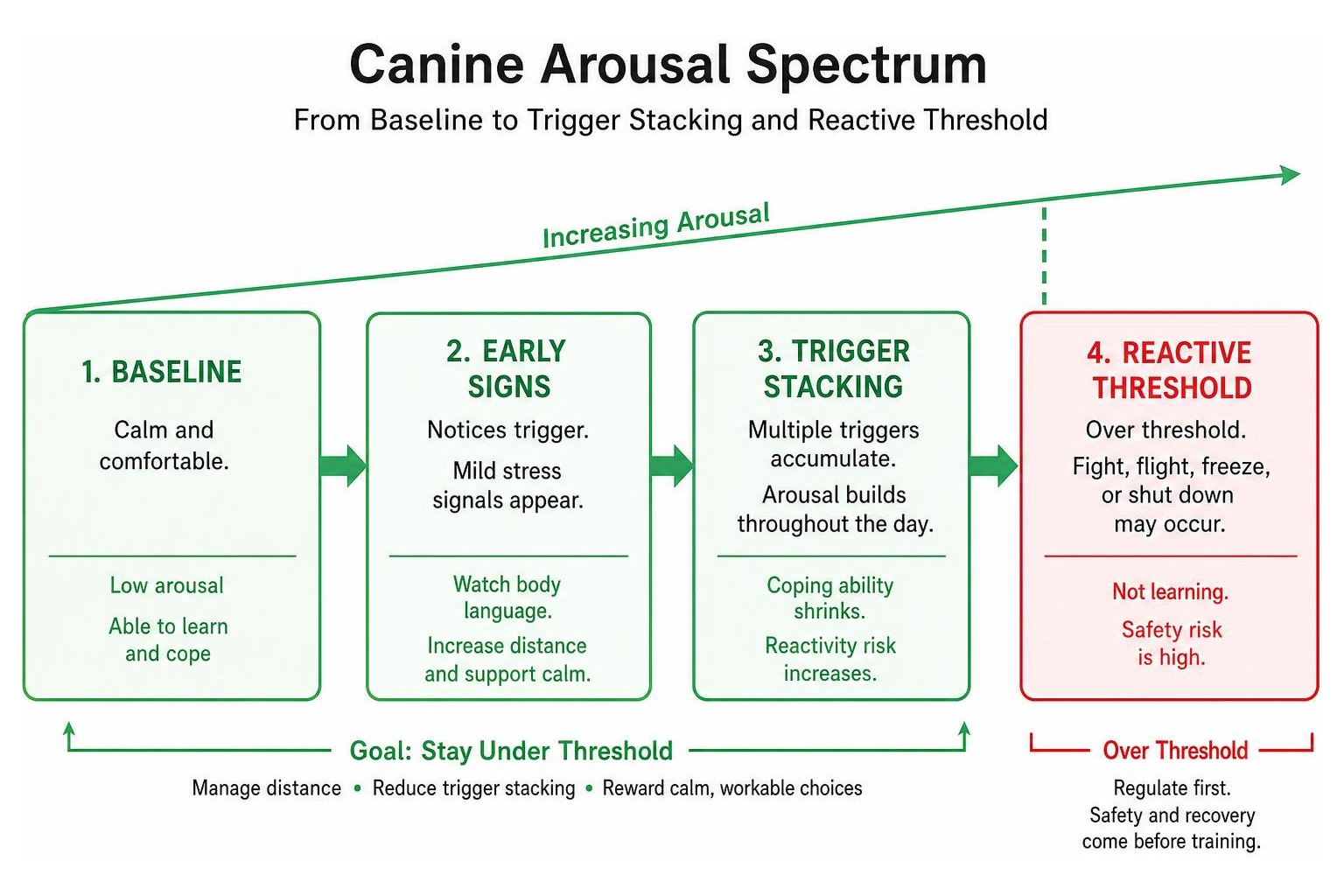
True aggression involves an intent to create distance, intimidate, or defend resources through threat displays or physical contact. When a dog displays aggression, their nervous system perceives a genuine threat. If pushed past their threshold, they may snap, bite, or display hard postural warnings to force the trigger away.
Trigger stacking plays a massive role in both behaviors. A dog might tolerate a mail carrier in the morning and a loud truck at noon, but an approaching dog in the evening pushes them over their emotional threshold.
| Feature | Canine Reactivity | True Aggression |
|---|---|---|
| Primary Driver | Frustration, social excitement, low impulse control | Fear, self-defense, resource protection, pain |
| Goal of Behavior | Access the trigger, relieve arousal, express barrier frustration | Increase distance from the trigger, remove the perceived threat |
| Common Body Language | Bouncing, high loose tail wag, whining, sudden lunging | Stiff posture, fixed hard stare, low growl, lip curl, freeze |
| Intent to Harm | Low; bites usually happen via accidental redirection | Present if thresholds are breached and escape is impossible |
| Recommended Setting | Structured environments like Group Dog Classes | Specialized aggression protocols and controlled behavioral setups |
Common Causes and Types of Aggressive Behavior
Canine aggression is a functional behavior used to communicate boundaries or survive perceived threats. Identifying the specific driver allows us to craft a realistic behavior modification plan.
- Fear-Based Aggression: The most common form of aggression. The dog feels trapped or unsafe and acts boldly to make the scary thing go away.
- Resource Guarding: A natural instinct where a dog protects high-value items, such as food bowls, raw bones, resting spots, or even specific family members.
- Territorial Defense: Aggressive displays directed at unfamiliar people or animals approaching the dog’s perceived territory, home, yard, or vehicle.
- Pain and Medical Issues: Underlying orthopedic pain, dental disease, thyroid dysfunction, or sensory loss can drastically lower a dog’s tolerance for handling and interactions.
- Barrier Frustration and Leash Reactivity: Restraint prevents natural avoidance behaviors, turning manageable stress into explosive outward displays.
- Redirected Aggression: When a dog is highly aroused by a trigger they cannot reach, they may suddenly turn and bite whatever is closest, including a leash, companion animal, or handler.
- Maternal Aggression: Protective behaviors displayed by a nursing mother or a female experiencing a false pregnancy.
Recognizing Subtle Early Warning Signals
Dogs rarely bite without warning. Before an explosive outburst happens, your dog provides subtle, micro-level shifts in their body language. Catching these early stress signals allows you to intervene before your dog crosses their threshold:
- Lip Licking and Tongue Flicks: Quick, repetitive tongue movements when no food is present.
- Yawning Out of Context: A yawn that occurs during introductions, training transitions, or direct approach.
- Whale Eye: The dog turns their head slightly away while keeping eyes locked on the trigger, revealing the white sclera of their eye.
- Sudden Freezing or Postural Stiffness: A complete cessation of movement, panting, or tail wagging. The body goes rigid.
- Hard Staring: Direct, unblinking eye contact with dilated pupils focused on a target.
- Lowering the Head and Weight Shift: Shifting center of mass over the front feet to prepare for lunging, or lowering the chin defensively.
- Piloerection (Raised Hackles): Hair standing up along the neck, shoulders, or base of the spine, indicating heightened autonomic arousal.
What to Expect in Professional Dog Aggression Behavior Classes
Enrolling in specialized behavior modification is a proactive step toward safety and peace of mind. Professional classes are conducted under careful management to ensure every dog and handler feels secure.
Before handling starts, your instructor conducts a functional behavior assessment to map your dog’s specific triggers, bite history, and stress thresholds. Training begins with systematic desensitization and counter-conditioning. We expose the dog to controlled triggers at a safe, sub-threshold distance where they notice the stimulus but remain relaxed enough to think, learn, and take treats.

We reward calm focus, check-ins, and alternate behaviors. Professional behavior modification follows established guidelines outlined by organizations such as the American Veterinary Society of Animal Behavior. When hands-on, customized coaching is needed for complex behaviors, starting with Private Training allows owners to build reliable foundation mechanics before working near other dogs.
Core Curriculum in Specialized Dog Aggression Behavior Classes
Specialized classes focus on life-saving handling skills and emotional regulation rather than simple obedience commands like stay or shake.
Key curriculum elements include:
- Differential Reinforcement of Alternative Behaviors (DRA): Teaching the dog to choose a compatible, calm behavior (such as looking at the handler or turning their body away) instead of lunging.
- Impulse Control Drills: Building emotional stability through patient waiting games, release cues, and stationary boundary work.
- Defensive Leash Mechanics: Mastering secure leash-locks, smooth turns, and arm-drag techniques that keep you balanced and in control during sudden lunges.
- Emergency Management Cues: Installing rapid U-turns, emergency treat scatters, and finding visual barriers to navigate unexpected encounters in public.
- Arousal Reduction Strategies: Using scent work, sniff breaks, and structured down-times to lower cortisol levels during high-stress scenarios. If you want to refine these timing skills, learning how to Stop the Barking Before It Starts in Group Reactivity Sessions gives you a clear roadmap for intercepting arousal before an outburst occurs.
Evaluating In-Person vs Virtual Dog Aggression Behavior Classes
Both in-person and virtual classes serve distinct, valuable roles in behavior rehabilitation.
Working through Virtual Dog Training provides a safe starting point for dogs that cannot yet enter a training facility without panicking. It allows owners to polish their timing, body language, and reward delivery without placing their dog into an overwhelming environment.
Essential Safety Protocols, Equipment, and Management Strategies
Safety is the absolute priority when managing canine aggression. The right training equipment gives handlers physical control, prevents bite injuries, and keeps the dog calm and secure.

- Ergonomically Fitted Basket Muzzles: A properly introduced basket muzzle allows your dog to pant, drink water, take high-value treats, and yawn comfortably while eliminating bite risk. Muzzle conditioning should be done with positive associations over several weeks.
- Fixed-Length Leashes (4 to 6 feet): Biothane or heavy-duty leather leashes provide solid grip and avoid leash-burns. Retractable leashes should never be used for reactive or aggressive dogs, as they offer zero physical control and can snap under sudden tension.
- Dual-Point Harnesses: A sturdy harness featuring both front-clip and back-clip attachment points prevents pulling and keeps pressure off the dog’s trachea.
- Visual Barriers and Spatial Dividers: In training facilities and at home, solid barriers, baby gates, and x-pens allow dogs to decompress without visual stimulation.
- Back-Ties and Tether Stations: In controlled training setups, secure secondary tethers keep everyone safe while testing spatial thresholds.
Balanced training welcomes appropriate, humane safety tools within an educated, professional setting. Tools must be chosen based on the dog’s individual history, sensitivity, and physical needs to maintain reliable safety and clarity throughout behavior modification.
Long-Term Maintenance and Safer Home Environment Routines
Modifying aggressive behavior requires ongoing, structured habits at home. Behavior modification works best when the entire household follows clear, daily routines that minimize chaos and support mental recovery.
- Decompression Protocols After High-Stress Events: If your dog experiences a close-call encounter or trigger-stacked walk, give them 24 to 48 hours of low-stimulation decompression. Focus on indoor scent games, lick mats, and quiet backyard exploration.
- Daily Mental and Physical Rotation: Balance physical exercise with mental enrichment. Physical exertion alone can elevate adrenaline; pairing it with structured problem-solving games and chew sessions helps regulate their autonomic nervous system.
- Threshold Awareness at Home: Manage entries, fence lines, and front windows. Use frosted window film or close blinds to prevent your dog from rehearsing barrier aggression at delivery trucks or passing pedestrians.
- Resource Management: Pick up high-value bones, toys, and food bowls when other pets or children are moving around the space. Feed multi-dog households in separate, gated areas to remove resource competition.
- Handler Consistency and Ongoing Skill Maintenance: Practice emergency handling, directional turns, and impulse-control drills weekly. Joining structured Dog Training Groups can help you maintain sharp handling mechanics and proof behaviors under supervised conditions.
Frequently Asked Questions About Aggressive Dog Training
Can an aggressive dog be fully rehabilitated?
Most dogs showing aggression can make meaningful progress, reach a stable baseline, and navigate daily life safely with a tailored plan. Complete eradication of all risk is rarely realistic, as aggression is an instinctual response to fear or stress. Success is measured by reducing the frequency and severity of outbursts, widening the dog’s comfort threshold, and equipping owners with reliable management skills.
Why should punishment and aversive collars be avoided for aggression?
Punishment-heavy tools can suppress outward warning cues like growling or lip curling without resolving the underlying fear or stress. When a dog is corrected for growling, they may stop vocalizing but remain terrified. This creates a dog that bites without warning when overwhelmed. In an educated, balanced setting, the goal is to shift how the dog feels about the trigger rather than suppressing their communication.
Is an immersive board-and-train better than group behavior classes?
Both formats offer distinct benefits. An immersive board-and-train provides round-the-clock structure, expert timing, and a high volume of positive repetitions in a controlled setting. Group behavior classes allow the owner to build hands-on handling skills directly alongside their dog. For aggression cases, board-and-train programs require comprehensive owner transfer sessions to ensure the new behaviors transfer smoothly back into the home environment.
Structured Rotation Protocols for Canine Behavior Modification
Implementing structured daily routines provides the mental stability aggressive and reactive dogs need to make consistent progress. Sustainable behavior change requires a deliberate balance of clear communication, environmental management, and emotional regulation throughout the day.
At Zen Doggy Den, located in Wheat Ridge, Colorado, dogs across Denver, Lakewood, Arvada, Boulder, and the wider Denver Metro Area participate in a proprietary structured rotation protocol. This system balances purposeful physical activity with targeted mental enrichment, keeping dogs engaged while preventing the overstimulation that often triggers reactive outbursts.
Owners seeking specialized behavior plans, immersive training, or structured day programs can work directly with skilled trainers at the Dog Training Center to develop a personalized strategy tailored to their dog’s specific triggers and household needs.