
What to Expect From an In-Home Personal Dog Trainer
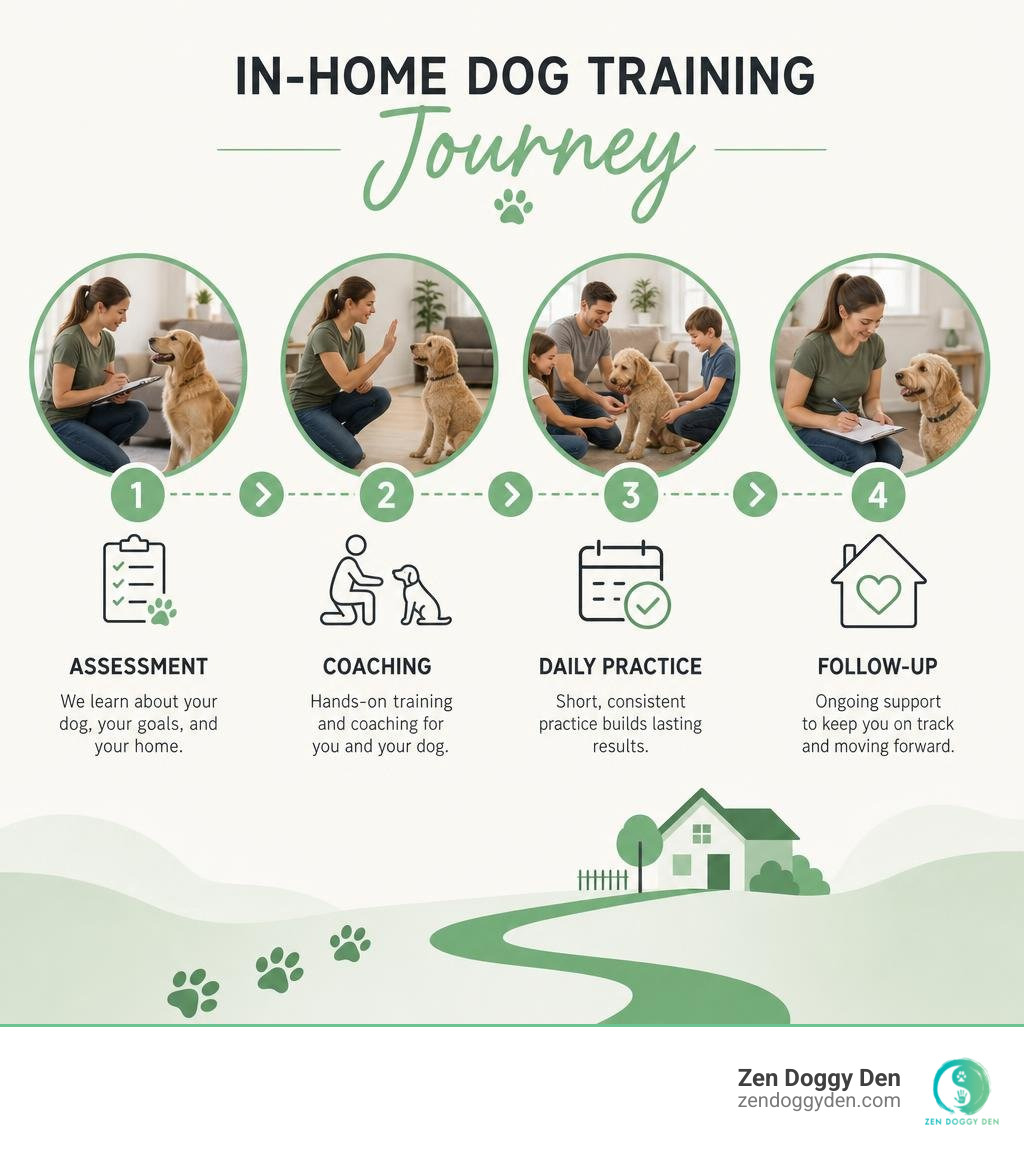
If you are looking for an in home personal dog trainer near me, expect more than a dog learning “sit.” A qualified trainer should assess your dog’s behavior, identify the triggers in your home, coach every key family member, and leave you with clear practice steps.
In-home training is especially useful when the problem happens at home or on your regular walk, such as barking at windows, jumping on guests, door dashing, counter surfing, leash pulling, or tension between dogs in the household. The trainer can see the real setup, routines, and distractions instead of guessing from a classroom.
A first visit usually includes:
- A behavior and health history review, plus a discussion of your goals.
- A look at your dog’s daily environment, including doors, feeding areas, crates, windows, and walking routes.
- Hands-on training and owner coaching using methods and tools the trainer explains clearly.
- A realistic follow-up plan, because lasting change comes from short, consistent practice between visits.
Private training is not a quick fix. It is a practical partnership that helps busy families build calmer routines where they matter most. I am Julie McLean, and I will walk you through what a good in-home training experience should look like from the first assessment onward.
Why Searching for an in home personal dog trainer near me Can Be Smarter Than Signing Up for Class
Canine learning is deeply tied to contextual learning. Dogs do not naturally generalize commands across completely different environments without dedicated practice. A dog might execute a textbook sit-stay in a quiet training hall, yet completely ignore that same cue when the Amazon driver rings your front doorbell. This disconnect is known as the transfer gap.
When you bring a personal dog trainer directly to your living room, you bypass that artificial bubble. Instead of spending weeks learning commands in a sanitized space, you focus immediately on your actual household routines.
| Training Format | Ideal Use Case | Owner Time Commitment | Typical Cost Range | Key Advantage |
|---|---|---|---|---|
| In-Home Private Training | Domestic manners, door bolting, contextual reactivity, personalized routines | Moderate to High (daily practice required) | $75 – $150 per hour | Solves root problems in the exact physical environment where triggers occur. |
| Group Training Classes | Basic puppy manners, handler focus around neutral dogs, cost savings | Moderate (weekly class + homework) | $50 – $125 per session | Cost-effective socialization and early distraction training. |
| Board and Train Programs | Intensive foundational skills, high-drive working breeds, busy professional schedules | Low during stay; High during handover | Variable by program scope | Fast foundational skill acquisition with trainer-led repetition. What You Should Expect to Pay for Dog Board and Train Programs provides a clear look at pricing factors. |
The Real Advantage: Training Where the Problem Actually Happens
The true strength of in-home training is that we tackle unwanted habits at the exact point of origin. Problem behaviors rarely occur in isolation. They are triggered by specific sightlines, tight hallway corners, fence lines, and family movement patterns.

During an in-home session, we can evaluate:
- Door charging and guest greetings: Teaching an impulse-controlled “place” boundary directly at the entryway so guests can enter peacefully.
- Counter surfing and kitchen boundaries: Creating clear spatial rules while you prepare dinner.
- Window reactivity: Managing visual access to neighborhood triggers and redirecting frantic barking into calm settling behavior.
- Crate placement and feeding dynamics: Setting up feeding zones and resting areas that prevent territorial friction or resource guarding between multiple pets.
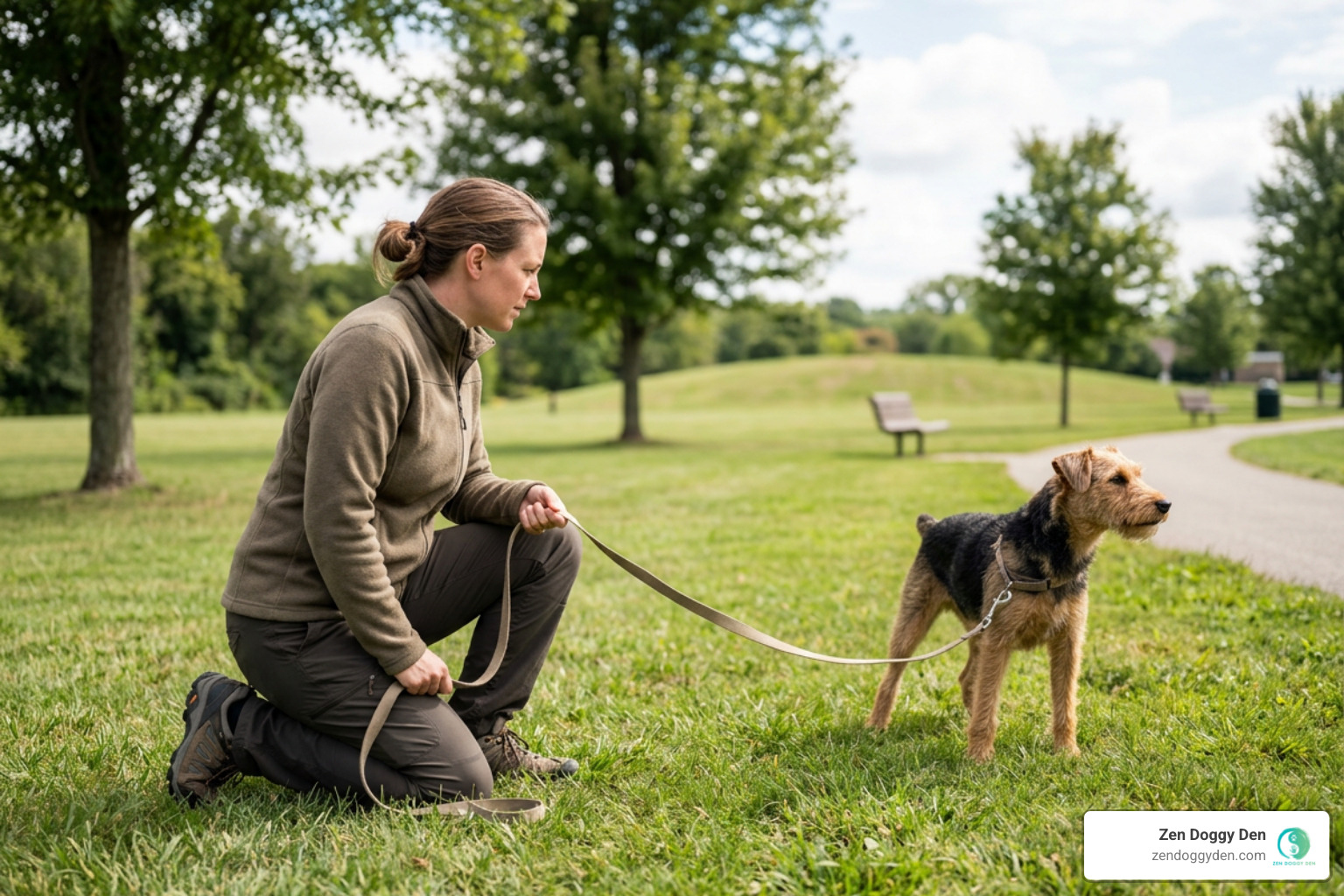
- Neighborhood walking routes: Practicing loose-leash neutrality on your specific sidewalk routes, apartment hallways, and local park trails.
Where Group Classes and Board-and-Train Still Fit
In-home private lessons are not the only solution for every canine journey. Group classes offer structured, low-intensity exposure to neutral dogs, which helps young dogs learn to focus despite social distractions.
Meanwhile, immersive training programs provide daily repetition from skilled handlers to establish complex behaviors before returning home. If you want an immersive jumpstart, you can Find the Perfect Denver Board and Train Center for Your Dog to pair facility foundations with structured in-home follow-up visits.
What a First In-Home Dog Training Session Should Look Like
A professional in-home training session is structured, diagnostic, and collaborative. It should never feel like a chaotic free-for-all where a trainer simply grabs the leash and begins issuing rapid-fire commands.
What an in home personal dog trainer near me Should Do Before Touching the Leash
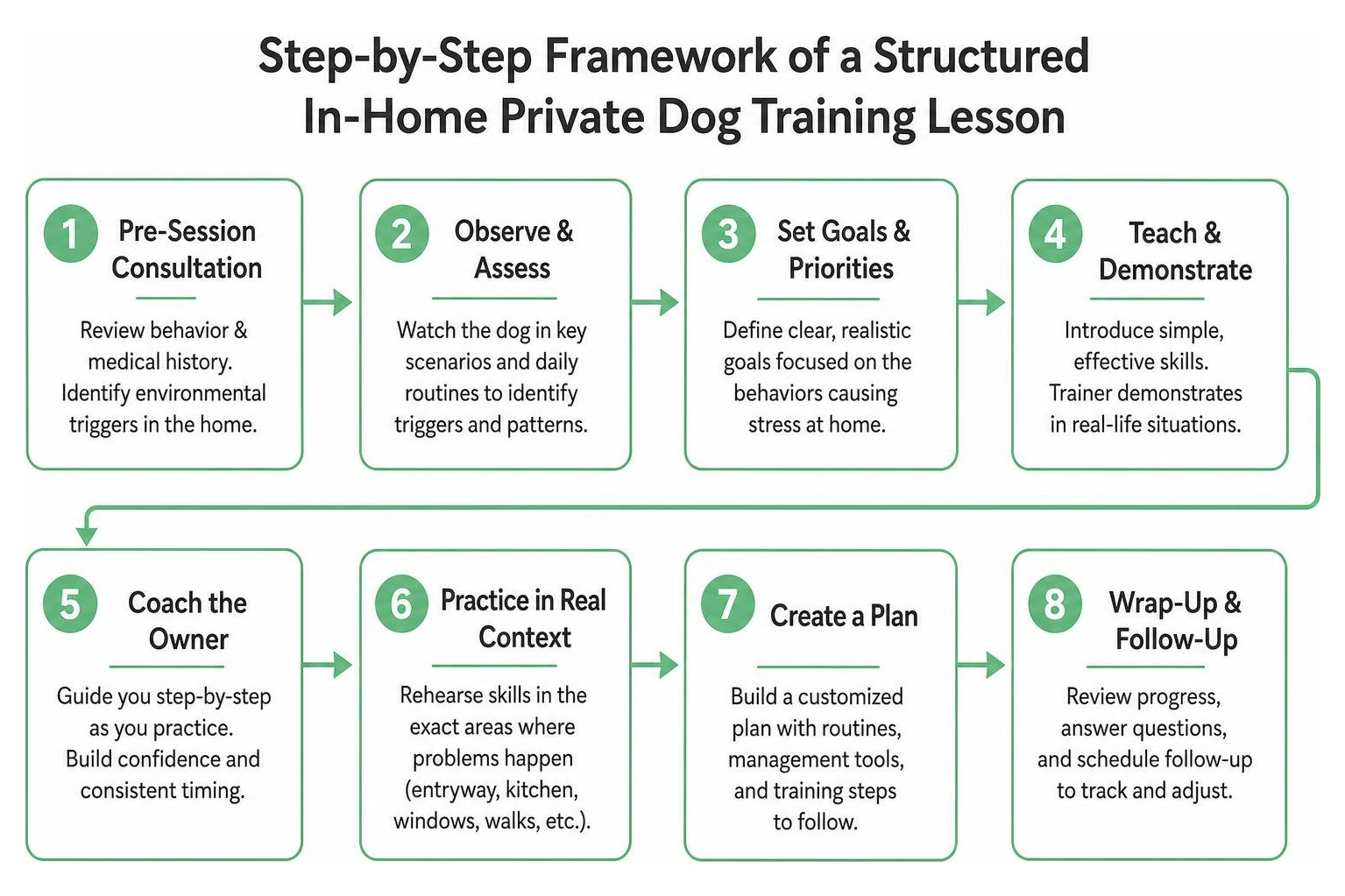
Before any equipment is clipped to your dog, an experienced professional will conduct an environmental and behavioral audit:
- Review Behavior & Medical History: Check for underlying pain, dietary issues, vaccination status, and previous bite history.
- Identify Environmental Triggers: Observe household layout, crate location, window views, and entryway setups that may elevate arousal.
- Assess Natural Motivation: Determine whether your dog works best for food, high-value toys, physical affection, or spatial release.
- Align Household Rules: Ensure every family member uses identical verbal cues, hand signals, and boundary expectations.
- Establish Honest Expectations: Explain realistic timelines without offering unethical guarantees, because canine behavior is dynamic and relies on consistent follow-through.
The Typical Session Flow: Demonstrate, Coach, Practice, Assign Homework
Most standard in-home sessions run approximately 60 to 90 minutes. We follow a clear, proven learning structure:
- Trainer Demonstration: The professional handles the dog first to demonstrate mechanical timing, leash handling, marker words, and reward placement.
- Owner Coaching: The leash is handed over to you. The trainer coaches your posture, handling mechanics, vocal inflection, and reinforcement timing.
- Structured Repetitions: You run short, successful repetitions of foundational skills like place, sit-stay, impulse control, and loose-leash walking.
- Follow-Up Homework: The session ends with written or video-supported homework specifying exact practice drills for 10 to 15 minutes each day.
How to Prepare Your Home and Family Before the Trainer Arrives
To get the absolute most out of your training investment, take a few simple steps before your trainer knocks on the door:
- Have updated vaccination records available.
- Prepare high-value, pea-sized training treats along with your dog’s standard leash, flat collar, or training tools.
- Keep the house quiet by turning off televisions and placing other pets in separate rooms initially.
- Gather all household members who interact with the dog so everyone receives identical handling instruction.
- Secure your dog safely on a leash or behind a baby gate so the initial greeting does not begin with frantic jumping or door bolting.
The Behaviors In-Home Personal Training Can and Cannot Fix Alone
Private in-home visits provide unmatched clarity for domestic living challenges, but understanding what in-home training can resolve on its own is essential for canine safety.
Household Manners: The Issues In-Home Training Handles Best
Domestic manners are where in-home coaching delivers rapid, lasting results. These habits stem directly from household reinforcement patterns and spatial dynamics:
- Door dashing and frantic entryway lunging
- Jumping on arriving guests and children
- Persistent barking out front windows at delivery trucks
- Stealing food from kitchen countertops or dining tables
- Housebreaking, crate distress, and puppy biting in young dogs
- Managing resource boundaries and spatial tension between pets
Reactivity, Aggression, and Anxiety Require More Than Obedience Commands
Complex behavioral issues like intense leash reactivity, fear-based aggression, resource guarding, and separation anxiety cannot be resolved by teaching a simple “sit” command. These conditions stem from underlying emotional states rather than disobedience.
Addressing fear and reactivity requires structured desensitization, counter-conditioning, trigger distance management, and proper safety equipment such as basket muzzle conditioning. For cases involving severe bite histories or profound panic disorders, in-home training must be paired with veterinary collaboration to ensure a humane, comprehensive safety plan.
Why Owner Follow-Through Matters More Than the Trainer’s One-Hour Visit
A dog trainer visits for an hour or two per week, but your dog is learning from your household interactions 24 hours a day, 7 days a week. If family members enforce rules during the lesson but allow counter surfing and jumping between visits, the dog receives mixed signals.
Durable behavior modification requires consistent daily repetitions, unified household cues, balanced physical exercise, and structured mental enrichment.
Training Philosophy Is Not a Footnote: It Is the Safety Plan
How a trainer communicates with your dog dictates both safety and long-term behavioral stability. A balanced training philosophy relies on clear communication, teaching desired behaviors with structured rewards, and establishing fair, predictable boundaries using appropriate tools.
Positive Reinforcement, Force-Free, and Fear-Free Approaches
Reward-based systems excel at building confidence, shaping brand-new foundational skills, and creating joyful engagement in puppies and insecure rescue dogs. Using treats, play, and marker cues allows dogs to understand exactly what behaviors earn rewards in low-stress environments, adhering to core learning principles supported by the American Veterinary Society of Animal Behavior.
Balanced Methods, E-Collars, and the Questions Owners Must Ask
In a professional and educated setting, balanced training utilizes appropriate tools such as slip leads, flat collars, prong collars, or modern low-level e-collars alongside rewards to establish reliable off-leash boundaries and clear communication.
When interviewing a trainer who uses balanced tools, ask:
- How do you teach the dog what the tool means before applying corrections?
- Are rewards and motivation integrated throughout every stage of the training plan?
- How do you ensure the dog remains confident, engaged, and stress-free during training?
My Take: The Best Trainer Explains the Method Before Selling the Package
A reputable professional never hides behind dogmatic buzzwords or marketing gimmicks. They evaluate the dog in front of them, explain the mechanical “why” behind their techniques, show complete transparency in their tool usage, and prioritize the dog’s physical and mental welfare above all else.
Cost, Credentials, and Consultation Questions Before You Hire
Because dog training remains an unregulated industry, pet owners must carefully evaluate experience, pricing models, and practical credentials.
How to Vet an in home personal dog trainer near me During a Free Consultation
Use your initial consultation to ask targeted, practical questions:
- What specific professional credentials, continuing education, or practical hands-on certifications do you hold?
- Are you insured and bonded to work inside private homes?
- Can you provide unedited video examples of dogs you have trained working calmly in real-world environments?
- What is your specific methodology for handling behavioral regression or setbacks?
- Do you offer structured post-session support via phone, text, or video feedback?
What Fair Pricing Looks Like in 2026
Professional in-home private dog training generally falls into clear pricing brackets:
- Private In-Home Lessons: $75 to $150 per hour depending on geographic area and trainer experience.
- Initial Behavioral Consultations: $150 to $250 for an in-depth 90-minute to 2-hour assessment.
- Basic Obedience Programs: Multi-session packages typically require 6 to 12 lessons to build reliable, generalized manners.
- Complex Behavioral Modification: Severe reactivity, anxiety, or multi-dog aggression cases frequently involve 8 to 20 or more structured sessions.
Red Flags That Should Make You Keep Looking
Be cautious of trainers who:
- Guarantee 100% permanent behavioral results in a single visit.
- Refuse to explain their tools, methods, or safety protocols clearly.
- Rely on excessive physical pressure without teaching foundational skills first.
- Dismiss the need for hands-on owner coaching and homework.
- Pressure you into expensive, non-refundable multi-week packages before completing a preliminary behavioral evaluation.
Frequently Asked Questions About In-Home Personal Dog Training
How many in-home dog training sessions does my dog need?
Most dogs learning foundational manners and basic obedience show reliable progress within 6 to 12 lessons, with visible improvements emerging in the first 2 to 4 weeks of consistent daily practice. Complex behavioral challenges such as fear reactivity, severe separation anxiety, or resource guarding often require 8 to 20 sessions paired with sustained lifestyle management.
Is in-home training better than board-and-train?
In-home training is ideal for solving environment-specific problems like door bolting, counter surfing, and window barking while directly coaching the owner’s handling skills. Board-and-train programs offer faster foundational skill building through professional repetition, but they require dedicated in-home transition lessons to prevent behavioral regression once the dog returns home.
Can an in-home trainer help with separation anxiety or aggression?
Yes, an experienced in-home trainer can evaluate household triggers, build structured departure routines, establish trigger boundaries, and introduce basket muzzle safety protocols. For severe cases with established bite histories, trainers collaborate directly with veterinary professionals to ensure a complete, humane management plan.
A Better Next Step for Colorado Dogs That Need Real-Life Training
If you are located in Wheat Ridge CO, Denver CO, Lakewood CO, Arvada CO, Boulder CO, or throughout the broader Denver Metro Area CO, real-world behavioral progress starts right where your dog spends their daily life.
At Zen Doggy Den, our unique approach uses a structured rotation protocol that carefully balances physical activity with focused mental enrichment to build calm, confident, and reliable companions. Whether you need hands-on household manners, puppy development, or advanced behavior modification, explore our private dog training plan in Wheat Ridge to build a calm, reliable routine for your entire family.