
Understanding Denver Board and Train Programs and How They Work
An immersive denver board and train program acts as a complete behavioral reset. Instead of working on a single command for a few minutes once a week, your dog enters a structured environment where every interaction is an opportunity to practice good manners. Professional trainers oversee their daily routine, managing everything from crate behavior to loose-leash walking around local distractions.
When you send your dog to a professional center, they do not just learn words like “sit” or “stay.” They learn how to learn. By removing your dog from their usual household environment, trainers disrupt long-standing habits like barking at the front window, counter surfing, or dragging you down the sidewalk. Learn more about What is a Dog Board and Train Service to see how this setup creates a clean slate for behavioral change.
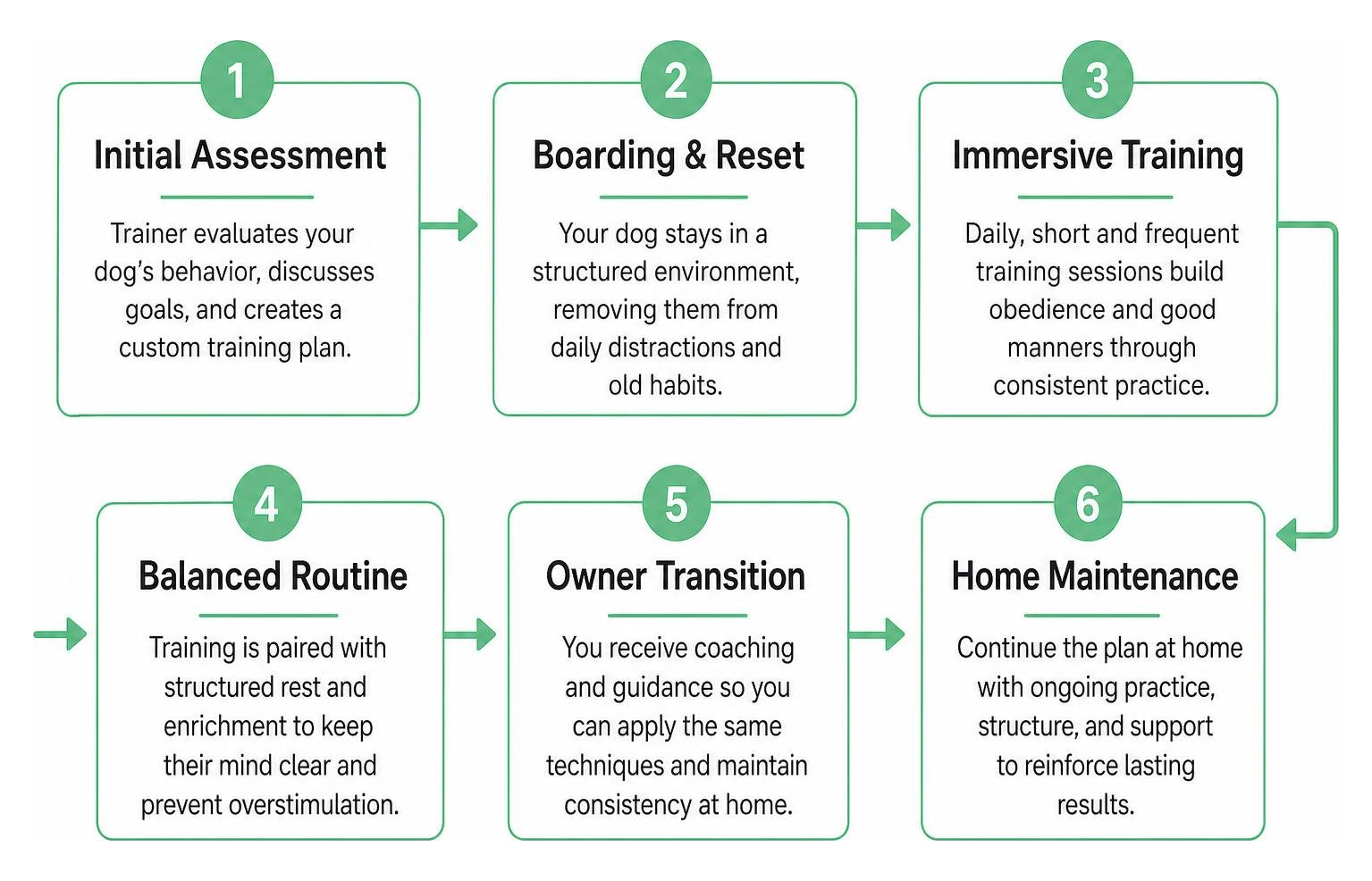
During their stay, dogs follow a balanced schedule. Active learning sessions are interspersed with required rest periods to keep their minds clear and avoid overstimulation. This combination of immersive learning and structured relaxation helps dogs return home calmer, more attentive, and ready to listen to your guidance.
Key Benefits of a Denver Board and Train Experience
The main advantage of board and train over other formats is the sheer volume of professional repetition. While a standard weekly class provides about 45 minutes of instruction, a multi-week boarding program delivers dozens of micro-training sessions every single day.
- Accelerated learning through consistent daily repetition
- Immediate correction of bad habits before they become ingrained
- Professional handling that builds confidence in fearful or overexcited dogs
- Clear communication systems that establish reliable impulse control
- Less stress for busy owners who lack the time for daily intensive foundation work
By exploring The Benefits of Board and Train for Dogs, pet parents quickly discover that professional handling establishes clear boundaries much faster than DIY training at home. Trainers catch timing nuances instantly, rewarding good choices and marking errors with precise timing.
Program Durations: From 2-Week Boot Camps to 5-Week Transformations
Choosing the right stay length depends on your dog’s current behavior, age, and your long-term goals. Denver programs typically range from short refresher courses to multi-week behavior modification stays:
- 2-Week Programs: Ideal for young dogs or pets that just need basic obedience polished. These stays focus on foundational commands like sit, down, place, and loose-leash walking.
- 3-Week Programs: The industry standard for comprehensive manners and real-world proofing. This timeframe provides enough space to address mild reactivity, build off-leash recall, and practice in public settings.
- 5-Week Programs: Recommended for complex issues, including severe aggression, deep-seated anxiety, or specialized e-collar conditioning. Longer stays allow trainers to work through behavioral thresholds safely without rushing the process. Some 5-week programs even target advanced standards like AKC Canine Good Citizen certification.
Selecting the right timeline from a dedicated Board and Train menu ensures your dog receives enough professional practice without staying away longer than necessary.
Curriculum, Off-Leash Reliability, and Reactive Behavior
A solid training curriculum prepares your dog for real life in the Front Range. Living in or around Denver means navigating busy sidewalks, crowded patio spots, and populated hiking paths. A well-rounded board and train program focuses on real-world etiquette rather than plain arena tricks.
Core curriculum pillars typically include:
- Loose-Leash Heel: Walking calmly beside you without pulling or lunging, even when passing other dogs.
- Place Command: Going to a designated cot or mat and staying settled until released, perfect for home visits or brewery patio outings.
- Door Etiquette: Waiting politely at external doors, car hatches, and crates instead of bolting through openings.
- Impulse Control: Exercising self-control around dropped food, toys, and sudden environmental noises.
Addressing Reactivity and Aggression in Denver Environments
Denver’s high urban density, tight apartment corridors, and dense dog population can trigger overstimulation, leash reactivity, or aggression in many dogs. When space is tight, dogs feel trapped on short leads, leading to barking, lunging, and tense interactions.
Professional facilities manage these behavior concerns through careful threshold management. Rather than suppressing emotions through harsh punishment or ignoring problematic behavior, trainers introduce controlled exposure to triggers at safe distances. By setting clear expectations and using appropriate handling tools, trainers teach dogs to look to their handler for guidance instead of reacting out of fear or frustration.
If your dog struggles with urban distractions or aggressive tendencies, sending them to an established Dog Training Center provides the controlled space needed to work through these triggers safely.
Off-Leash Reliability with Denver Board and Train
For many Colorado dog owners, off-leash reliability on hiking trails and in open parks is the ultimate goal. Achieving a dependable recall when wildlife or other dogs appear requires thorough distraction proofing.

During an immersive stay, trainers build off-leash recall step-by-step. They start in low-distraction indoor rooms before moving to outdoor yards, public parks like Washington Park, and mountain trails.
Many modern programs utilize balanced tools like e-collars as low-level communication devices. When conditioned properly at low levels, remote collars act like a gentle invisible leash tapping the dog, prompting them to turn back to you instantly regardless of distance or surrounding distractions.
Comparing Training Options: Costs, Methods, and Alternatives
Understanding the financial and time investment required for dog training helps you pick the right service for your family budget and lifestyle.
| Training Format | Average Denver Cost | Time Investment for Owner | Best For | Key Advantage |
|---|---|---|---|---|
| Board & Train | $1,085 – $3,400+ | Low during stay; moderate during transfer | Busy owners, fast resets, severe reactivity | Professional immersion and real-world proofing |
| Private Coaching | $150 – $250 / session | High; daily practice required | Owners wanting full hands-on involvement | Personalized focus in your own home |
| Daycare Training | $80 – $150 / day | Moderate; daily drop-offs | Local commuters, basic manners | Continuous socialization with daytime practice |
To evaluate detailed rate options for various training packages, review current Pricing details before booking.
Board and Train vs. Daycare Training and Private Coaching
While board and train programs offer the fastest behavioral installation, they are not the only choice available.
- Private Coaching: Ideal if you want to be the one directly training your dog from day one. You receive 1-on-1 instruction, but progress relies entirely on your personal time commitment to daily home practice. Check out Private Training options if you prefer direct involvement.
- Daycare Training: A middle-ground solution where you drop your dog off in the morning and pick them up after work. The dog receives professional handling during the day, but returns to your home environment each night. Learn more about Dog Day Training Services to see if this schedule fits your daily routine.
Balanced training approaches draw on a clear spectrum of learning principles. They use positive reinforcement like treats, play, and praise to teach new skills, alongside clear markers and fair corrections to eliminate unwanted behaviors. This balanced approach gives dogs confidence while establishing real accountability.
How to Choose the Best Denver Board and Train Center
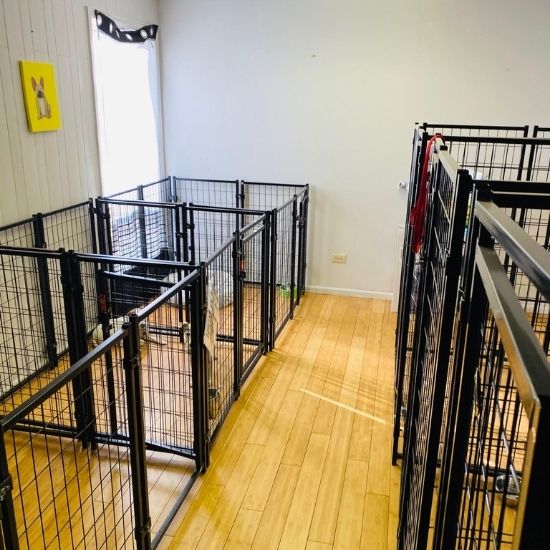
Not all training facilities operate to the same standard. Because dog training is an unregulated field, doing your homework before enrolling your dog is vital for their safety and well-being.
When evaluating local options, look for these quality markers:
- Low Dog-to-Trainer Ratios: Ensure trainers manage a reasonable number of dogs (ideally 5:1 or lower) so your dog receives ample individual attention and care.
- Transparent Facility Tours: A reputable center welcomes in-person facility tours so you can inspect living quarters, exercise yards, and sanitation standards.
- Clear Qualifications: Inquire about trainer experience, credentials, and their underlying balanced philosophy.
- Regular Updates: Top facilities provide regular progress photos, videos, and phone updates to keep you connected throughout your dog’s stay.
Visiting our FAQ page can answer many common questions about safety standards, daily schedules, and lodging conditions.
Post-Graduation Success: Transfer Lessons and Home Maintenance
The most important phase of any board and train program happens after your dog comes home. Your dog may respect the trainer completely, but they must learn to follow your leadership back in your home environment.

A quality program includes hands-on transfer lessons where trainers teach you how to give cues, deliver timing, and enforce rules accurately. Expect to follow a structured home transition protocol for the first two weeks following graduation.
By scaling back privileges, keeping home distractions low, and enforcing consistent routines, you prevent your dog from testing boundaries. Long-term success is backed up by post-graduation follow-up sessions, group practice walks, and graduate boarding perks. Explore our complete Dog Board and Train details to see how we set families up for lifelong reliability.
Frequently Asked Questions About Denver Dog Training
Will my dog remember me and keep their training after board and train?
Yes, your dog will definitely remember you! Dogs retain strong emotional bonds with their families. While they will be thrilled to see you at pickup, long-term training success depends on owner consistency.
If you maintain the rules, boundaries, and communication style established during their stay, your dog will retain their manners indefinitely. However, if household rules are ignored once they return home, dogs will quickly test boundaries and regress into old habits.
At what age can puppies start a board and train program?
Puppies can safely begin foundational board and train programs as early as 10 to 12 weeks of age, provided they are up to date on age-appropriate vaccinations. Early puppy stays focus on gentle crate conditioning, potty routine foundations, leash familiarity, and proper social etiquette with people and other dogs. Formal off-leash obedience and advanced distraction training typically wait until puppies reach 5 to 6 months of age.
Can I tour the facility before enrolling my dog?
Absolute transparency is a non-negotiable standard for dog care. Any professional facility should encourage you to book an in-person tour prior to enrollment. Touring allows you to inspect boarding quarters, verify clean standards, observe ongoing training sessions, and meet the staff handling your dog directly.
Ready to Start Your Dog’s Training Journey?
Finding the right training program can turn a stressful household dynamic into a balanced relationship built on trust, clear communication, and mutual respect. An immersive stay gives your dog an environmental reset, replacing pulling, barking, and overexcitement with calm manners and real-world reliability.
At Zen Doggy Den in Wheat Ridge, CO, we serve pet parents across the Denver Metro Area, Lakewood, Arvada, and Boulder. Our unique structured rotation protocol balances active physical exercise and focused mental work with quiet rest, keeping dogs calm and ready to learn.
Whether your goal is peaceful sidewalk walks, brewery patio manners, or dependable off-leash recall on mountain trails, we are here to support your journey. Explore our comfortable Dog Boarding and training options today to build a better life with your dog.