
Key Factors Influencing Dog Boarding Training Cost in 2026
When evaluating dog boarding training cost, you will quickly discover that prices vary widely across the country. Understanding what drives those price differences helps you determine whether a quote represents a solid value or an overpriced package.
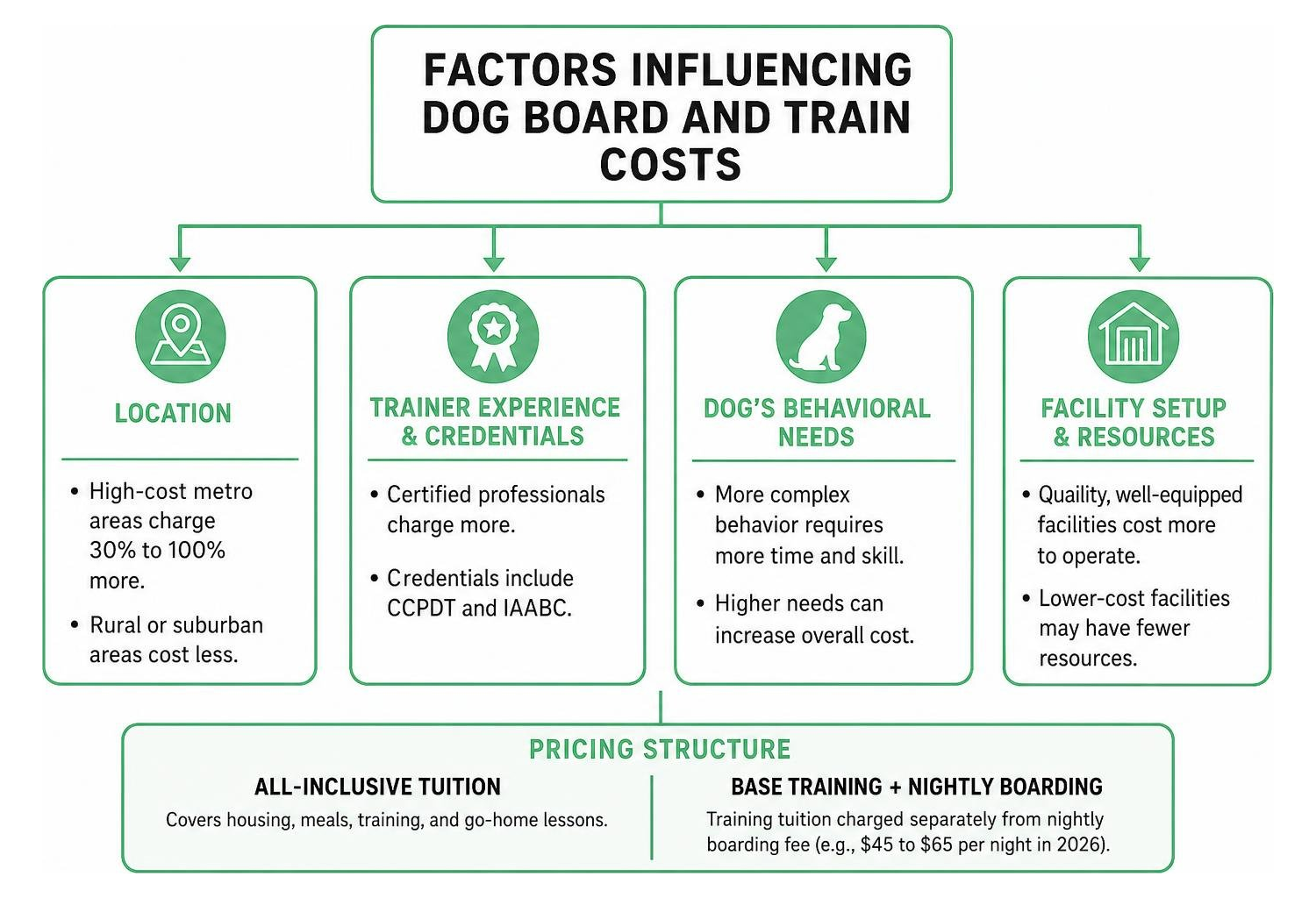
Several primary variables shape board and train pricing: geographic location, trainer credentials, your dog’s behavioral needs, and the physical setup of the facility.
Understanding Base Program Fees vs Nightly Boarding Charges
Different training providers structure their billing in distinct ways. Some facilities offer an all-inclusive tuition rate that covers housing, daily meals, specialized instruction, and go-home lessons. Other facilities split their invoices into base training tuition plus a mandatory nightly boarding fee.
For example, a provider might charge $1,300 to $2,100 for a multi-week training curriculum, then add a $60 per night boarding fee to cover standard kennel accommodations. When standard kennel boarding averages $45 to $65 per night nationally in 2026, those nightly additions add up quickly over a 14 to 21-day stay.
Always ask for an itemized estimate so you know whether food, basic care, grooming, and follow-up sessions are included or billed as extra incidentals.
How Location and Trainer Experience Drive Dog Boarding Training Cost
Geographic region plays a massive role in overall costs. Facilities operating in high-cost-of-living metropolitan hubs often charge 30% to 100% more than providers in rural or suburban areas due to real estate, labor, and insurance costs.
In addition to location, trainer experience heavily dictates price. A certified professional carrying credentials from organizations like the Certification Council for Professional Dog Trainers (CCPDT) or the International Association of Animal Behavior Consultants (IAABC) commands higher rates than an uncertified hobbyist. Highly qualified trainers maintain low trainer-to-dog ratios, often working with only 1 to 4 dogs at a time rather than managing 10 to 15 dogs in a high-volume kennel setting. Paying a higher rate for a skilled professional who gets results safely is far wiser than choosing a low-cost facility that relies on rushed, high-stress repetition.
Average Dog Board and Train Rates by Duration and Program Focus
The duration of your dog’s stay directly dictates the final cost. Most programs run between one and four weeks, though complex behavioral cases may require extended stays.
| Program Type | Average Duration | Typical Price Range | Core Focus Areas |
|---|---|---|---|
| Basic Obedience | 1 to 2 Weeks | $800 – $2,000 | Leash manners, sit, stay, recall, house manners |
| Intermediate Behavior | 2 to 3 Weeks | $2,000 – $3,500 | Leash reactivity, impulse control, polite greetings |
| Advanced & Aggression Rehab | 3 to 6+ Weeks | $3,500 – $6,000+ | Resource guarding, severe anxiety, aggression rehab |
Basic Obedience Programs (1-2 Weeks)
Short-term immersion stays focus on foundational manners and clear communication. During a 1 to 2-week program, your dog works on polite leash walking, impulse control at doorways, reliable recall, and standard commands like sit, down, and place under mild distractions.
These jump-start packages work best for younger dogs, newly adopted rescues needing structure, or busy owners who want to outsource initial foundational training. To learn more about how these structured stays operate, check out our guide on What Is a Dog Board and Train Service?.
Advanced Behavior Modification and Aggression Rehab (3+ Weeks)
When dealing with deep-seated behavioral challenges such as fear, severe leash reactivity, resource guarding, or dog-on-dog aggression, short stays are insufficient. Brain chemistry and long-standing habits take time to modify safely.
Comprehensive behavior modification programs require 3 to 6 weeks or longer and typically cost between $3,500 and $6,000+. These specialized programs involve carefully controlled environmental triggers, balanced conditioning, and structured recovery periods. Exploring The Benefits of Board and Train for Dogs can help you decide if an intensive residential program aligns with your dog’s emotional needs.
What Is Included in Your Package and Common Extra Fees
Before signing a contract or placing a non-refundable deposit, review the line-item inclusions of the package. A high upfront quote may actually be a better financial deal if it includes complete post-graduation support, whereas a cheaper baseline rate might hide unexpected extra fees.
Itemizing Included Services vs Hidden Add-Ons
A transparent, high-quality board and train package typically includes:
- Daily care, housing, and structured physical and mental exercise.
- Dedicated one-on-one training sessions throughout the day.
- A comprehensive go-home transfer session (usually 1 to 3 hours long).
- Follow-up private lessons to ensure progress translates to your home.
- Training tools used during the stay (such as specialized leashes or collars).
Conversely, common extra fees that can catch owners off guard include:
- Mandatory initial consultations: Some facilities require a $150 to $320 evaluation prior to accepting your dog.
- Holiday surcharges: Peak holiday weeks (Thanksgiving, Christmas, July 4th) often incur a 15% to 50% price increase.
- Medication administration: Billed at $5 to $15 per day for dogs with special medical needs.
- Extra follow-up lessons: Billed at $75 to $200 per hour if not bundled into your initial package.
Evaluating the Long-Term ROI of Your Dog Boarding Training Cost
To evaluate whether a board and train program is worth the price tag, consider the long-term return on investment. The ultimate success of any residential program depends on the owner transfer process. Dogs are contextual learners; they quickly adapt to a professional trainer’s rules, but they will revert to old habits at home if owners fail to enforce the same standards.
An insightful guide on Dog Board and Train: Is It Worth It in 2026? emphasizes that skills like heel, sit-stay, and crate manners transfer seamlessly to home environments, provided owners attend their transfer coaching sessions. When comparing our transparent Pricing, consider how structured professional intervention saves you months of frustrating trial and error.
Board and Train vs. Alternative Training Formats
While residential training offers rapid progress, it is far from the only format available. Comparing board and train to private coaching or group classes helps clarify where your budget is best spent.
Cost Comparison Across Popular Dog Training Formats
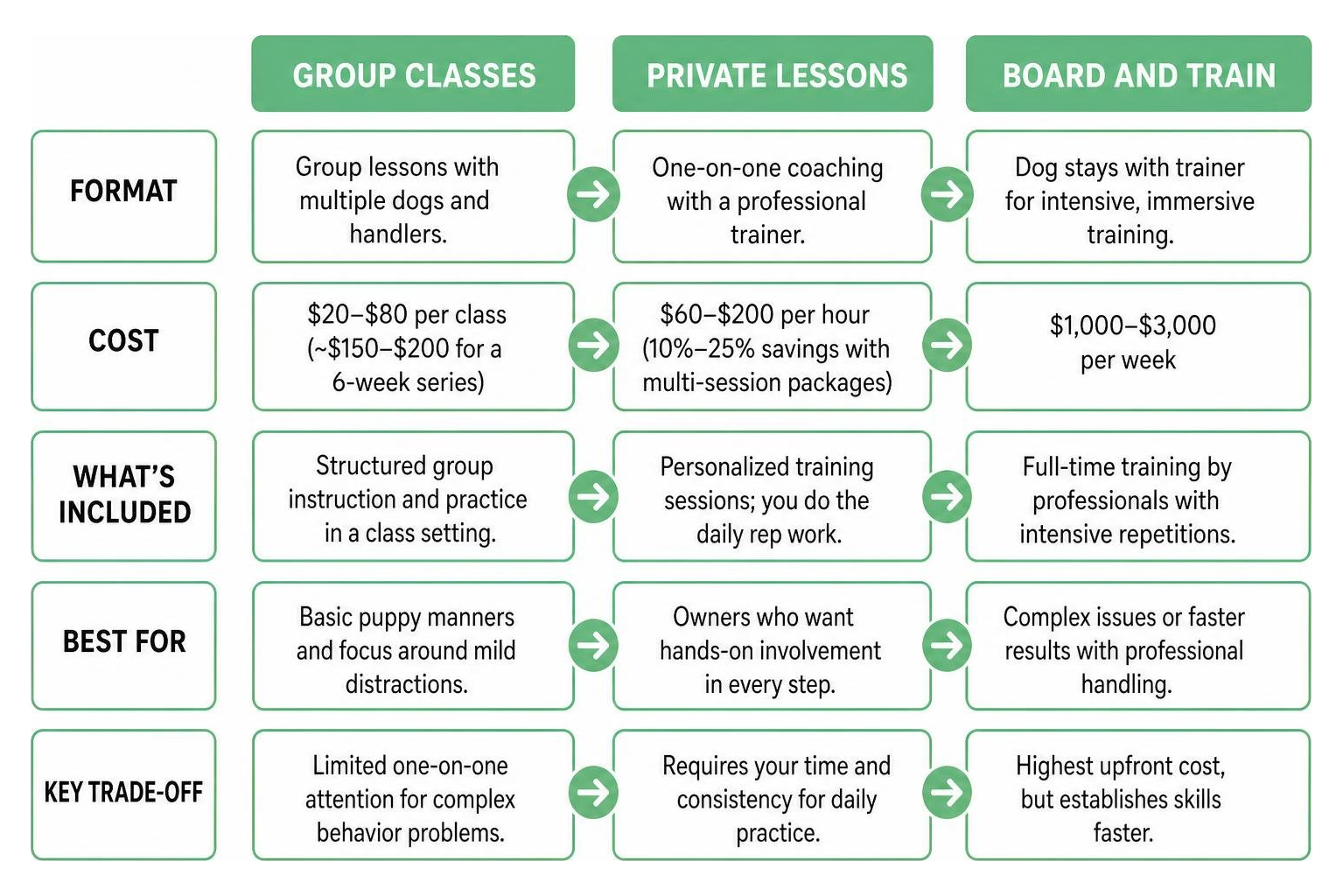
- Group Classes: Group lessons typically cost $20 to $80 per class (or about $150 to $200 for a 6-week series). They are ideal for basic puppy manners and building focus around mild distractions, though they offer limited one-on-one attention for complex behavior problems.
- Private Lessons: Individual sessions range from $60 to $200 per hour. Buying multi-session packages often unlocks 10% to 25% savings. Private lessons require you to do all the daily rep work yourself, but they keep you intimately involved in every step of the process.
- Board and Train: Averaging $1,000 to $3,000 per week, this format carries the highest initial cost. However, because a professional handles the intensive early repetitions, skills are established much faster than through weekly lessons alone.
Effective Budget Alternatives to Residential Programs
If a multi-thousand-dollar residential stay falls outside your current budget, consider these effective alternatives:
- Day Training: Drop your dog off for professional training during the day and pick them up each evening. This provides professional rep work at a fraction of the cost while eliminating overnight boarding fees.
- Private Coaching Packages: Combine 4 to 6 private lessons with consistent daily homework at home to achieve excellent obedience retention without leaving your dog overnight.
- Early Puppy Socialization: Investing early in group puppy classes between 8 and 16 weeks of age prevents costly behavioral issues from forming later in life.
How to Select a Qualified Program and Red Flags to Avoid

Entrusting your companion to a facility requires thorough vetting. Never base your decision on price alone; exceptionally low rates often signal overcrowded conditions or inexperienced staff.
Watch out for these critical red flags:
- 100% Behavioral Guarantees: Dogs are dynamic, living creatures. Any trainer offering a “money-back guarantee” on animal behavior is acting dishonestly.
- Facilities That Refuse In-Person Tours: You should always be permitted to view where your dog will sleep, rest, and train.
- Lack of Mandatory Owner Transfer Lessons: If a trainer drops your dog off at the door without spending at least an hour coaching you, the training will likely fail long-term.
- Vague Methodology Explanations: Qualified trainers clearly explain their protocols, tools, and reward structures without hiding behind buzzwords or secrecy.
Key questions to ask before booking include:
- What is your trainer-to-dog ratio during active training cycles?
- How much structured downtime and nap time does my dog receive daily?
- What professional credentials or certifications do your head trainers hold?
- What exact post-graduation support is included if my dog struggles at home?
Frequently Asked Questions about Dog Boarding Training Cost
How much does the average 3-week board and train cost in 2026?
A typical 3-week board and train program in 2026 costs between $1,500 and $4,500 nationally. Basic obedience packages land on the lower end of that spectrum, while comprehensive behavior modification programs for reactivity or resource guarding fall toward the higher end.
Can I save money on board and train without sacrificing quality?
Yes. You can lower costs by booking during off-peak seasons, asking about multi-dog enrollment discounts, or utilizing split payment installment schedules. Additionally, establishing solid home foundations early reduces the total weeks of professional training your dog requires.
Are dogs with severe aggression suitable for standard board and train programs?
No. Dogs with a history of severe human-directed aggression or serious bite incidents are rarely accepted into standard obedience programs. They require specialized, high-security behavioral rehab programs with experienced behaviorists, which are priced on a custom, per-night or per-week basis.
Final Thoughts on Choosing the Right Board and Train Program
Investing in your dog’s education is one of the most rewarding decisions you can make for your household’s long-term harmony. While dog boarding training cost requires a meaningful financial commitment, choosing a reputable provider ensures your dog gains reliable real-world manners while building confidence.
At Zen Doggy Den, located in Wheat Ridge, CO, we serve families across Denver, Lakewood, Arvada, Boulder, and the entire Denver Metro Area. Our signature structured rotation protocol balances active physical conditioning, focused mental exercise, and necessary decompression downtime so your dog thrives throughout their stay. Explore our tailored Board & Train programs today, and let us help you transform your companion into a calm, reliable partner.