
How to Compare Colorado Dog Daycare Services
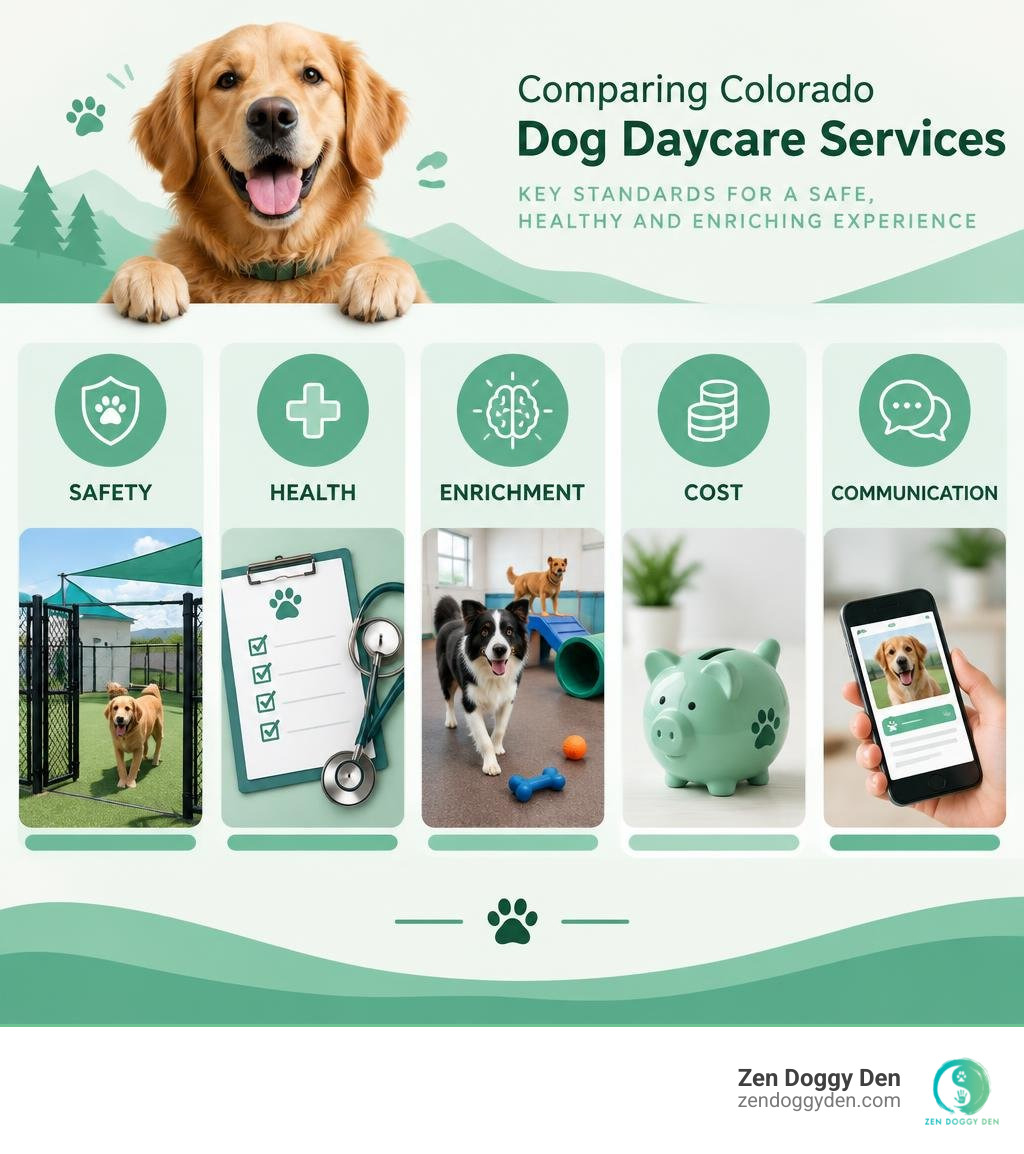
The best Colorado dog daycare services match your dog’s energy, social comfort, and health needs with a facility’s safety standards, daily routine, and supervision. Before enrolling, compare:
- Playgroups: Dogs should be matched by size, temperament, and play style.
- Safety: Look for temperament assessments, trained staff, secure fencing, rest breaks, and clear emergency procedures.
- Health rules: Most programs require current rabies, distemper/parvo, and Bordetella vaccines. Some also require canine influenza vaccination and spay/neuter after a certain age.
- Daily structure: A good daycare balances active play with quiet time, not nonstop group activity.
- Cost and convenience: Denver-area full-day rates commonly range from about $35 to $60, with packages, half-days, and add-ons affecting the final price.
For busy families, the right program can give a bored dog exercise, safe social time, and mental work while making drop-off, pick-up, and updates easier to manage. This guide compares the daycare models and standards that matter most before you choose.
I’m Julie McLean, and next we’ll look at the core features that separate a basic playgroup from a well-run daycare program.
Evaluating Colorado Dog Daycare Services: Key Standards and Features
Choosing the right facility for your dog requires looking beyond colorful play yards and glossy lobby brochures. High standards of safety, hygiene, and daily management protect your pet from injury, illness, and chronic stress. Across the Front Range, dog daycares operate under varied business models, making it essential to identify the non-negotiable qualities of a top-tier provider.

A quality facility prioritizes safety from the ground up. Look for climate-controlled indoor spaces equipped with compressed rubber or seamless non-porous flooring. Rubber flooring cushions joints during high-impact running, prevents painful paw pad abrasions, and offers vital traction to stop slipping.
Hygiene protocols must be strict and hospital-grade. Top facilities use pet-safe, bio-compatible disinfectants multiple times each day to sanitize turf, suites, and indoor yards. Fresh-air exchange systems and dedicated HVAC units help prevent the transmission of airborne respiratory pathogens.
Staff credentials form the backbone of safe group management. Attendants should hold formal certifications in canine CPR and first aid, alongside education in dog dynamics and subtle stress signaling. In a professional setting, trainers and handlers use balanced training principles and fair, practical boundary setting to curb bullying, stop hyper-arousal, and maintain order. Handlers should never permit a free-for-all environment. Instead, they must actively direct canine interactions, establish clear rules, and utilize structured rotation protocols that prevent over-exhaustion.
Core Types of Colorado Dog Daycare Services
Across Denver, Lakewood, Arvada, Wheat Ridge, and Boulder, dog daycare services fall into distinct categories designed for different canine needs:
- Open Play Daycares: These facilities focus on large, continuous playgroups separated primarily by size. They suit socially fluent, high-energy dogs that thrive in bustling pack environments.
- Boutique and Home-Style Facilities: Operating on smaller footprints or converted residential properties, these facilities offer low dog-to-staff ratios and intimate, hand-selected groups.
- Luxury Pet Resorts: Combining daytime care with hotel-grade accommodations, these centers offer private suites, live webcam access, spa grooming add-ons, and concierge services.
- Kennel-Free Centers: These open-concept layouts let compatible dogs roam together under 24/7 staff supervision throughout the day.
- Private Yard and Specialized Daycare: Facilities that provide private yards or solo handler sessions cater to dogs that need individual attention, medical convalescence, or space from unfamiliar dogs.
- Day Training Programs: Combining supervision with structured behavioral education, specialized dog day training services allow dogs to learn foundational manners, impulse control, and leash skills from professional trainers while their owners work.
Before jumping into enrollment, pet parents should carefully evaluate their dog’s personality and ask themselves if they should try doggy day care based on their dog’s social tolerance and stamina.
Mental and Physical Enrichment vs. Open Play
Traditional daycare focuses on burning physical energy through hours of chasing, wrestling, and running. While high-energy dogs need exercise, endless physical exertion without mental structure often creates hyper-aroused, over-tired animals that struggle to settle at home.
Enrichment-focused daycare bridges this gap by combining physical movement with cognitive challenges. Enrichment activities include:
- Scent Tracking and Nose Work: Canine sensory games that stimulate natural foraging instincts and calm the nervous system.
- Agility Equipment and Obstacles: Tunnels, ramps, wobble boards, and climb structures that build body awareness, balance, and confidence.
- Brain Puzzles and Problem-Solving: Interactive toys, snuffle mats, and food-dispensing puzzles that teach patience and focus.
- Structured Obedience Drills: Quick repetitions of impulse control commands like place, sit-stays, and calm doorway thresholds.
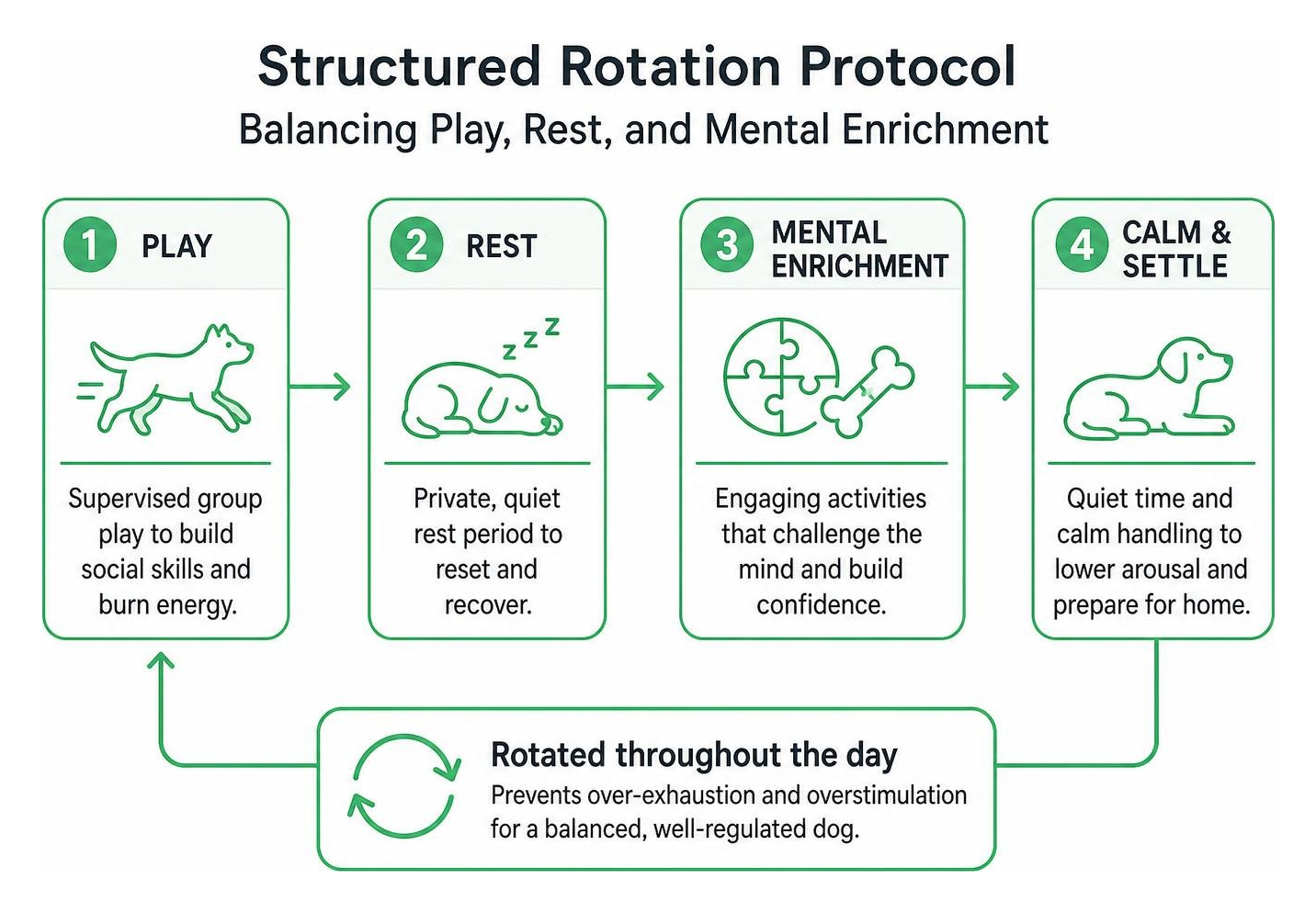
A balanced routine prevents overstimulation through mandatory, structured rest periods. During midday nap breaks, dogs rest in private, quiet quarters with dim lighting and soothing sounds. This allows their heart rates and adrenaline levels to reset before afternoon activities resume.
Comprehensive Comparison of Denver Metro Dog Daycare Options
Finding the best match for your dog means comparing facility layouts, group sizes, and supervisory approaches. A young, boisterous Labrador requires a completely different daily structure than an aging, arthritic Golden Retriever or a timid rescue dog learning social boundaries.
| Daycare Model | Typical Group Size | Staff-to-Dog Ratio | Best Suited For | Key Amenities |
|---|---|---|---|---|
| Traditional Open Play | 15 to 30 dogs | 1:15 | Highly social, bulletproof dogs with endless play drive | Large play yards, basic play equipment, misting systems |
| Enrichment-Based Daycare | 6 to 12 dogs | 1:8 | Dogs needing cognitive stimulation and balanced arousal | Scent games, agility courses, brain puzzles, daily report cards |
| Boutique Home-Style | 4 to 10 dogs | 1:5 | Shy, sensitive, or small dogs easily overwhelmed by noise | Homelike settings, private yards, personalized handler care |
| Luxury Pet Hotel | 10 to 20 dogs | 1:10 | Dogs needing climate control and luxury amenities | Luxury suites, live HD webcams, splash pools, on-site grooming |
| Structured Day Training | 1-on-1 to small groups | 1:3 | Dogs needing manners, impulse control, or behavioral tune-ups | Professional trainers, balanced tool integration, obedience drills |
Segmenting playgroups by size, age, energy level, and play style is mandatory for safety. High-impact body-slammers should never share space with delicate seniors or timid puppies. Top facilities carefully screen play dynamics to pair gentle, polite players together while giving high-drive dogs room to romp without disturbing more reserved companions.
Cost Breakdown and Pricing Models for Colorado Dog Daycare Services
Daycare pricing across the Denver Metro area, Boulder, and surrounding Front Range communities reflects differences in facility quality, staff credentials, and enrichment options.
- Standard Full-Day Rates: Basic open-play daycare typically runs between $35 and $46 per day.
- Enrichment and Premium Full-Day Rates: Programs featuring specialized brain games, small groups, and agility access range from $50 to $65 per day.
- Half-Day Options: Sessions lasting five hours or less generally cost between $24 and $35 per dog.
- Multi-Day Punch Cards and Packages: Purchasing 10, 20, or 30-day punch cards reduces daily costs, offering savings of up to $10 to $15 per session.
- Multi-Pet Discounts: Facilities commonly offer discounted daily rates for second and third dogs boarding or playing together from the same household.
- VIP Memberships: Monthly subscription tiers starting around $150 to $400 per month provide guaranteed reservation spots, complimentary bath vouchers, nail trims, and discounted overnight boarding.
When evaluating your budget, look for providers with transparent daycare pricing structures that clearly outline standard rates, late pickup fees, evaluation costs, and optional add-on services.
Luxury Accommodations vs. Boutique Home-Style Facilities
When choosing where your dog spends their day, the distinction between high-end commercial resorts and boutique home-style facilities often comes down to personal preference and your dog’s temperament.
Luxury facilities feature extensive modern infrastructure. They boast private executive suites with raised orthopedic bedding, flat-screen televisions playing dog-friendly media, live streaming webcams, and automated activity monitors tracking daily steps. Many offer full spa services, allowing owners to schedule therapeutic baths, de-shedding treatments, and paw-pad balms before pickup.

Boutique facilities emphasize a quiet, personalized touch. Operating on smaller acreages or residential-style settings, these centers focus on low dog counts and individualized care. Handlers know each dog’s distinct habits and personality quirks. Both models have their place; your decision should align with whether your dog thrives in an active, tech-forward resort or prefers the peaceful routine of a boutique environment when searching for the best doggy daycare in CO.
Essential Safety, Health, and Operational Policies
A fun daycare experience rests on strict operational standards. Professional facilities maintain clear protocols regarding behavioral assessments, vaccination documentation, perimeter security, and medical response.
Before admitting any dog into group play, reputable facilities require a comprehensive behavioral intake evaluation. These evaluations generally last between 2 and 5 hours. Trained evaluators introduce the new dog to calm neutral dogs, slowly escalating group size while assessing body language, stress thresholds, resource guarding tendencies, and recovery times after correction.
Physical security is equally critical. Facilities must feature double-gated entry airlocks, 6 to 8-foot secure perimeter fencing with dig-guards, and tamper-proof latches. Handlers maintain direct supervision in every yard, holding clear protocol playbooks for managing unexpected medical emergencies, sudden weather changes, or dog-to-dog disputes.
Health, Vaccination, and Spay/Neuter Requirements
To protect all canine guests from contagious illnesses, Colorado daycare facilities enforce mandatory veterinary requirements before check-in:
- Rabies: Required by state law for all dogs over 16 weeks of age.
- DHPP (Distemper, Hepatitis, Parvovirus, Parainfluenza): Core viral protection administered as a puppy series and boosted periodically.
- Bordetella: Required semi-annually or annually to defend against infectious canine tracheobronchitis (kennel cough).
- Canine Influenza (H3N2 / H3N8): Increasingly required or highly recommended across Front Range pet facilities due to regional respiratory outbreaks.
- Spay/Neuter Policies: Most facilities require dogs over 6 to 12 months of age to be spayed or neutered to participate in open group play. Some boutique programs offer flexible intact policies for large breeds awaiting growth-plate maturity, provided the dog passes regular behavioral checks.
Reviewing vaccination timelines and facility health checklists in advance ensures a smooth intake and helps pet parents learn what to expect during dog boarding and care.
Operating Hours, Drop-Off Logistics, and Live Monitoring
Convenience and communication keep owners at ease throughout the workday. Commuter-friendly facilities in the Denver Metro area typically open for morning drop-off between 6:30 AM and 7:30 AM and close between 6:00 PM and 7:00 PM. Weekend hours may be condensed, often featuring scheduled morning and evening pickup windows. Facilities situated near Denver International Airport or central business arteries often cater to travelers by providing early drop-off access or 24/7 staff coverage.
Technology keeps pet parents connected to their companions. High-definition live webcams allow owners to check in via mobile apps or desktop browsers throughout play hours. Facilities that opt against live feeds often send daily electronic report cards complete with photos, videos, playgroup notes, and restroom updates.
Frequently Asked Questions About Dog Daycare in Denver
How do daycares accommodate dogs with special needs or behavioral issues?
Daycares designed with flexible layouts accommodate dogs needing specialized care through private yard rotations, solo handler play, and customized quiet times. For anxious rescues, reactive dogs, or pets recovering from medical procedures, handlers offer one-on-one enrichment, scent walks, and puzzle games away from large playgroups. Staff trained in balanced handling recognize subtle anxiety cues early, giving sensitive dogs the calm guidance and space they need to decompress without feeling threatened.
What is the typical daily routine at a Colorado dog daycare?
A structured daycare routine balances physical play with necessary mental downtime:
- 6:30 AM – 9:00 AM: Morning check-ins, health wellness checks, and low-key group introductions.
- 9:00 AM – 11:30 AM: Active group play, agility courses, ball chasing, and outdoor yard rotations.
- 11:30 AM – 2:00 PM: Mandatory quiet rest, midday naps in private suites, light snacks, and digestion time.
- 2:00 PM – 4:30 PM: Afternoon enrichment, scent tracking puzzles, brain games, and supervised small-group play.
- 4:30 PM – 7:00 PM: Calm wind-down time, exit brushing or baths, and parent pickup.
When can puppies start attending dog daycare in Colorado?
Most facilities welcome puppies starting between 12 and 16 weeks of age, provided they have completed their second or third round of DHPP boosters, their initial Bordetella vaccine, and a clear fecal examination. Specialized puppy socialization programs focus on gentle, age-matched play, exposure to novel textures and sounds, and early handling drills that build resilience and lifelong social confidence.
Questions to Ask When Touring Colorado Daycare Facilities
Before committing to a facility, visiting in person gives valuable insight into how staff interact with dogs and manage daily routines. Asking targeted questions helps verify whether a center lives up to its safety and enrichment standards.
Key questions to ask during a tour include:
- How do handlers manage playgroup transitions? Staff should explain their rotation schedules and how they prevent dogs from becoming overstimulated.
- What are your emergency veterinary protocols? Ask which local emergency clinic the facility partners with and how quickly owners are notified in an urgent situation.
- How do you handle rest and meal periods? Confirm whether dogs receive private, quiet spaces during mandatory midday downtime to rest and digest.
- What handling philosophy does your team follow? Facilities should use balanced handling methods to reinforce calm boundaries and address problematic behaviors before they escalate.
Taking time to evaluate a facility ensures your dog receives structured care tailored to their personality. Pet parents can also explore options to reserve premier dog boarding and structured daycare that incorporate these balanced daily protocols.