
Find Canine Obedience Training That Fits Your Dog and Your Schedule
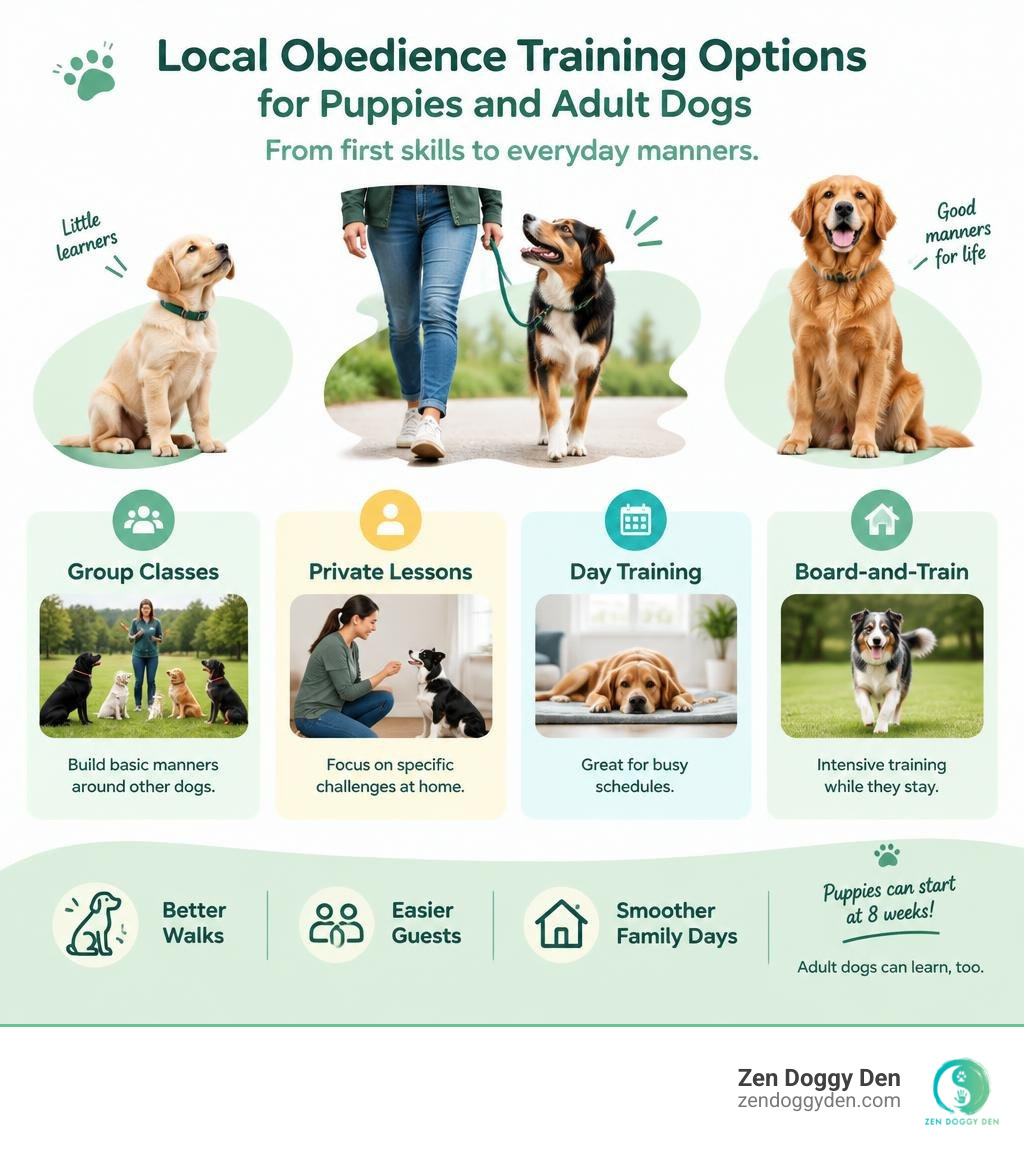
Start with your dog’s needs, then compare local options. Group classes are a good fit for basic manners around other dogs. Private lessons can focus on problems at home, while day training or board-and-train may suit a packed family schedule. Ask each trainer what your dog will learn, which tools they use, what you will need to practice, and the full cost before you enroll.
Good training is about more than getting a dog to sit. It can make walks, guests, and busy family days easier to manage. Puppies can begin learning simple skills at about eight weeks old, and adult dogs can learn, too. When you search for canine obedience training near me, the right program should match your dog’s temperament and your daily routine.
I’m Julie McLean, and I’ll help you sort through the options so you can choose a program that works in real life.
Canine obedience training near me glossary:
Exploring the Best Canine Obedience Training Near Me: Program Options and Formats
Finding the right training program starts with understanding your dog’s personality, learning style, and daily environment. Every dog thrives under different conditions, whether that means working through distractions alongside peers or receiving focused, one-on-one attention in their home environment. Choosing the right path ensures your dog builds lasting, real-world manners rather than robotic responses that fall apart outside the classroom.
Reviewing a local owners playbook for finding dog obedience training helps owners identify programs that align with their lifestyle and schedule.
| Program Type | Average Cost | Duration | Ideal Use Case |
|---|---|---|---|
| Group Classes | $120 to $300 per course | 6 to 8 weeks (1 hr/week) | Basic manners, distraction proofing, social neutrality |
| Private Lessons | $60 to $155 per hour | 3 to 10 sessions | Specific behavioral fixes, in-home manners, custom goals |
| Day Training | $50 to $100 per day | 2 to 4 weeks | Busy workdays, continuous skill building, impulse control |
| Board and Train | $1,500 to $4,000+ total | 2 to 4 weeks | Intensive foundation, busy families, immersive habits |
Group Dog Classes and Puppy Socialization
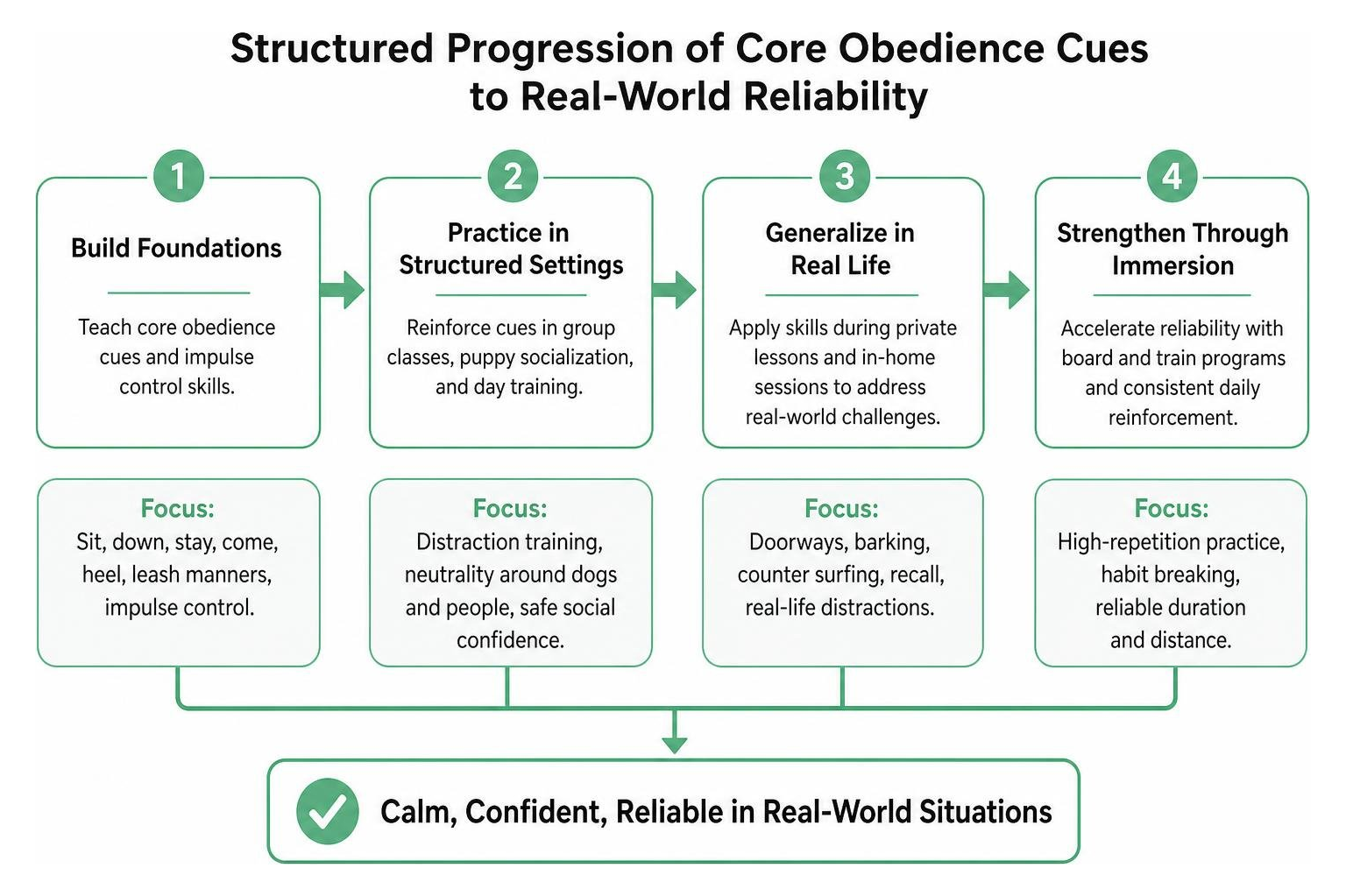
Group classes provide a structured setting where dogs learn to focus on their handlers despite the presence of other dogs, unfamiliar people, and novel sounds. In these sessions, the primary goal is not always direct interaction with other dogs, but rather cultivating neutral, calm behavior around natural distractions.
Enrolling in structured group dog classes helps young and adolescent dogs generalize cues in dynamic environments. For younger pets, joining group puppy training early builds safe social confidence, bite inhibition, and foundational body awareness during their critical development windows.
One-on-One Private Lessons and In-Home Sessions
When specific household challenges arise, such as doorway bolting, excessive barking at windows, or counter surfing, private instruction is often the most direct solution. Private lessons allow a professional trainer to observe contextual triggers in real time and coach every member of the family on proper handling mechanics.
Scheduling tailored private training offers personalized feedback tailored to your exact floor plan and daily routine. To get the most from these sessions, knowing what to expect during in home personal training for dogs helps owners prepare their living spaces and training logs for faster progress.
Immersive Board and Train Programs
Board-and-train programs, sometimes referred to as training boot camps, provide intensive, daily professional immersion. Your dog stays at a dedicated facility where experienced trainers handle the heavy lifting of initial cue introduction, impulse control conditioning, and habit breaking throughout the day.
Choosing an intensive dog board and train program accelerates learning through consistent, high-repetition practice. These programs are followed by thorough turnover sessions and go-home lessons so that owners learn how to maintain those newly established boundaries at home.
Daytime Enrichment and Day Training Services
For owners balancing demanding work schedules, day training programs combine structured learning with supervised daytime care. Instead of staying home alone, dogs spend their day alternating between focused obedience drills, decompression rest, and healthy physical exercise.
Utilizing dedicated dog day training services ensures your dog receives ongoing reinforcement of leash walking, recall, and impulse control, returning home calm, exercised, and mentally satisfied.
Core Commands, Behavior Modification, and Training Methodologies
Modern canine education relies on clear communication, clear boundaries, and structured reinforcement. Professional trainers use balanced methodologies tailored to the individual dog, pairing reward-based markers with appropriate, educated tool handling to achieve clear communication and high reliability.
You can master your dogs mindset with professional canine behavioral training by establishing clear expectations early. Using evidence-based training resources helps pet parents bridge the gap between classroom exercises and everyday life.
Essential Commands and Impulse Control Skills
Obedience training centers on practical life skills that keep dogs safe and make daily management effortless:
- Sit-Stay and Down-Stay: Fundamental duration behaviors that teach patience during meals, door greetings, and vet visits.
- Reliable Recall (“Come”): A life-saving cue that brings your dog back immediately regardless of distractions.
- Loose-Leash Walking and Heel: Eliminates pulling, turning walks into relaxing outings rather than battles of physical strength.
- Place Command: Directs your dog to settle quietly on a designated mat or bed until released, essential when guests arrive.
- Leave It and Drop It: Vital impulse control commands that stop dogs from ingesting hazardous objects on walks or stealing items at home.
- Door Boundary Etiquette: Prevents dangerous darting through open front doors or car gates.
Specialized Support for Reactive Dogs, Rescues, and Separation Anxiety

Dogs with severe reactivity, fear, resource guarding, or separation anxiety require systematic behavioral modification rather than generic obedience cues. Professional trainers employ counter-conditioning, gradual desensitization, and threshold management to alter the dog’s underlying emotional response to triggers.
For rescue dogs transitioning into new homes, structured routines provide safety, clarity, and predictable expectations, allowing them to rebuild confidence at a sustainable pace.
Achieving the AKC Canine Good Citizen (CGC) Certification
The American Kennel Club Canine Good Citizen (CGC) program is a nationally recognized standard of canine manners and responsible pet ownership. The ten-step test evaluates a dog’s ability to maintain composure during basic handling, grooming, greeting friendly strangers, walking through crowds, and reacting calmly to sudden distractions or neutral dogs. Achieving CGC certification is an excellent milestone for family companions and serves as a foundational prerequisite for therapy dog work.
How to Choose the Right Trainer for Your Dog
Dog training is an unregulated industry, making careful vetting essential when selecting a local professional. Look for trainers who pursue formal continuing education, understand canine learning theory, and maintain clean, secure training environments.

What to Look for in Canine Obedience Training Near Me
When evaluating local options, look for:
- Verifiable Experience: Proven track records across diverse breeds, ages, and behavioral challenges.
- Clear Communication: Trainers who can clearly explain why a specific technique or tool is used.
- Balanced Skill Application: Experience using positive reinforcement combined with fair, educated handling tools.
- Clean and Safe Facilities: Climate-controlled indoor spaces, sanitary boarding suites, and secure, double-gated play yards.
- Comprehensive Client Support: Programs offering written homework, video reviews, and follow-up consultation options.
Critical Questions to Ask Before Hiring a Dog Trainer
Before signing up, ask the trainer these key questions:
- What training methodology and tools do you use for my dog’s specific needs?
- How do you structure physical exercise and mental rest throughout the day?
- How will you coach my family to maintain these behaviors at home?
- What follow-up support or refresher options do you provide after program completion?
- Can you provide references or video examples of client dogs with similar issues?
Ideal Timing: Starting Puppies vs. Training Older Dogs
Early foundation work starts the day a puppy arrives home at eight weeks old, focusing on potty routines, crate comfort, and gentle handling. The ideal window for formal obedience and group classes opens between 3.5 and 4 months of age, once initial vaccination rounds are complete.
Training is never limited by age. Adult and senior dogs possess remarkable neuroplasticity. Older dogs can learn new commands, unlearn destructive habits, and benefit greatly from the mental stimulation of structured training routines.
Cost Breakdown, Timelines, and Value of Dog Training Programs
Professional dog training costs typically range from $60 to $155 per hour for private lessons, with comprehensive multi-week programs priced based on length, complexity, and boarding inclusion. Transparent pricing allows owners to balance their immediate budget against long-term behavioral goals.
Investing in professional training early prevents costly household damage, reduces daily stress, and eliminates emergency veterinary bills resulting from dropped-object ingestion or running into traffic.
How Long It Takes to See Results from Canine Obedience Training Near Me
Most puppies master core basic obedience cues within two to three weeks of consistent daily practice. Complete behavioral modification and reliable off-leash obedience plans generally span 8 to 12 weeks of structured progression.
Research indicates that dogs undergoing structured training respond reliably 6 to 12 weeks faster than those receiving irregular or inconsistent practice. For isolated minor habits, a skilled owner can see shifts in as little as one session, while moderate to complex behavioral challenges typically require 3 to 10 private lessons.
Comparing In-Person Instruction and Virtual Dog Training
In-person instruction allows trainers to coach physical mechanics directly, while virtual dog training provides flexible, remote behavioral analysis for owners managing tight schedules or working with dogs too stressed for group environments. Many owners find success using a hybrid approach, starting with virtual consults for baseline routines before transitioning to in-person distraction training.
Frequently Asked Questions About Local Canine Obedience
What is the difference between basic obedience and a complete training program?
Basic obedience classes introduce foundational commands such as sit, down, and loose-leash walking in low-distraction environments. A complete obedience training program builds upon those foundations by incorporating impulse control, reliable distance recall, place work, and proofing behaviors under heavy real-world distractions like parks, crowds, and traffic.
Is a board-and-train program worth the investment for busy owners?
Yes. Board-and-train programs provide intensive, professional repetition that establishes solid behavioral habits much faster than once-a-week classes. To make the investment last, owners must commit to attending turnover sessions and consistently maintaining the trainer’s rules, cues, and handling routines at home.
How do professional trainers manage reactive or aggressive dogs safely?
Professional trainers manage reactivity through spatial awareness, working below the dog’s arousal threshold to prevent panic or outbursts. They utilize secure equipment, counter-conditioning techniques, and gradual exposure protocols, ensuring the dog and everyone around them remain safe throughout the rehabilitation process.
Take the Next Step Toward a Calmer, Happier Companion
At Zen Doggy Den in Wheat Ridge, CO, we serve pet parents across Denver, Lakewood, Arvada, Boulder, and the wider Denver Metro Area. Our training philosophy is built around a structured rotation protocol that balances focused mental stimulation with physical exercise and restorative rest. Whether your dog needs puppy manners, advanced obedience, or specialized behavioral modification, our balanced approach helps you build clear communication and lifelong trust.
Reach out to our team to book today and explore our comprehensive canine obedience and behavioral programs.