
Find the Right Canine Obedience Classes Near Me
To find canine obedience classes near me that fit your dog and your schedule, start by matching the class to your dog’s age, behavior, and training goals:
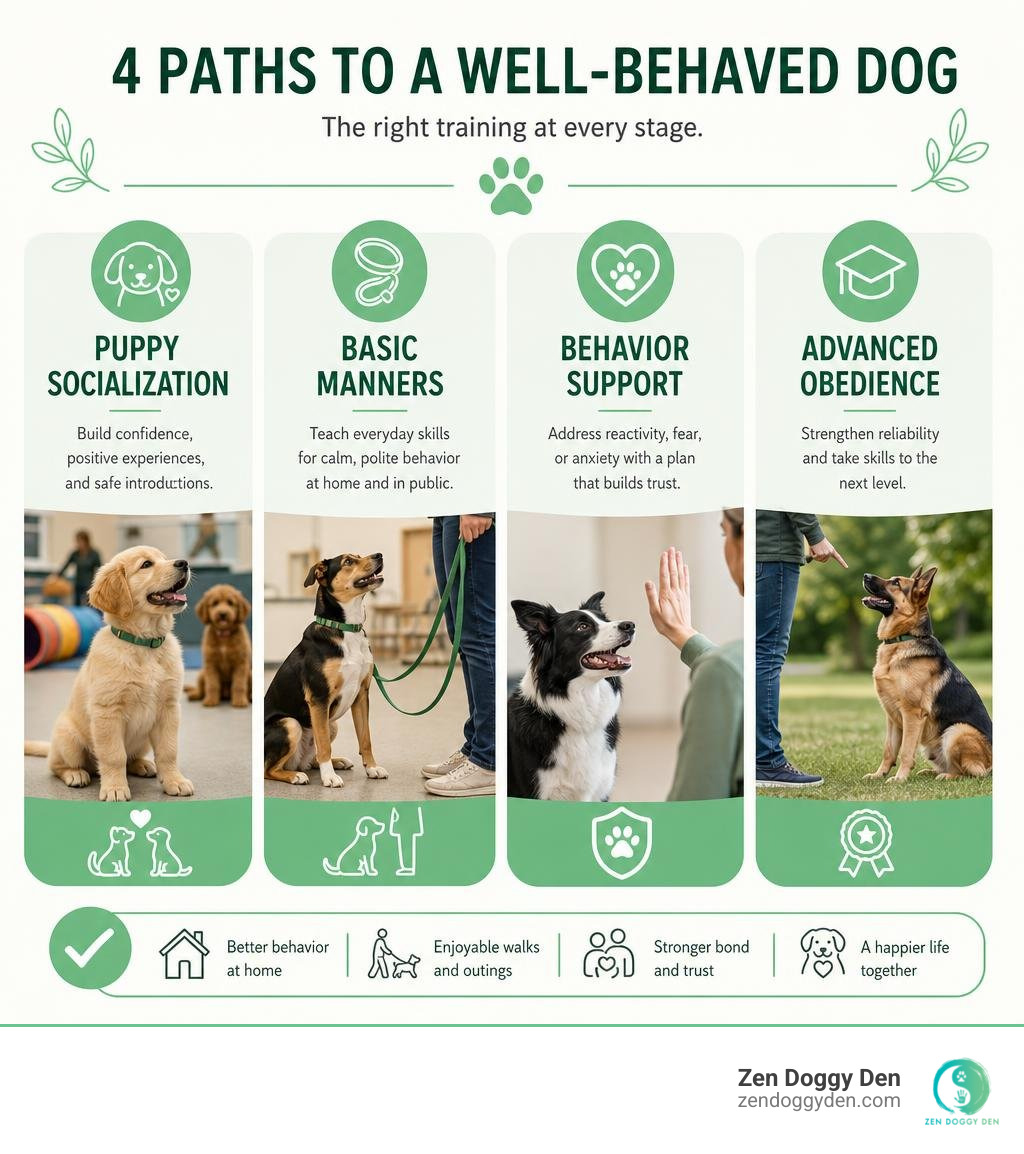
- Choose puppy socialization or kindergarten for young dogs, and basic manners for untrained adults.
- Ask whether reactive, fearful, or aggressive dogs need a private assessment before group class.
- Confirm the schedule, class size, vaccination rules, training approach, and total cost before enrolling.
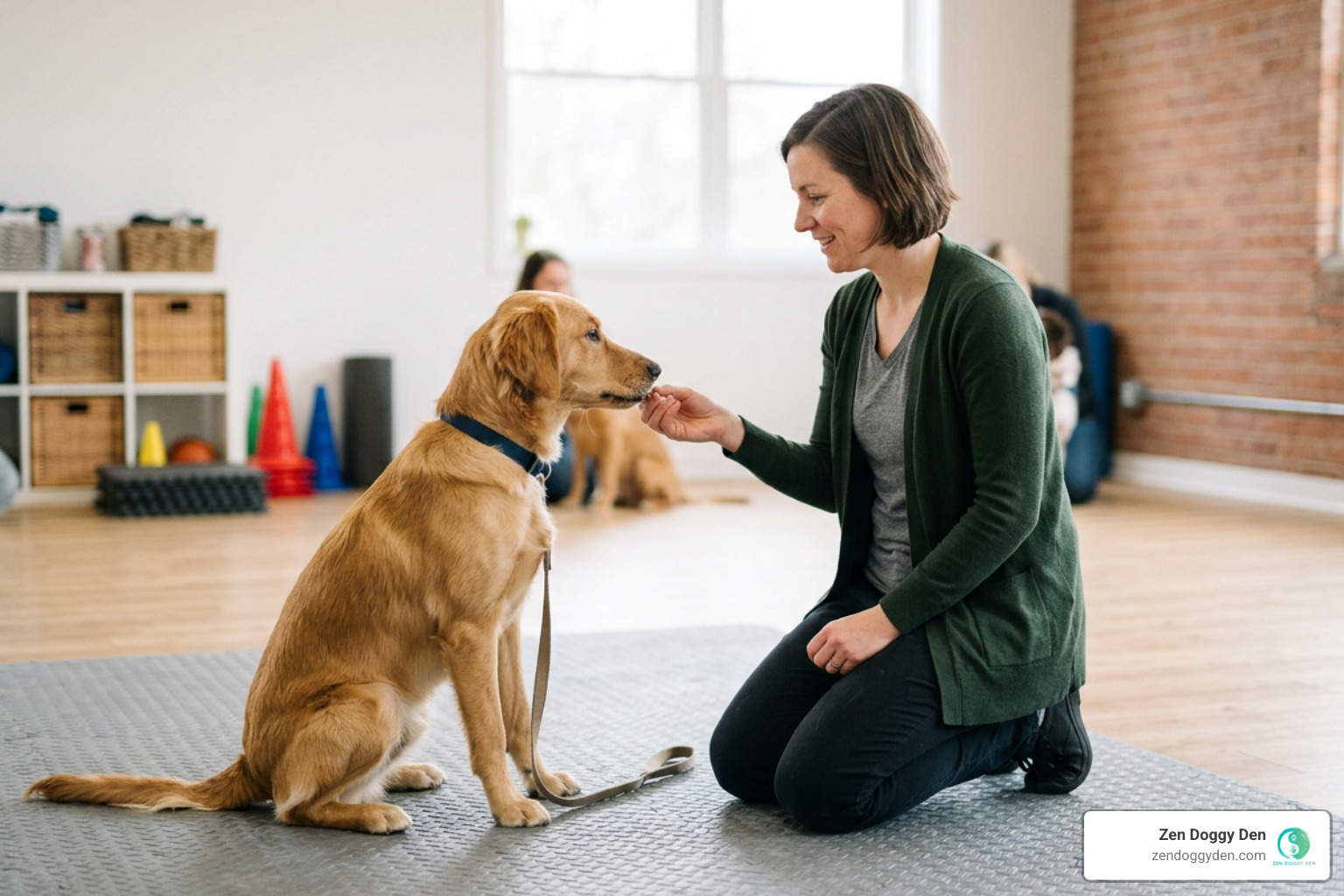
Most local group programs meet once a week for 6 to 8 weeks. They commonly teach loose-leash walking, sit, down, recall, stay, polite greetings, and impulse control. Small classes can give busy families more hands-on coaching, while private lessons or board-and-train may be a better fit when behavior issues need focused support.
The right program should help your dog practice real-life skills around everyday distractions, without making family life harder. I am Julie McLean, and this guide will help you sort through local options and choose a practical next step.
7 Core Types of Local Dog Obedience Programs
When you begin searching for reliable training nearby, you will quickly notice that one size does not fit all. Dogs have distinct behavioral foundations, varying attention spans, and different developmental requirements.
A comprehensive training program builds clear communication between you and your dog. From teaching essential impulse control to mastering real-world life skills, local facilities typically organize their curriculums into clear tiers. Understanding these formats ensures you enroll your companion in a setting that sets them up for success.
Finding Puppy vs. Adult Canine Obedience Classes Near Me
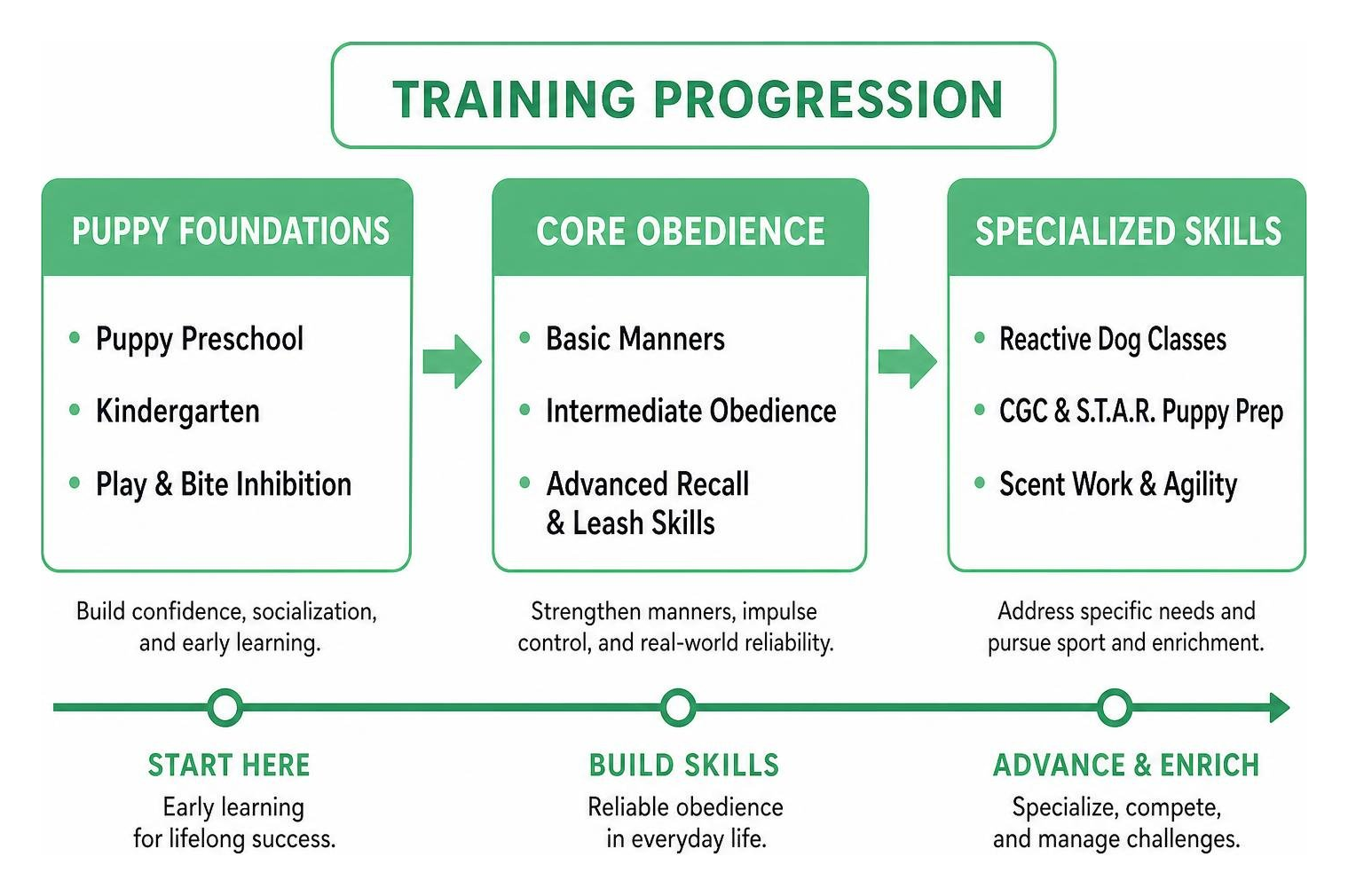
Early developmental stages form the cornerstone of your dog’s lifetime behavior. Enrolling your puppy in a specialized puppy preschool or kindergarten establishes crucial bite inhibition, confidence around novel surfaces, and healthy socialization protocols.
Our approach to group puppy training ensures young pups learn how to focus around other dogs without becoming overstimulated. Addressing new puppy behaviors dog training early prevents common habits like play-biting, counter-surfing, and destructive chewing from taking root.
Adult obedience classes, by contrast, shift focus toward solidifying adult basic manners. These programs refine loose-leash walking, formal stays, reliable recalls under distraction, and reliable impulse control. Whether you adopted a rescue dog who missed early training or need a manners refresher for an adolescent dog, adult classes build a dependable working relationship.
Specialized Formats: Reactive Rover, CGC Prep, and Scent Work
Not every dog thrives in a standard group setting right away. Specialized formats cater to unique behavioral and enrichment goals:
- Reactivity Programs: For dogs struggling with barking, lunging, or barrier frustration, specialized classes provide controlled setups with visual barriers. Learning to stop the barking before it starts in group reactivity sessions helps handlers identify stress signals, manage reactivity thresholds, and redirect their dogs calmly.
- Canine Good Citizen (CGC) and AKC S.T.A.R. Puppy: These structured curricula prepare dogs for official evaluations, covering ten essential obedience items such as polite greetings, walking through a crowd, and reacting calmly to distractions.
- Enrichment and Dog Sports: Scent puzzles, rally, and foundational agility channel your dog’s natural instincts into positive outlets. Programs following established structures, such as AKC obedience competition levels, allow handlers to progress from beginner exercises to advanced trial rings.
Group Sessions vs. Private Lessons vs. Board-and-Train
Finding the right format depends on your dog’s temperament, your schedule, and your lifestyle goals.
Participating in group dog classes provides real-world distraction training, teaching dogs to listen while peers work nearby. When complex behavioral problems arise, one-on-one private training delivers customized coaching tailored to your specific household routine.
For busy owners seeking accelerated results, intensive immersion programs provide a clear advantage. Exploring the benefits of board and train for dogs reveals how daily consistency creates lasting habits. A premier dog board and train program combines immersive daily work with comprehensive handler transfer sessions, giving you the skills to maintain good behavior at home.
| Training Format | Typical Duration | Average Cost | Ideal Candidates | Primary Benefit |
|---|---|---|---|---|
| Group Classes | 5 to 8 Weeks (1 hr/week) | $150 to $245 | Social dogs, puppies, basic manners | Distraction proofing around other dogs |
| Private Lessons | 3 to 6 Sessions | $100 to $175 / hr | Fearful dogs, specific habits, busy schedules | 100% personalized handler coaching |
| Board-and-Train | 2 to 3 Weeks | $1,800 to $3,500+ | Fast-paced homes, high reactivity, busy owners | Immersive habit building and daily repetition |
| Specialty Workshops | Single Day or 4 Weeks | $40 to $125 | Scent work, loose-leash focus, tricks | Targeted skill development and mental outlet |
How to Choose the Right Canine Obedience Classes Near Me
Selecting a quality training provider requires looking closely at class structure, facility cleanliness, and the team’s training philosophy.
What to Budget for Canine Obedience Classes Near Me
Obedience training costs vary based on class type, location, and instructor experience. Standard 6-week group classes typically range from $150 to $245, with weekly sessions lasting 50 to 60 minutes. Many local non-profit facilities and humane organizations offer rescue dog adoption discounts, typically saving owners $10 to $25 per course.
Workshops often provide two pricing tiers: working spots (hands-on handling) and audit spots (observation only), letting owners observe techniques at a lower cost.
For immersive programs, reviewing what you should expect to pay for dog board and train programs helps you evaluate multi-week residency options. Clear, transparent pricing ensures you find high-value training that fits your budget.
Trainer Certifications, Philosophy, and Class Sizes
Look for instructors with established credentials through professional bodies such as the Certification Council for Professional Dog Trainers (CCPDT) or certified canine behavior consultants. A balanced training philosophy uses clear communication, motivating rewards, and appropriate, fair boundaries to build a confident, reliable companion.
Class size directly influences your learning experience. High-quality programs maintain structured curriculum standards and enforce strict caps on total attendance.
Look for programs that limit enrollment to 6 to 8 dogs for standard classes, and 4 dogs for reactive classes. These limits ensure your instructor has time to provide individual feedback and adjust exercises for each dog.
Mandatory Health, Vaccination, and Age Prerequisites
Before joining any in-person class, reputable facilities require verification of core veterinary care to keep all dogs safe:
- DHPP Series: Proof of current Distemper, Hepatitis, Parvovirus, and Parainfluenza vaccines or documented titer tests.
- Rabies Certification: Mandatory for all dogs 16 weeks of age and older.
- Bordetella Protection: Often required for group environments to guard against canine cough.
- Age Requirements: Puppy classes welcome young dogs starting around 8 to 16 weeks (following initial vaccine rounds), while standard adult classes usually require dogs to be at least 5 to 6 months old.
- Orientation Sessions: Many schools require a human-only orientation session, either in-person or online, before bringing dogs into the training room.
Frequently Asked Questions About Local Dog Obedience Training
How much do local group obedience classes typically cost?
Most 6-to-8-week group obedience classes cost between $150 and $245. Single-day workshops or audit spots typically range from $40 to $75, while specialized programs like reactive dog courses run around $250 for 6 structured sessions. Most schools require advance registration deposits and outline clear refund policies before the start date.
What vaccinations does my dog need before attending training?
Standard facility policies require proof of DHPP, Rabies (for dogs over 16 weeks), and Bordetella vaccinations. Puppies must have completed their initial veterinary booster rounds before attending group classes. Always have your digital or paper veterinary records ready prior to your first class.
Can reactive or aggressive dogs join standard group classes?
Dogs that display intense barking, lunging, or aggressive behavior toward people or other dogs are usually not suited for standard beginner classes. These dogs benefit most from an initial private evaluation, one-on-one behavior modification, or a specialized Reactive Rover class with visual barriers and controlled distances.
What Equipment and Gear to Bring to Dog Training Classes
Arriving prepared with the right equipment helps your dog stay comfortable and allows you to handle exercises smoothly during group or private sessions. Professional facilities throughout Wheat Ridge, Denver, Lakewood, Arvada, and Boulder recommend bringing several core items to every working class:
- Fixed-Length Leashes: A standard 4-foot to 6-foot leather or biothane leash gives you secure control and clear tactile feedback. Retractable flexi-leads are generally prohibited in obedience classrooms because they can tangle, cause friction burns, and encourage pulling.
- Appropriate Handling Collars: Flat buckle collars, martingales, or properly fitted training tools approved by your instructor provide secure boundary communication without slipping off.
- High-Value Training Treats: Pack bite-sized, soft rewards that your dog can swallow quickly without extensive chewing. Bringing a mix of everyday kibble and high-value treats like freeze-dried liver or string cheese helps maintain focus during high-distraction exercises.
- Treat Pouch: A waist-mounted bait bag keeps rewards readily accessible, ensuring your reinforcement timing remains crisp and accurate.
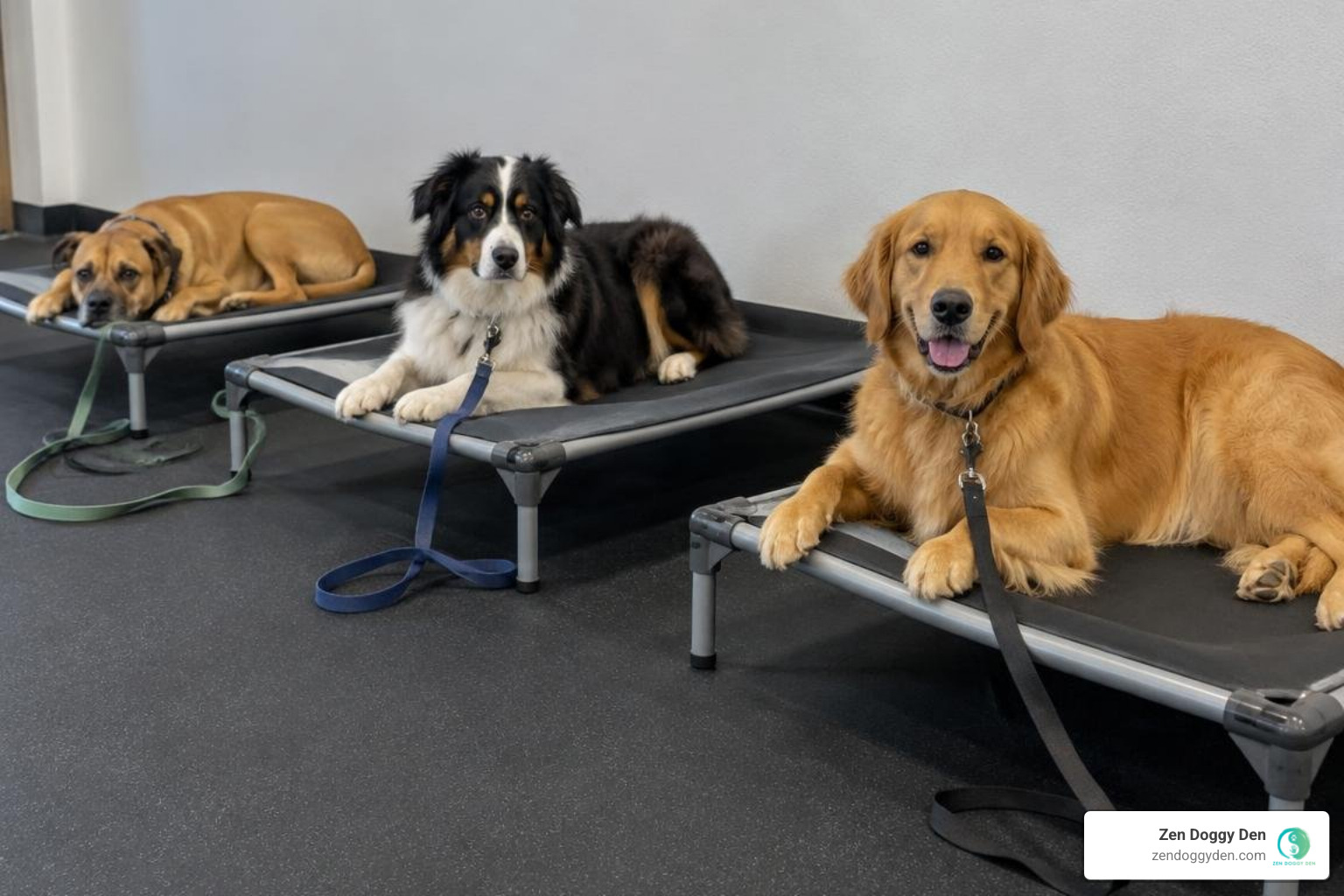
- Portable Mat or Place Cot: A familiar mat gives your dog a defined physical boundary to practice place stays, settle cues, and impulse control between repetitions.
At Zen Doggy Den, our training facility integrates a structured rotation protocol that balances active obedience repetitions with mental enrichment and calm decompression intervals. This balanced rhythm prevents mental fatigue, helping dogs master lasting manners in real-world settings.