
Which Dog Obedience Training Class Is Right for Your Dog?
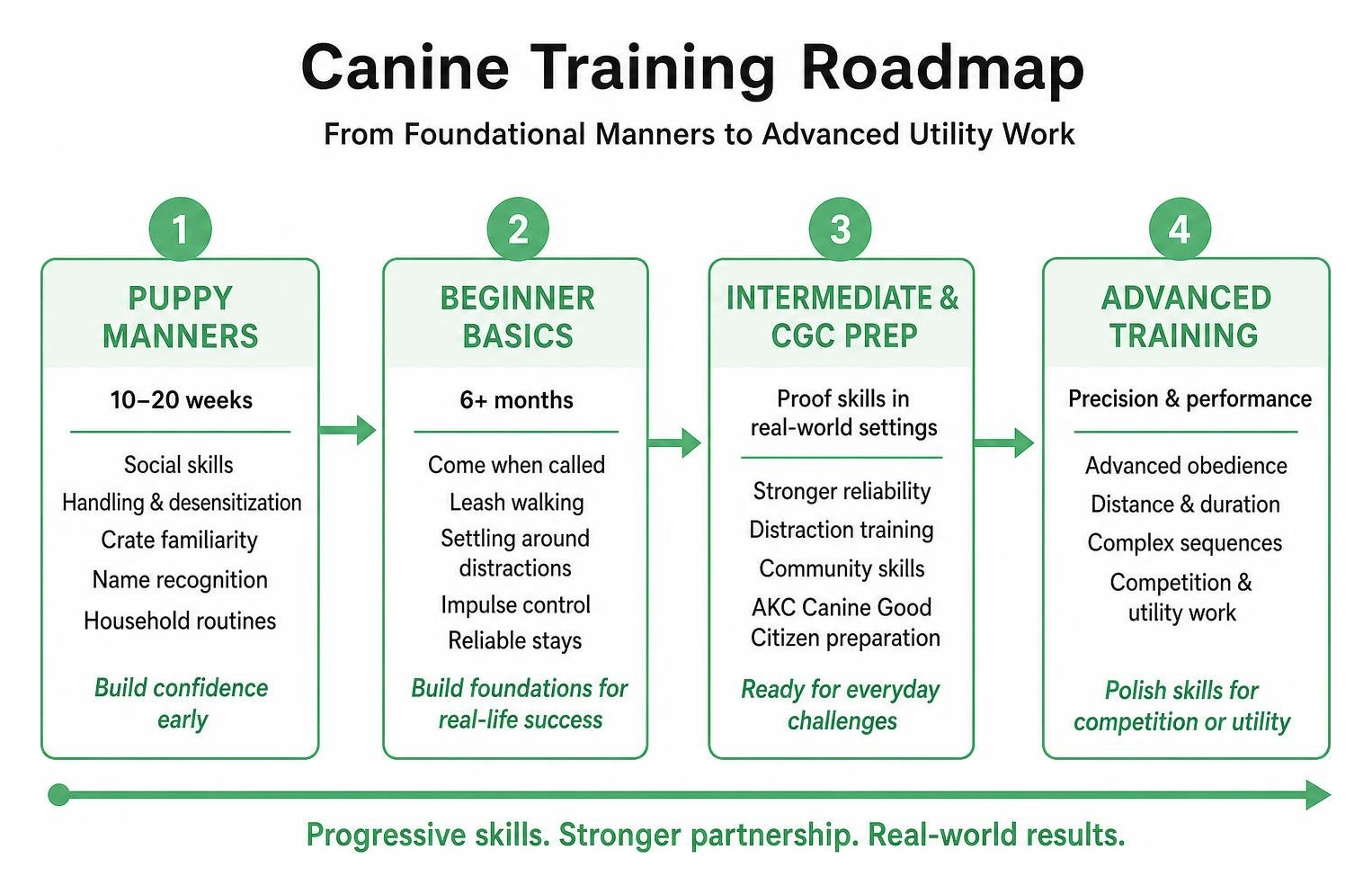
Choose a class based on your dog’s age, current skills, and your goal. Puppy classes focus on early manners and social skills. Beginner classes teach dogs of any age skills like coming when called, walking on a leash, and settling around distractions. Intermediate and Canine Good Citizen (CGC) prep classes build on those basics. Advanced classes focus on more precise work, often for competition.
For a busy family, a beginner group class can give you a weekly plan to practice at home. Check the age and vaccine rules before you enroll, and ask how the instructor handles dogs who need extra space or help. The American Kennel Club provides a helpful overview of puppy socialization and training timelines for new owners.
I’m Julie McLean, and I’ll walk you through the options so you can find a class that fits your dog and your schedule.

Dog obedience training classes terms to know:
Types of Dog Obedience Classes: From Puppy Manners to Advanced Titles
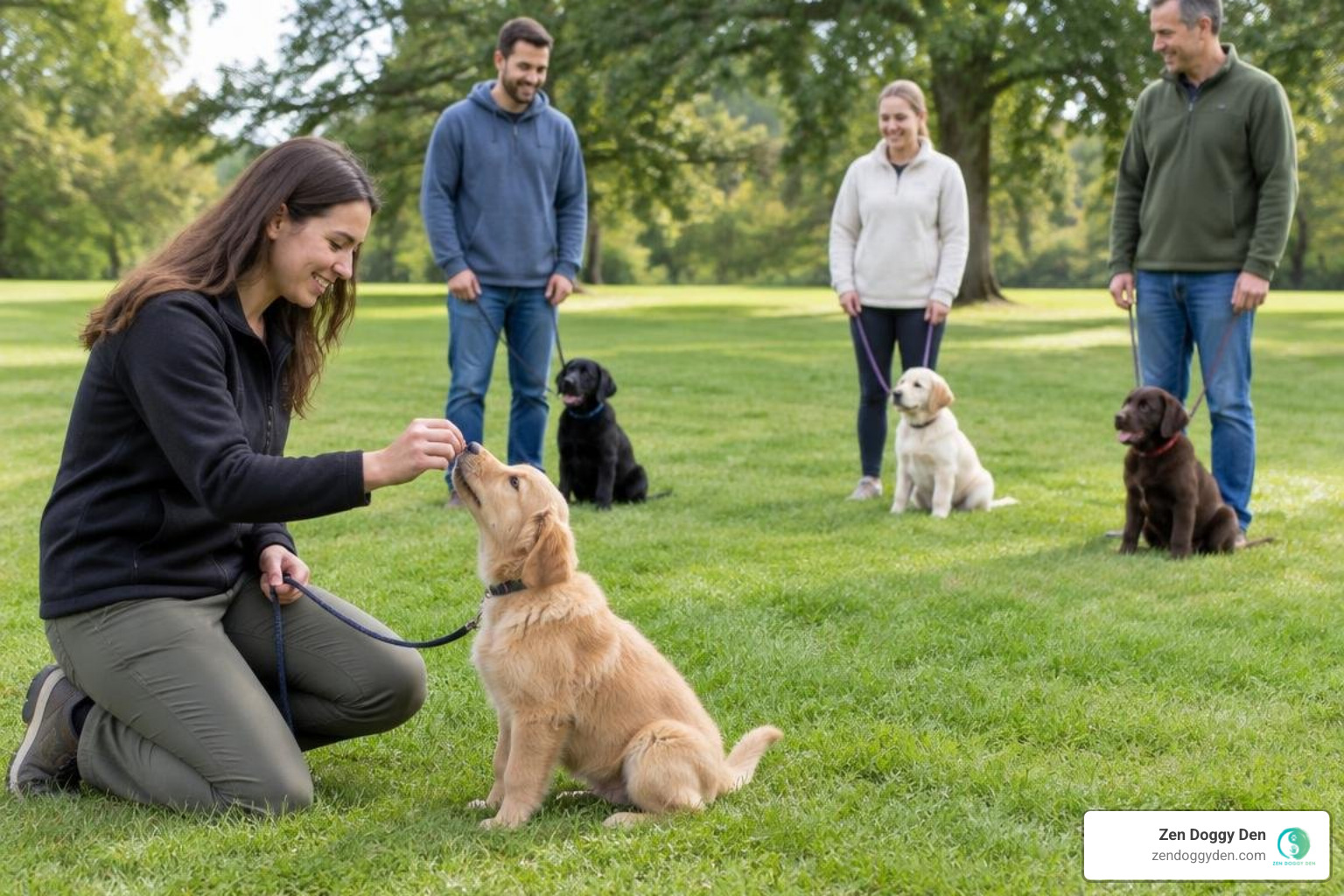
Navigating dog training can feel overwhelming with all the specialized course names available today. Whether your goal is a calm companion during patio dining around Denver or a titled competitor in trial rings, structured classes provide the framework for clear communication between you and your canine partner.
Established curriculum standards have long demonstrated that dog training functions best as a progressive journey. Each tier builds upon the impulse control, handler focus, and muscle memory established in the previous stage.
Puppy Kindergarten vs. Adult Dog Foundations
The primary difference between a puppy class and an adult beginner course lies in developmental focus and physical maturity.
Puppy kindergarten, typically designed for dogs between 10 to 20 weeks old, emphasizes early socialization, bite inhibition, handling desensitization, crate familiarity, and foundational name recognition. The goal is to build environmental confidence before the critical developmental fear windows close. These classes also help owners navigate immediate household challenges like potty routines, teething, and bounding energy through dedicated group puppy training.
Adult foundation classes cater to dogs six months and older that may have missed early training or joined your home as an adult rescue. While puppies learn through brief, play-based intervals, adult classes demand longer attention spans and address established habits. Adult courses dive straight into impulse control, heel positioning, reliable stays, and managing arousal around other dogs.
Intermediate Obedience and Canine Good Citizen (CGC) Prep
Once your dog understands baseline cues in a low-distraction setting, intermediate classes step in to proof those behaviors against real-world chaos. This stage bridges classroom exercises and dependable real-life obedience.
Intermediate programs often align directly with the American Kennel Club (AKC) Canine Good Citizen framework. CGC preparation challenges your dog to maintain focus while navigating practical community scenarios, including:
- Accepting a friendly stranger without jumping
- Sitting politely for petting and basic grooming exams
- Walking through a crowd on a loose leash
- Maintaining a sit-stay or down-stay when another dog and handler pass nearby
- Demonstrating steady confidence around sudden environmental distractions
- Handling supervised separation without vocalizing or pacing
Mastering these exercises ensures your dog can accompany you safely on neighborhood walks, vet visits, and outdoor gatherings across the Denver Metro Area.
Advanced Competition and Utility Training
For handlers who want to pursue competitive obedience or performance sports, advanced courses refine execution down to the inch and second. Many training clubs categorize these upper-tier offerings into Novice, Open, and Utility tracks.
These programs prepare dog-and-handler teams for Companion Dog (CD), Companion Dog Excellent (CDX), and Utility Dog (UD) titles. Skills taught include:
- Off-leash heeling with automatic sits and speed changes
- Moving stand exams where the handler continues walking while the dog remains standing
- Directed jumping over high and bar jumps
- Scent discrimination, where a dog identifies and retrieves an article scented specifically by the handler from a pile of metal and leather items
- Dumbbell retrieves on flat surfaces and over hurdles
Even if you never plan to step into a competition ring, working on utility exercises offers advanced mental stimulation that helps keep high-drive breeds calm and satisfied.
Comparing Dog Obedience Training Classes: Levels and Formats
Finding the right training setup depends on your schedule, budget, and your dog’s current behavior profile.
| Class Level / Format | Target Dog Age & Skill Level | Typical Duration & Structure | Focus Skills & Goals | Estimated Cost Range |
|---|---|---|---|---|
| Puppy Kindergarten | 10–20 weeks; initial vaccine rounds | 4–6 weeks; 45–60 min sessions | Socialization, bite inhibition, name focus, crate comfort | $150 – $220 |
| Basic / Beginner Obedience | 5+ months; beginners or rescues | 6–8 weeks; 50–60 min weekly | Sit/down stays, loose leash, recall, polite greetings, leave it | $160 – $240 |
| Intermediate / CGC Prep | 6+ months; completed basic class | 5–6 weeks; 60 min weekly | Distraction proofing, heelwork, supervised separation, CGC test | $160 – $200 |
| Competition / Utility | Intermediate graduates; sports focus | 6–10 weeks or ongoing drop-in | Scent work, directed jumping, moving stands, off-leash precision | $145 – $220 |
| Drop-In Ring Prep | Advanced dogs; competition handlers | Single sessions; 60–90 min | Trial ring simulation, novel ring distraction practice | $15 – $25 per class |
Fixed Multi-Week Courses vs. Drop-In Sessions
Fixed multi-week courses run with the same group of dogs and handlers for five to ten weeks. This format provides a structured curriculum where each week introduces a new skill that builds directly on the previous week’s practice. Cohort consistency creates a controlled learning environment, which is ideal for puppies, easily distracted dogs, and handlers who benefit from clear weekly homework assignments.
Drop-in sessions operate on a flexible, pay-per-class model. These are best suited for intermediate and advanced handlers who already have solid fundamentals and simply need a ring space to proof skills around new dogs. Drop-ins allow you to practice trial routines, fine-tune specific exercises like scent discrimination, and maintain your dog’s focus without committing to a multi-week calendar block.
Group Classes vs. One-on-One Lessons
Choosing between group classes and individual instruction comes down to your dog’s emotional state and your training goals.
Structured group dog classes provide built-in distractions. Learning to hold a stay or walk on a loose leash while other dogs are working just a few feet away teaches your dog that working with you is always the priority. Group environments also help owners learn by watching how instructors coach other dog-and-handler teams through different challenges.
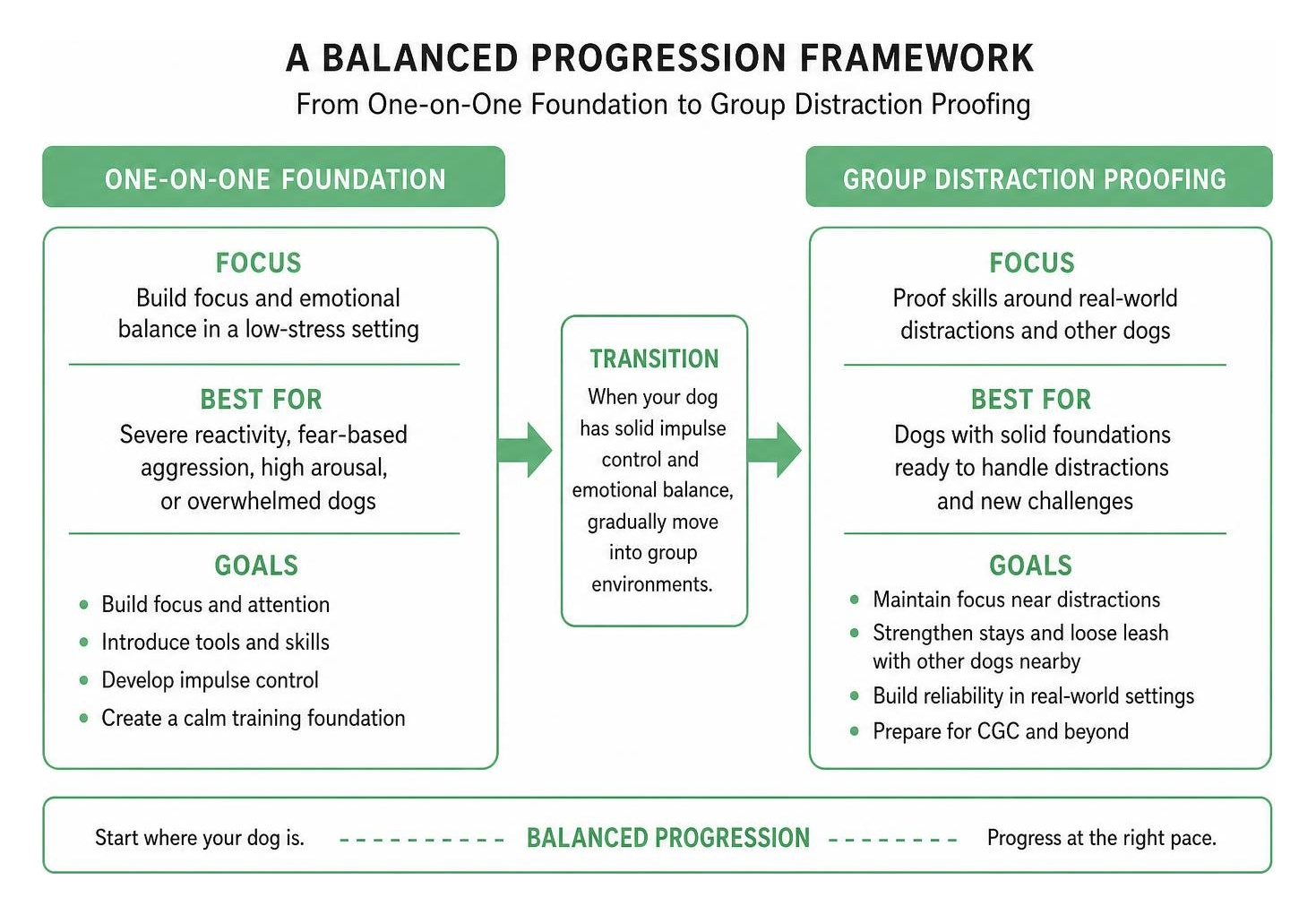
However, group classes are not always the best starting point for every dog. If your dog struggles with severe reactivity, fear-based aggression, or high arousal, a room full of other dogs can quickly cause sensory overload. In these cases, starting with private training allows a professional trainer to build focus and introduce appropriate training tools in a controlled, low-stress environment. Once your dog develops foundational impulse control and emotional balance, they can transition into group environments with confidence.
Core Curriculum, Prerequisites, and Class Logistics
Core Skills Taught in Beginner Dog Obedience Training Classes
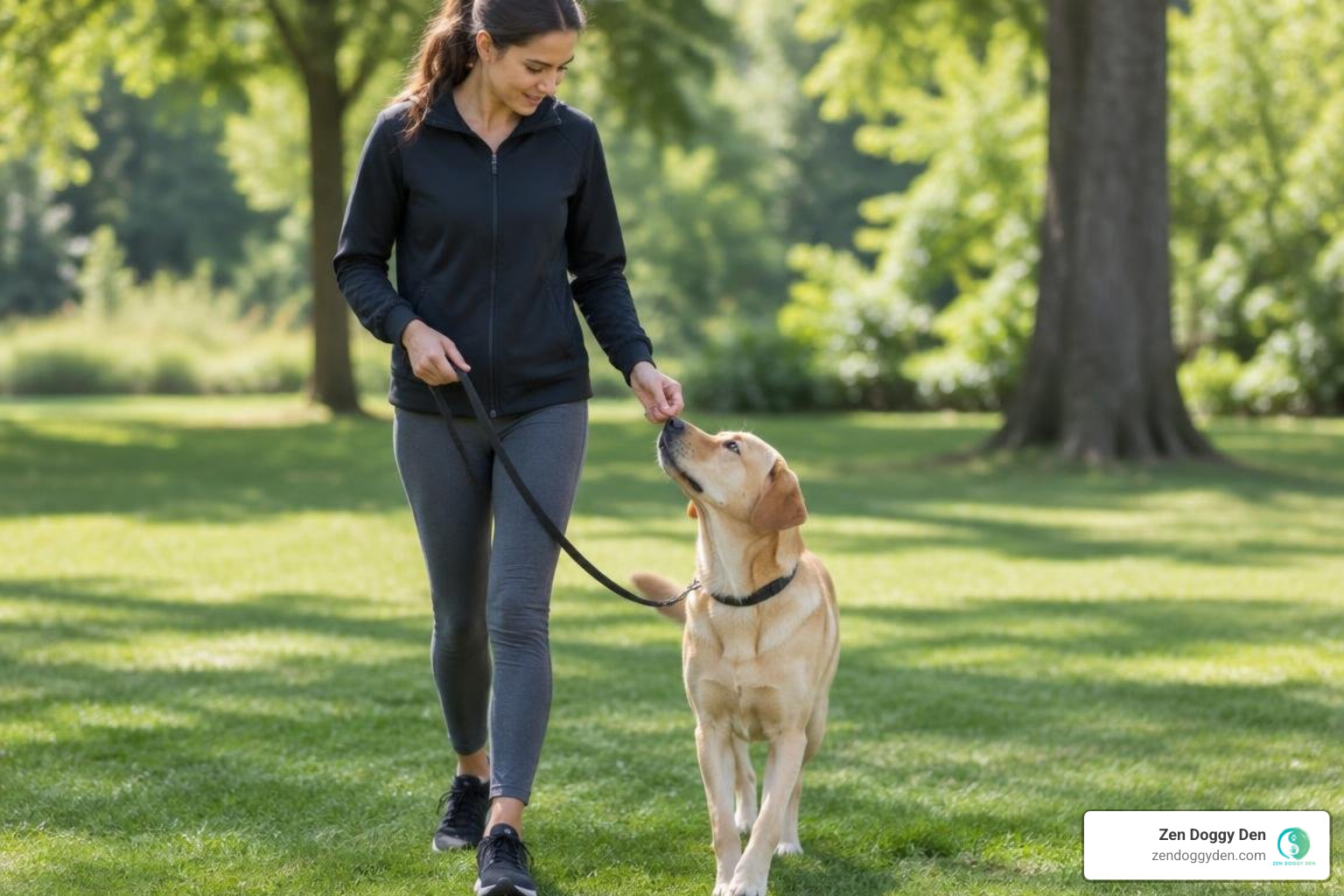
A comprehensive beginner obedience curriculum focuses on everyday life skills that make living with your dog enjoyable. Professional programs avoid teaching commands in isolation; instead, they integrate real-world context, handler engagement, and impulse control.
Standard beginner skills include:
- Loose Leash Walking: Teaching your dog to match your walking pace without pulling forward or lagging behind.
- Reliable Recall: Building a fast, eager response when called, even around toys, people, and other dogs.
- Sit and Down Stays: Establishing steady duration and distance so your dog remains settled until released.
- The “Leave It” Command: Preventing your dog from grabbing dropped food, trash on the sidewalk, or wildlife on the trail.
- Polite Greetings: Teaching your dog to keep four paws on the floor when greeting family members and guests.
- Hand Targeting: Using a nose-to-palm touch to position your dog smoothly during heelwork or to redirect focus away from distractions.
- Place Command: Teaching your dog to settle calmly on an elevated bed or mat during dinner or when visitors arrive.
In a balanced training framework, instructors use high-value rewards to teach clear behaviors, paired with consistent boundaries and fair corrections to ensure reliable compliance when real distractions pop up.
Equipment and Prerequisites for Dog Obedience Training Classes
Before your first day of class, reputable training facilities require health verification and proper handling gear to maintain a safe, clean environment for everyone.
Health and Age Prerequisites:
- Puppies: Must typically be at least 10 to 12 weeks of age and show proof of their initial DHPP (distemper, hepatitis, parvo, parainfluenza) vaccine rounds.
- Adult Dogs: Must be up to date on DHPP, Rabies (mandatory for dogs over 16 to 20 weeks), and Bordetella vaccinations.
- Behavioral Screening: Dogs must be non-aggressive toward handlers and other dogs in a shared space. Dogs dealing with severe reactivity or aggression should be evaluated for one-on-one behavioral programs first.
Required Training Equipment:
- Standard Six-Foot Leash: Made of durable leather or biothane. Retractable leashes and chain leads are widely prohibited in group classes due to safety and control concerns.
- Properly Fitted Training Collars: Standard flat buckle collars, martingale collars, or appropriate training tools recommended by your instructor based on your dog’s size, drive, and handling needs.
- High-Value Rewards: Soft, bite-sized treats like freeze-dried liver, string cheese, or diced meat that your dog can chew quickly without losing focus.
- Hands-Free Treat Pouch: Keeps your rewards accessible so you can mark and reward correct behaviors with clean timing.
Costs, Class Duration, and Selecting the Right Training Facility
When planning your training budget in the Denver Metro Area, course costs vary based on program length, instructor credentials, and facility amenities. Standard five- to six-week group obedience classes typically range between $160 and $240. Extended eight- to ten-week programs, such as comprehensive Canine Good Citizen prep or competition foundation tracks, generally range from $145 to $230.
Many training facilities and non-profit dog clubs offer cost savings to encourage continued education:
- Rescue and Shelter Adoption Discounts: Many clubs provide $10 to $20 discounts for owners who adopted their dog from a shelter or rescue organization.
- Returning Student Rates: Facilities often extend 10% discounts for clients signing up for their next course level.
- Class Size Caps: Quality facilities typically cap class sizes at 5 to 8 dogs. Smaller groups ensure your instructor can provide one-on-one feedback, adjust tools when needed, and maintain safe working distances between dogs.
When evaluating facilities, look for clean, well-ventilated indoor spaces with non-slip flooring or secured outdoor training yards. It is equally important to work with instructors who use balanced, clear training methods. A good trainer understands how to motivate dogs while using clear boundaries and appropriate tools to guide owners through challenges.
For a step-by-step breakdown on screening trainers and visiting local classes, check out a local owners playbook for finding dog obedience training.
Frequently Asked Questions About Dog Obedience Classes
At what age can my puppy start attending obedience classes?
Puppies can safely begin puppy kindergarten classes as early as 10 to 12 weeks of age, provided they have completed at least two rounds of their core puppy vaccines, including parvo and distemper. Veterinary guidelines support early socialization in clean, sanitized, and controlled training facilities before all final booster shots are completed around 16 weeks.
Waiting until a dog is six months old means missing the critical early socialization window when puppies learn bite inhibition, environmental resilience, and how to communicate with other dogs.
What is the difference between basic manners and Canine Good Citizen certification?
Basic manners classes teach foundational commands such as sit, down, stay, come, and loose leash walking in a classroom setting. Handlers frequently use treat rewards and luring to help the dog understand each exercise.
The AKC Canine Good Citizen program is a formal 10-step evaluation that tests those behaviors under realistic, community-style conditions without the use of food treats during testing. The CGC test checks practical manners, including remaining calm while a stranger grooms the dog, walking through crowds, and sitting quietly while the owner steps out of sight for three minutes. Many therapy dog organizations and pet-friendly residential communities require CGC certification as a prerequisite.
Can older rescue dogs benefit from beginner obedience training?
Adult and senior dogs learn exceptionally well in beginner obedience classes. While older rescue dogs may come with ingrained habits or limited past structure, their adult attention spans often allow them to pick up foundational skills faster than young puppies.
Structured training provides rescue dogs with clear expectations, which helps relieve anxiety and builds handler trust in a new home. Beginner classes give adult rescue dogs a predictable routine, reliable leash manners, and constructive mental exercise.
Daily Structure: How the Rotation Protocol Enhances Obedience
Integrating structured rotations into your dog’s daily schedule balances mental drive with physical exercise. At Zen Doggy Den, training programs follow a dedicated rotation schedule designed to prevent mental fatigue and reinforce impulse control.
A structured training day incorporates three distinct phases:
- Focused Handling Drills: Short 10- to 15-minute sessions dedicated to practical obedience, including heelwork, duration place commands, and rapid recall under distraction.
- Controlled Physical Outlets: Structured leash walks, yard play, or obstacle navigation around Wheat Ridge and Denver parks to burn physical energy.
- Calm Settling Periods: Dedicated crate or mat rest in a low-stimulus environment, teaching dogs how to bring their arousal levels down after high-energy tasks.