
The Best Age to Board and Train a Puppy
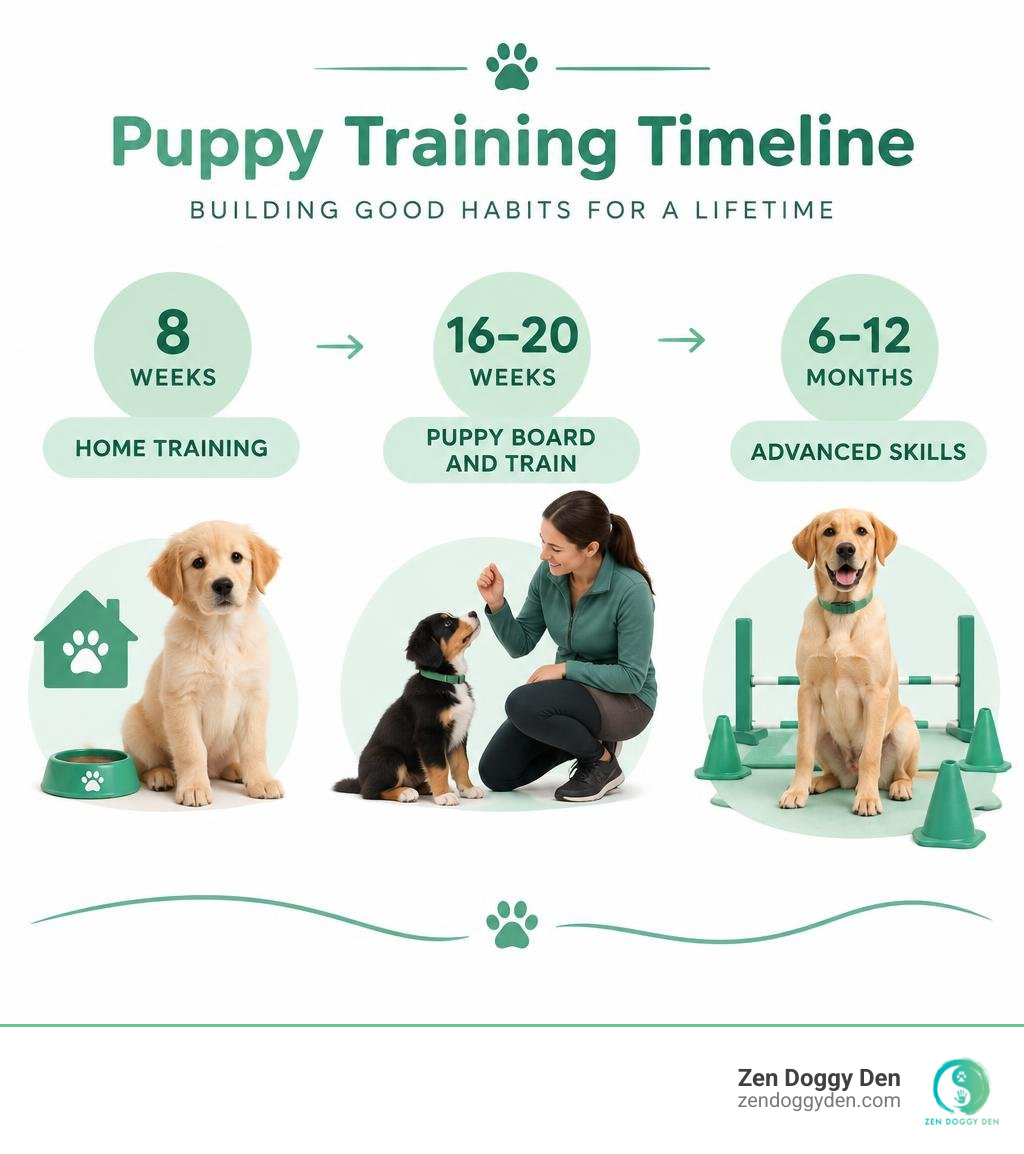
For many puppies, 16 to 20 weeks is a good time to start a puppy-focused board and train program. Some programs accept puppies at 12 weeks, but the right start date depends on your puppy’s health, vaccination status, and the program’s requirements. If your goal is more reliable obedience around distractions, 6 to 12 months may be a better fit.
You do not need to wait for boarding to begin training. Simple practice at home can start when your puppy arrives. I’m Julie McLean, and I’ll help you weigh your puppy’s age and readiness so you can choose a program that fits your family.
What Is the Best Age to Board and Train Puppy Dogs?
Deciding when to transition your young dog into a professional learning environment requires balancing biological safety with cognitive readiness. When assessing the best age to board and train puppy companions, owners must evaluate both developmental timing and health prerequisites. At Zen Doggy Den, we frequently guide owners through these early developmental choices across the Denver Metro Area, Lakewood, and Arvada.
The baseline requirement for any immersive stay begins with vaccinations. Most professional training facilities establish a firm 12-week minimum threshold. By this point, puppies have generally completed their second or third round of core distemper, hepatitis, parainfluenza, and parvovirus (DHLPP) vaccines, providing the immune defense needed for a new environment.
While 12 weeks serves as the entry point for foundational habit formation, the broader sweet spot depends on what you want to accomplish. Early programs focus heavily on housebreaking, crate manners, and social resilience. Later stays build reliable impulse control and formal obedience. Understanding these distinctions helps you pinpoint how immersive dog board and train services can best serve your dog’s stage of development.
| Developmental Stage | Typical Age Window | Core Training Objectives | Primary Program Focus |
|---|---|---|---|
| Early Puppyhood | 12 to 16 Weeks | Socialization, crate comfort, potty routines, name recognition | Foundation building & prevention |
| Juvenile Starter | 16 to 20 Weeks | Basic leash manners, polite greetings, impulse control, sit/place | Structured obedience fundamentals |
| Adolescent Peak | 6 to 12 Months | Distraction proofing, reliable recall, boundary testing, heel | Real-world reliability & drive management |
| Young Adult | 12 to 24 Months | Complex problem solving, off-leash control, behavioral tuning | Advanced handling & habit modification |
Why 16 to 20 Weeks Is the Best Age to Board and Train Puppy Starters
The juvenile window spanning 16 to 20 weeks is widely considered the best age to board and train puppy candidates who need a reliable behavioral head start. At this stage, your puppy has moved past the extreme fragility of early infancy but remains free of entrenched, self-rewarding habits.
Cognitively, puppies in this stage are little learning machines. Their bladder capacity has matured enough to support structured house training schedules, and their attention spans have expanded to handle short, focused obedience sessions. They are capable of understanding marker words, leash pressure fundamentals, and basic impulse control exercises such as waiting at doorways.
Enrolling your puppy during this window bridges the gap between early home routines and outside distractions. It teaches them how to settle quietly in a crate, accept clear boundaries, and practice polite engagement around new people and novel sights. For owners managing busy household routines, incorporating these principles reflects the early socialization insights from Chapter 14 written by Katya Freedman, which highlight how proactive structure prevents fearful avoidance and over-arousal before bad habits take root.
Is Adolescence (6-12 Months) the Best Age to Board and Train Puppy Breeds?
If your training goals center on solid, real-world obedience that holds up at crowded parks or busy neighborhood sidewalks, adolescence (6 to 12 months) is the premier Goldilocks zone.
Between 6 and 12 months, young dogs experience significant hormonal shifts and physical growth spurts. Suddenly, the compliant puppy who followed your every step begins testing boundaries, ignoring known recall cues, and pulling on the leash to investigate the world. This natural developmental phase is when many pet parents feel overwhelmed.
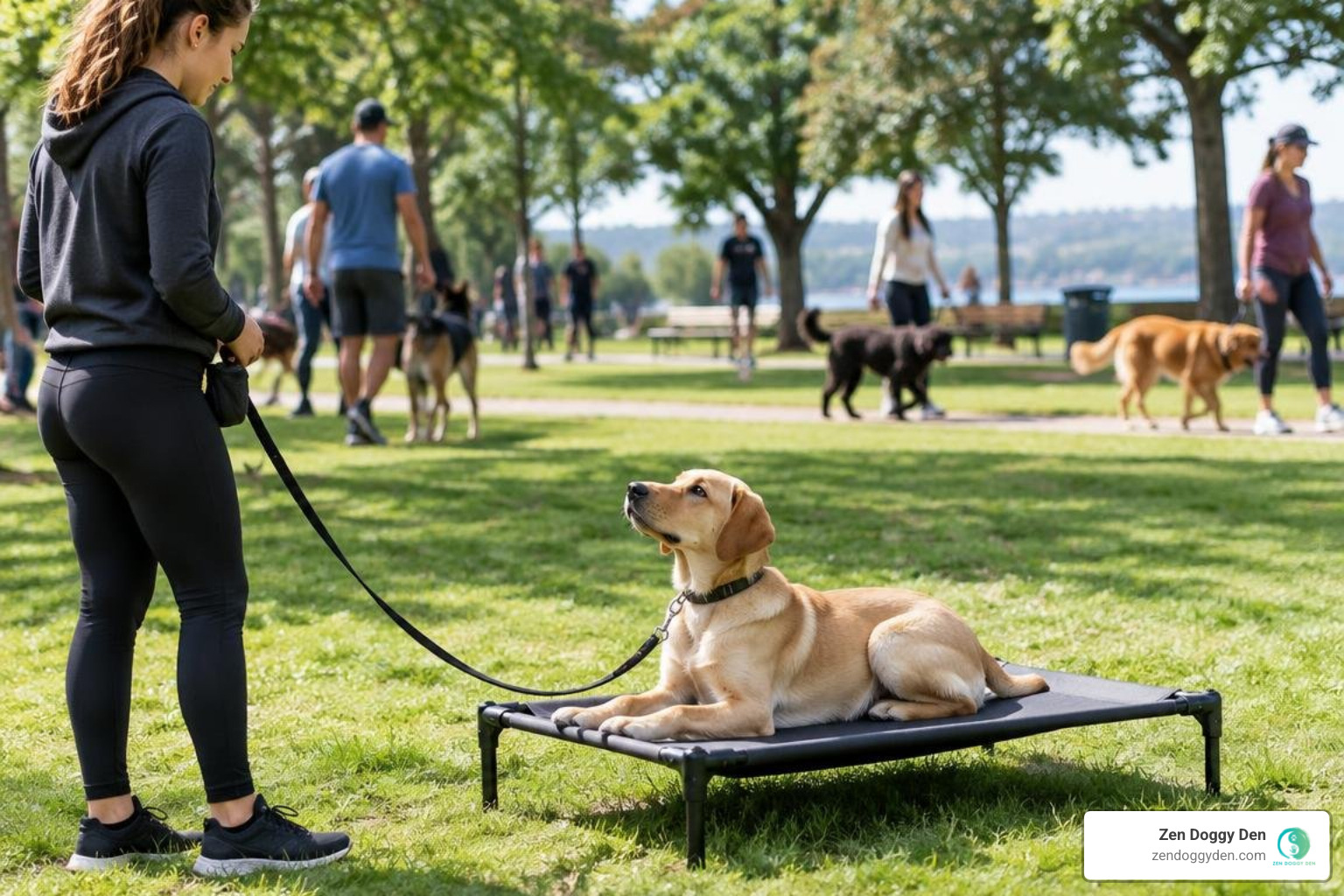
Adolescent dogs possess the physical stamina and mental maturity to handle formal proofing around high-level distractions. In our Wheat Ridge facility, we utilize balanced training approaches that clearly define expectations for teenage dogs. We combine motivational rewards with fair, age-appropriate accountability to teach dogs how to control their impulses. Experiencing the benefits of structured canine board and train during adolescence resets communication, cleans up leash manners, and solidifies commands like place, stay, and recall before selective hearing becomes a permanent lifestyle.
Life Stage Variations: Program Length and Training Focus
Not every dog requires the same amount of time away from home to achieve lasting behavioral transformation. A dog’s age directly influences their learning velocity, attention endurance, and the amount of habit unlearning required.
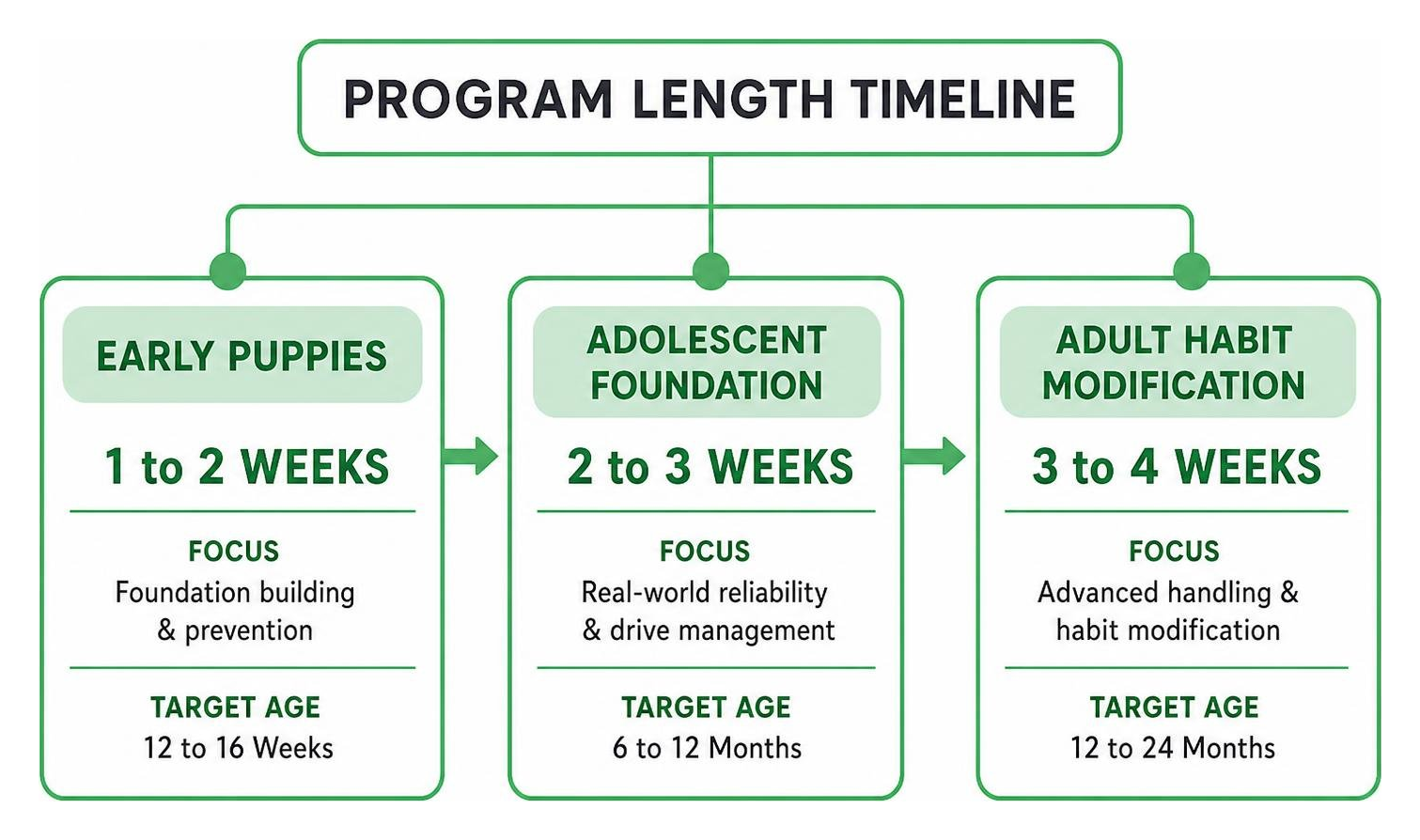
Younger puppies thrive in focused 1 to 2 week stays. Because their brains tire quickly, their training centers on frequent, low-stress learning blocks integrated into daily care routines. Attempting to force an extensive multi-week curriculum on a 14-week-old pup often yields diminishing returns due to developmental fatigue.
Adolescent and untrained adult dogs typically benefit most from a 2 to 3 week stay. This window allows professional handlers to install clear mechanics during week one, introduce controlled environmental distractions during week two, and proof those behaviors across varied real-world scenarios during week three. Investing in professional dog board and train during these formative windows ensures that the skills are deeply ingrained rather than surface-level tricks.
Early Puppyhood (12–16 Weeks): Establishing Routine and Manners
For owners who choose to start early between 12 and 16 weeks, the training curriculum looks markedly different from adult obedience bootcamps. The objective here is prevention and clarity.
At this stage, we prioritize:
- Crate Habituation: Leveraging the dog’s natural den instinct to create a peaceful, safe space for rest and recovery. Helpful approaches can be seen in structured puppy crate training techniques with G1 Small Kennel, which show how secure, properly sized spaces prevent crate anxiety.
- Housebreaking Rhythms: Establishing predictable outdoor bathroom breaks tied to feeding and nap schedules.
- Gentle Redirection: Teaching puppies that human hands, clothing, and furniture are not chew toys by substituting appropriate engagement items.
- Engagement and Luring: Using food rewards and enthusiastic praise to teach foundational positions like sit, down, and name recognition without heavy pressure.
Adult and Senior Dogs: Modifying Entrenched Behaviors
We often hear the old adage that you cannot teach an old dog new tricks. In reality, adult dogs are exceptional learners, though their educational path involves an extra step: unlearning self-rewarding habits.
When an adult or senior dog enters an immersive program, they bring months or years of practiced behaviors, such as jumping on guests, counter surfing, or barking reactively at passing dogs. Training an older dog requires balanced counter-conditioning, clear boundary setting, and intentional physical pacing.
We design custom exercise and mental stimulation plans that match their joint health and energy levels. By combining clear consequences for unwanted choices with high-value rewards for calm obedience, older dogs quickly discover that cooperation yields far better outcomes than their old habits. You can explore our approach to mastering canine mindset through behavioral training to see how systematic habit reversal works for mature dogs.
Key Factors to Evaluate Before Enrolling Your Dog
Enrolling your dog in a residential training program is a major decision that requires evaluating more than just the calendar date on your puppy’s birth certificate.
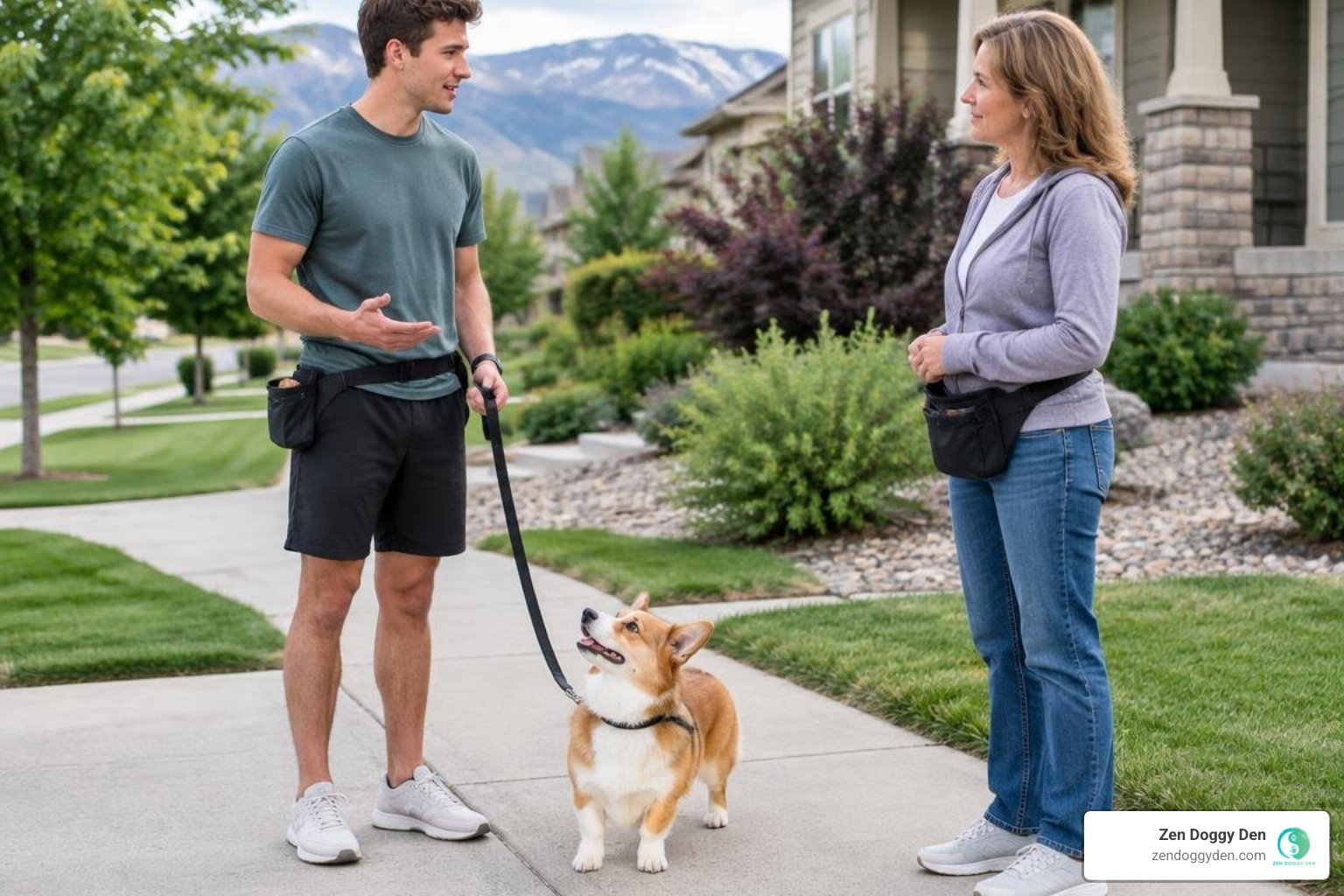
Before booking your dog’s stay, evaluate these critical household and behavioral elements:
- Vaccination and Health Clearances: Verify that your veterinarian has signed off on all required vaccine boosters, including rabies, distemper, parvovirus, and bordetella.
- Upcoming Lifestyle Transitions: If you are preparing for a move, welcoming a new baby, or facing a demanding work travel season, scheduling your dog’s stay to coincide with these events can reduce household chaos.
- Baseline Independence: While puppies do not need to be fully crate trained before arriving, they should have basic exposure to spending brief moments away from your direct side without panic.
- Owner Readiness to Maintain Standards: The most successful boarding outcomes happen when handlers are fully prepared to enforce identical rules once the dog returns home.
Selecting the right professional team is just as important as your timing. When researching facilities, look for clear methodologies, safe living conditions, and transparent communication protocols, using reputable standards such as the humane criteria for choosing a trainer or behaviorist – MSPCA-Angell to ensure your dog is placed in competent hands.
Risks of Enrolling Too Early or Waiting Too Late
Timing errors on either end of the age spectrum carry distinct developmental drawbacks.
Enrolling a puppy before 12 weeks exposes them to preventable viral risks because their immune systems are not yet fortified by complete vaccine protocols. Furthermore, separating an infant puppy from their home during the sensitive fear-imprint stage (around 8 to 10 weeks) without expert handling can cause stress that hinders future confidence.
Conversely, waiting too long carries significant risks. Statistics indicate that behavioral issues, not infectious illness, represent the leading cause of death and shelter surrender in dogs under three years old. Allowing destructive chewing, barrier frustration, or leash reactivity to compound through adolescence makes rehabilitation far more labor-intensive down the road. Addressing problems proactively protects your dog’s long-term behavioral health.
Essential Preparation Steps for Boarding Success
To help your puppy hit the ground running when they arrive for their stay, complete a few simple preparatory steps at home:
- Acclimate to Crate Resting: Practice feeding meals inside a secure crate at home with the door open, then closed for short intervals, building positive associations with quiet resting periods.
- Pack Consistent Nutrition: Sudden diet changes cause gastrointestinal upset. Provide enough of your puppy’s regular kibble for their entire stay, pre-portioned in sealed containers.
- Include Comfort Items: A familiar blanket or chew toy carrying your home’s scent helps young dogs settle smoothly during their initial transition nights.
- Document Medication and Daily Rhythms: Write down your puppy’s typical bathroom times, feeding amounts, and any veterinary notes so our training team can maintain familiarity.
Frequently Asked Questions About Puppy Board and Train Timing
What is the minimum age a puppy can start a board and train program?
The absolute minimum age for most reputable residential programs is 12 weeks old. This guideline ensures the puppy has received their foundational series of DHLPP vaccines, giving them vital protection against environmental illnesses. Starting at 12 to 14 weeks allows trainers to focus on early socialization, confidence building, and house training routines while the puppy is in their formative learning window.
How long does a puppy board and train program typically last?
Puppy-specific programs generally run between 10 to 14 days (1 to 2 weeks). Because young puppies have shorter attention spans and require balanced nap rotations, a two-week stay provides ample time to install manners, crate comfort, and leash familiarity without overwhelming them. Adolescent and older dogs pursuing advanced distraction proofing or behavior modification typically benefit from 2 to 3 weeks or longer.
How can owners prevent regression after the program ends?
Training does not end at pickup; it transfers into your living room. Preventing regression requires active owner participation during the turnover process. High-quality programs include comprehensive go-home coaching sessions where handlers learn the exact mechanics, vocal cues, and boundary enforcement techniques used during the dog’s stay. Committing to 15 minutes of structured daily reinforcement at home keeps your puppy’s newly learned habits sharp and reliable.
Structured Routine Protocols for Lifelong Behavioral Health
Developing a confident, polite canine companion requires a deliberate balance of physical activity, mental challenge, and clear communication. A structured rotation protocol balances focused training blocks with supervised play and restorative rest, ensuring that dogs learn how to stay calm, focused, and adaptable across various environments.
Balancing Mental and Physical Conditioning
Young dogs and adolescents can easily become overstimulated when subjected to continuous training or unstructured play. A structured daily routine rotates through specific phases:
- Focused Work Intervals: Short, goal-oriented sessions that build impulse control, leash mechanics, and marker responsiveness.
- Supervised Social Outlets: Controlled exposure to novel sights, sounds, and playgroups that reinforce emotional neutrality rather than hyper-arousal.
- Restorative Crate Downtime: Scheduled, quiet rest periods that allow the nervous system to decompress and solidify new cognitive pathways.
Whether working with a 12-week-old puppy or an energetic 9-month-old adolescent, this balanced framework creates a predictable routine. Integrating these methods with comprehensive puppy board and train programs provides owners with the educational foundation and structured consistency required to maintain reliable behaviors over the long term.